
DTE Energy's Q2 Earnings and Strategic Investments in Grid Modernization and Renewables: A Case for Long-Term Resilience
 Aime Summary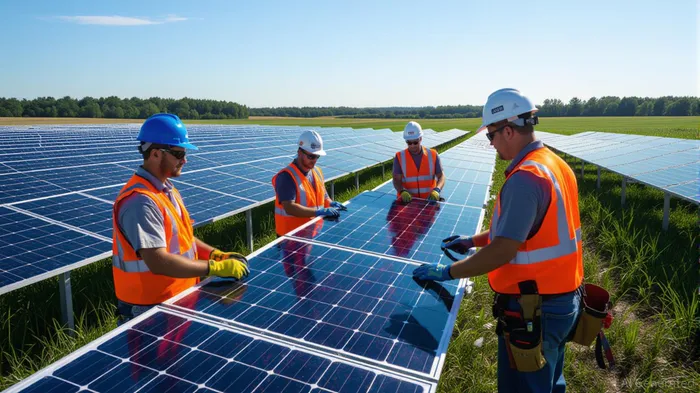
DTE Energy's Q2 2025 earnings report, released on July 29, 2025, revealed a mixed performance: operating earnings fell to $283 million ($1.36 per share) from $296 million ($1.43 per share) in Q2 2024, missing both analyst estimates and prior-year results. However, the company's reaffirmed full-year guidance of $7.09–$7.23 per share—aligned with the Zacks Consensus Estimate—underscores confidence in its long-term strategy. This strategy hinges on aggressive investments in grid modernization, renewable energy, and emerging markets like data center infrastructure. For investors, the question is whether DTE's operational resilience, capital allocation discipline, and regulatory alignment justify its current valuation and position it as a growth-oriented utility stock in the energy transition.
Operational Performance: Navigating a Mixed Quarter
DTE's Q2 results were shaped by divergent segment performances. DTE Electric, the company's core business, delivered a $39 million year-over-year earnings increase to $318 million, driven by grid reliability initiatives and customer affordability programs. DTE VantageVNTG--, its renewable energy segment, more than doubled earnings to $31 million, benefiting from federal tax credits and project completions like the Pine River Solar Park. However, declines in DTE Gas ($6 million, down from $12 million) and Energy Trading ($24 million, down from $31 million)—coupled with a $96 million loss in the Corporate & Other segment—dragged on overall results.
Despite the near-term drag, DTE's first-half 2025 capital expenditures of $1.8 billion (out of a $4.4 billion annual plan) highlight its focus on long-term infrastructure. These investments include 220 smart grid devices, 230 miles of pole-top maintenance, and a 3,350-mile tree-trimming program. The company has already reduced outage durations by nearly 70% in 2024, with a target of a 50% improvement by 2029. Such reliability gains not only enhance customer satisfaction but also align with Michigan's 100% clean energy mandate by 2040, positioning DTE as a critical player in the state's decarbonization roadmap.
Capital Allocation: A $30 Billion Bet on the Future
DTE's five-year capital plan (2025–2029) totals $30 billion, with the majority allocated to its electric business. This includes 3,200 MW of new solar and 1,000 MW of wind by 2032, as well as 430 MW of battery storage. The Cold Creek Solar Park (100 MW) and Ludington Pumped Storage Plant are emblematic of this strategy, leveraging Inflation Reduction Act incentives to reduce costs. Additionally, DTE is targeting 3 GW of new load from data center partnerships, with its first major deal expected to close by year-end. These projects are designed to expand its regulated rate base, a key driver of utility valuations.
The company's capital discipline is further evidenced by its minimal equity issuance plan ($0–$100 million annually through 2027) and investment-grade credit ratings. While its Altman Z-Score of 1.03 and interest coverage ratio of 2.37 signal financial caution, DTE's projected $3.3 billion in 2025 operating cash flow—against $4.9 billion in capex—demonstrates its ability to fund growth without overleveraging. Analysts project 6–8% annual EPS growth through 2029, which, if achieved, would justify the company's current valuation metrics.
Regulatory Environment: A Double-Edged Sword
As a regulated utility, DTE's ability to recover capital costs through rate cases is pivotal. In April 2025, the Michigan Public Service Commission (MPSC) approved a $217 million electric rate increase. However, a pending $574 million rate increase request for 2026 faces scrutiny from the state attorney general, introducing uncertainty. Regulatory lag—the delay between capital expenditures and rate recovery—remains a risk, particularly as DTE's $30 billion investment plan unfolds.
Yet DTE's regulatory alignment with Michigan's clean energy goals offers a counterbalance. The state's 2040 decarbonization target and DTE's CleanVision Integrated Resource Plan (retiring all coal plants by 2040 and achieving 65% emissions reduction by 2028) create a policy tailwind. The company's Infrastructure Recovery Mechanism (IRM) and performance-based incentives (e.g., penalties for outages, bonuses for reliability improvements) further mitigate regulatory risk by linking returns to measurable outcomes.
Valuation Metrics: A Premium for Future Growth?
DTE's stock trades at a trailing P/E of 18.56 and a PEG ratio of 3.34, both above its 10-year averages. This premium reflects market skepticism about its ability to meet 6–8% EPS growth targets, particularly given the Q2 earnings miss and regulatory uncertainties. However, a PEG ratio of 3.34 must be contextualized against the company's $30 billion capital plan, which is expected to drive earnings expansion through rate base growth.
The dividend yield of 3.13% (based on a $1.09 per share payout) is attractive for income-focused investors, with a payout ratio of 60% indicating sustainability. Analysts project the yield to rise to 3.7% over the next three years as earnings normalize. While DTE's valuation is less compelling than peers like Duke EnergyDUK-- (PEG 2.77), its alignment with Michigan's energy transition and data center demand growth could justify the premium for patient investors.
Investment Thesis: A Strategic Play in the Energy Transition
DTE Energy's Q2 earnings may have disappointed, but its long-term strategy is robust. The company is betting big on grid modernization, renewable energy, and data center infrastructure—sectors poised for sustained growth. Its capital discipline, regulatory alignment, and commitment to customer affordability (electric bills rose just 3.0% from 2021–2025, vs. 21.3% U.S. average) position it as a resilient utility.
For investors, the key risks are regulatory delays and the PEG ratio's premium. However, DTE's $30 billion capital plan, $4.4 billion in 2025 spending, and strategic diversification into data centers and renewables create a compelling long-term value proposition. If the company secures its 2026 rate increase and executes its capital projects efficiently, it could outperform expectations and deliver 6–8% EPS growth.
Final Verdict: DTE EnergyDTE-- is a buy for investors with a 5–7-year horizon, offering a blend of income (3.13% yield) and growth potential tied to the energy transition. The current valuation reflects near-term uncertainties but aligns with long-term structural trends. As the company moves toward its 2029 targets, its ability to balance regulatory navigation with capital execution will be critical. For now, the strategic cards are in DTE's favor.

Delivering real-time insights and analysis on emerging financial trends and market movements.
Latest Articles
Stay ahead of the market.
Get curated U.S. market news, insights and key dates delivered to your inbox.
AInvest
PRO
AInvest
PRO



Comments
No comments yet