
DTE Energy's Q2 2025 Earnings and Grid Modernization Progress: A Strategic Bet on Clean Energy's Future
 Aime Summary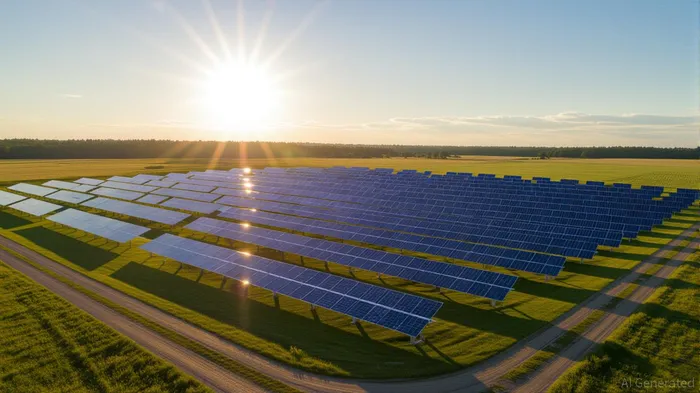
DTE Energy's Q2 2025 earnings report, released on July 29, 2025, offered a mixed performance at first glance but underscored the company's long-term strategic resolve to position itself as a leader in the clean energy transition. While operating earnings fell to $1.36 per share from $1.43 in Q2 2024, and GAAP net income declined by 29%, the company reaffirmed its full-year guidance of $7.09–$7.23 per share. This resilience, paired with aggressive investments in grid modernization and renewable energy, raises the question: Does DTE's current valuation, trading at a P/E of 19.77 and a PEG ratio of 2.55, reflect its potential to capitalize on structural tailwinds in the energy sector?
A Mixed Quarter, But a Clear Path Forward
DTE's Q2 results were dragged down by weaker performance in its Gas and Corporate & Other segments, which saw earnings fall by 50% and 140%, respectively. However, the Electric segment—a cornerstone of the company's growth strategy—delivered robust results, with earnings rising to $318 million from $279 million in 2024. The DTE Vantage unit, focused on custom energy solutions like renewable natural gas and carbon capture, more than doubled its earnings to $31 million, signaling progress in diversifying revenue streams.
The company's capital expenditures, meanwhile, remain a defining feature of its strategy. In the first half of 2025 alone, DTE invested $1.8 billion in infrastructure, with $4.4 billion allocated for the full year. This spending is part of a $30 billion, five-year capital plan, 80% of which is directed toward electric infrastructure. These investments are not merely operational—they are foundational to DTE's ability to meet Michigan's 100% clean energy mandate by 2040 and to capture emerging opportunities in the data center market, where the company is pursuing 3 gigawatts of new load.
Grid Modernization: A Hedge Against Volatility
DTE's focus on grid reliability is both a defensive and offensive move. The company has committed $10 billion to modernize its grid, aiming to reduce outages by 30% and outage duration by 50% by 2029. This includes installing smart grid devices, replacing utility poles, and expanding tree trimming programs. Such investments not only improve customer satisfaction but also insulate DTE from the volatility of weather-related disruptions—a growing risk in a warming climate.
Moreover, DTE's Infrastructure Recovery Mechanism (IRM) provides a critical regulatory buffer. By expanding the IRM from $290 million in 2025 to $1 billion by 2029, DTE ensures it can recover costs from customers for targeted grid upgrades without relying solely on rate hikes. This mechanism, combined with its $574 million rate increase request for the DTE Electric unit, signals confidence in its ability to align capital spending with revenue streams.
Renewable Energy: Scaling for the Long Game
DTE's renewable energy initiatives are central to its value proposition. The company has completed the 80-megawatt Pine River Solar Park and is constructing the 100-megawatt Cold Creek Solar Park, which will supply carbon-free energy to Ford Motor Company's Michigan operations. With over 2,300 megawatts of renewables already in service and plans to add 800 megawatts annually through 2029, DTE is positioning itself as a key player in the decarbonization of industrial demand.
The strategic importance of these projects cannot be overstated. By locking in “safe harbored” solar panels through 2027, DTE mitigates risks from U.S. solar tariffs, while its collaboration with hyperscale data center providers taps into a sector poised for 4% annual load growth. These moves align with broader trends: data centers are expected to account for 3% of global electricity demand by 2030, and Michigan's low energy costs make it a prime location for this growth.
Valuation and Analyst Sentiment: A Premium Justified?
DTE's P/E ratio of 19.77 and PEG ratio of 2.55 suggest the stock trades at a premium to its near-term earnings growth. However, this premium must be viewed in context. The company's long-term operating EPS growth target of 6–8% is underpinned by its $30 billion capital plan, which is expected to drive rate base growth and leverage Michigan's regulatory framework. Analysts, too, have been bullish: a “Buy” consensus rating from 15 analysts, with an average 12-month price target of $140.71 (2.63% above the current price), reflects confidence in DTE's ability to execute its strategy.
Critics may argue that DTE's Q2 earnings miss and elevated debt levels (with interest coverage at 2.37) justify caution. Yet, the company's $3.3 billion in projected 2025 operating cash flow, coupled with minimal equity issuance plans through 2027, underscores its financial discipline. Moreover, DTE's dividend yield of 3.16% (based on a $4.36 annualized payout) provides income-focused investors with a cushion against short-term volatility.
The Case for DTE as a Must-Own Utility Stock
DTE Energy's Q2 results may have disappointed in the near term, but its strategic investments in renewables, grid reliability, and data center partnerships position it as a must-own utility stock for the clean energy transition. The company's ability to navigate regulatory hurdles, secure cost recovery mechanisms, and align with macroeconomic trends—such as the decarbonization of manufacturing and the energy demands of the digital economy—justifies its current valuation.
For investors, the key takeaway is that DTE is not merely reacting to market shifts; it is shaping them. While the PEG ratio remains elevated, the company's long-term growth trajectory, supported by a $30 billion capital plan and a 6–8% EPS growth target, offers a compelling case for patience. In a sector where regulatory certainty and infrastructure spending are paramountPARA--, DTE's proactive approach makes it a standout play in the energy transition.
In conclusion, DTE Energy's Q2 performance may have highlighted the challenges of balancing short-term earnings with long-term investments, but its strategic clarity and alignment with structural trends make it a compelling addition to a diversified portfolio. For those willing to look beyond quarterly fluctuations, DTE represents a rare combination of defensive utility characteristics and offensive growth potential in the clean energy era.

Delivering real-time insights and analysis on emerging financial trends and market movements.
Latest Articles
Stay ahead of the market.
Get curated U.S. market news, insights and key dates delivered to your inbox.
AInvest
PRO
AInvest
PRO



Comments
No comments yet