
DTE Energy's Clean Energy Transition: Strategic Long-Term Value Creation Amid Regulatory and Market Volatility
 Aime Summary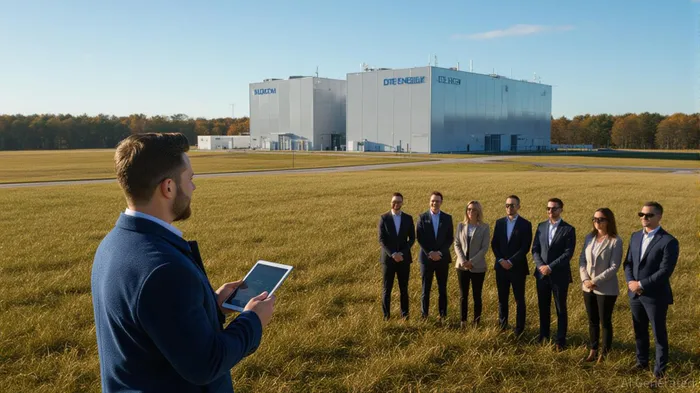
The energy transition is no longer a distant horizon but an urgent imperative. For investors, the challenge lies in identifying utilities that can navigate the turbulence of regulatory shifts, market volatility, and decarbonization demands while building durable long-term value. DTE EnergyDTE-- (DTE) stands out as a case study in strategic resilience. By aligning its decarbonization roadmap with capital discipline, stakeholder engagement, and regulatory tailwinds, DTEDTE-- is positioning itself to outperform traditional utilities in the race toward a net-zero economy.
A Decarbonization Roadmap Anchored in Execution
DTE's CleanVision Integrated Resource Plan (IRP) is a masterclass in balancing ambition with pragmatism. The company's 2025 roadmap includes a 65% reduction in carbon emissions by 2028 and 85% by 2032, with a net-zero target by 2050. These milestones are underpinned by concrete actions: retiring 1,300 MW of coal-fired capacity at the Belle River Power Plant by 2025, converting the Monroe Power Plant to natural gas by 2032, and adding 5,400 MW of solar and wind by 2032.
The Slocum Energy Center, a 14 MW battery storage pilot, and the upcoming 220 MW Trenton Channel facility exemplify DTE's focus on innovation. By 2042, the company aims to double its energy storage capacity to 2,900 MW, a critical asset for grid stability as renewable penetration rises. These projects are not just environmental milestones—they are revenue-generating infrastructure that aligns with Michigan's clean energy mandates and federal Inflation Reduction Act (IRA) incentives.
Capital Allocation: Balancing Growth and Affordability
DTE's $30 billion five-year capital investment plan is a testament to its disciplined approach. In 2025 alone, the company has already invested $1.8 billion in grid modernization, renewable energy, and infrastructure upgrades. This includes $370 million in the first half of 2025 to improve electric reliability, resulting in a 60% reduction in outage durations compared to 2024.
The company's ability to leverage IRA tax credits for renewable natural gas (RNG) and battery storage further enhances the economics of its capital-intensive projects. For instance, battery storage qualifies for a 30% investment tax credit (ITC), which can be increased to 40% with domestic content requirements. These incentives reduce the cost of capital, enabling DTE to fund its $1 billion infrastructure recovery mechanism (IRM) by 2029 without eroding affordability for customers.
Stakeholder Engagement: Building Trust in a Transition Era
DTE's stakeholder engagement strategy is a differentiator in an industry often criticized for opacity. The company has adopted a centralized system (Quorum) to track sentiment, map stakeholder priorities, and address concerns proactively. Initiatives like the Energy Efficiency Makeover contest—awarding small businesses $5,000 for upgrades—demonstrate DTE's commitment to community-driven sustainability.
Leadership under CEO Joi Harris has prioritized transparency, with quarterly reviews of stakeholder sentiment and executive-level accountability for engagement metrics. This approach mitigates reputational risks and fosters local advocacy, critical for navigating regulatory scrutiny and public skepticism.
Balance Sheet Strength and Regulatory Tailwinds
DTE's investment-grade credit ratings (S&P: A–, Fitch: A) provide a buffer against market volatility. Despite a debt-to-equity ratio of 202.7%, the company's operating cash flow of $3.3 billion in 2025 supports its capital expenditures while maintaining a sustainable dividend payout ratio of 62%. The Michigan Public Service Commission (MPSC) has also approved key rate increases, including a $217 million gas rate hike in April 2025 and a $574.1 million electric rate increase under review.
The IRA and state-level policies create a favorable regulatory environment. For example, DTE's battery storage projects qualify for extended tax credits through 2036, while Michigan's 2040 clean energy mandate ensures long-term demand for DTE's renewable infrastructure.
Investment Thesis: Patient Capital for a High-Conviction Play
DTE's strategy is not without risks. High debt levels and regulatory delays could pressure short-term earnings. However, the company's focus on clean infrastructure—where demand is growing at 15% annually—positions it to capture market share in a sector poised for decades of growth.
For patient investors, DTE offers a compelling mix of regulated utility stability and growth in high-margin renewables. The company's ability to pass through IRA savings to customers, combined with its track record of reliability improvements (e.g., 70% reduction in outage durations in 2024), suggests a path to outperforming peers.
Investment Advice: DTE Energy is a buy for long-term investors seeking exposure to the energy transition. While near-term earnings may face pressure from rate cases and capital expenditures, the company's strategic alignment with regulatory and market trends—coupled with its robust balance sheet—makes it a resilient long-term holding. Monitor the MPSC's approval of the $574.1 million electric rate increase and the progress of the Trenton Channel battery project as key catalysts.
In an era of uncertainty, DTE Energy's clean energy transition is a blueprint for how traditional utilities can evolve into leaders of the future. For those willing to look beyond short-term volatility, the rewards are substantial.

Delivering real-time insights and analysis on emerging financial trends and market movements.
Latest Articles
Stay ahead of the market.
Get curated U.S. market news, insights and key dates delivered to your inbox.
AInvest
PRO
AInvest
PRO



Comments
No comments yet