
DTE Energy: A Beacon of Renewable Resilience in a Decarbonizing Economy
In an era where decarbonization is reshaping the global energy landscape, DTE EnergyDTE-- (NYSE: DTE) stands out as a utility with a clear vision: to transform Michigan into a hub of sustainable power. Backed by a $30 billion capital investment plan through 2025, the company is aggressively scaling renewable energy capacity while modernizing its grid to meet rising demand for clean, reliable power. Recent earnings results, analyst upgrades, and regulatory tailwinds suggest DTEDTE-- is positioned to thrive in this transition—despite near-term financial headwinds.
Strategic Investments: The Renewable Pivot and Grid Reinvention
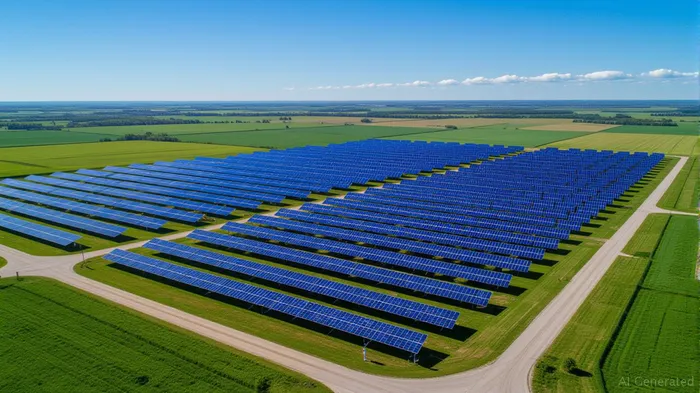
DTE's renewable push is best exemplified by its completion of the 100-megawatt Polaris Solar Park, which will power 23,000 homes annually. This milestone follows the launch of five additional solar parks under construction, funded by its MIGreenPower program, now serving 100,000 residential and 1,200 business customers. By 2025, DTE aims to generate enough wind and solar energy to power 800,000 Michigan homes, with a net-zero emissions target by 2050.
Meanwhile, grid modernization is underpinned by $5 billion in capital spending in 2024 alone. This includes deploying smart grid technologies, expanding transmission networks, and upgrading infrastructure to reduce outages—a critical priority as extreme weather events grow more frequent. DTE's goal: 30% fewer outages by 2029 and halving outage durations.
Financials: Growth Amid Capital Intensity
DTE's Q2 2025 earnings reflect progress and challenges. Revenue surged 37% year-over-year to $4.44 billion, driven by strong gas and non-utility segments. EPS hit $2.10, beating estimates by 6.1%, though the core electric segment struggled, with earnings down 24% year-over-year to $147 million.
While capital spending led to negative free cash flow (-$824 million in 2024), operating cash flow rose 13% to $3.64 billion, signaling robust underlying profitability. DTE's dividend payout ratio remains steady at ~54%, with a yield of 3.28%, supported by its $30 billion capital plan and disciplined debt management.
Analyst Sentiment: Mixed Signals, but Bulls Are Charging
Analyst reactions to DTE's strategy are divided. BarclaysBCS-- lowered its price target to $136 from $137, citing execution risks, but the average target remains higher at $143.67, with CitigroupC-- (raised to $151) and Wells FargoWFC-- (up to $154) signaling optimism.
The bulls argue that DTE's investments in renewables and grid resiliency align perfectly with Michigan's 60% renewable energy mandate by 2035 and the growing demand for data centers—industries hungry for reliable, low-carbon power. Meanwhile, skeptics warn of capital intensity risks and margin pressures from the auto sector, a key Michigan employer.
Regulatory Tailwinds and Market Opportunities
DTE benefits from Michigan's supportive policy framework, including tax incentives for renewables and data center growth. The state's favorable climate and DTE's grid reliability make it an attractive location for hyperscale data centers, a high-margin segment with 12% annual growth potential.
The Inflation Reduction Act (IRA) further strengthens DTE's hand by expanding tax credits for clean energy projects. While some uncertainties remain around tax credit transferability, DTE's existing pipeline of projects positions it to capitalize on federal incentives.
Risks to Consider
- Capital Intensity: Negative free cash flow could strain liquidity unless DTE balances growth with cost discipline.
- Execution Risks: Delays in solar/wind projects or grid upgrades could disrupt timelines and budgets.
- Regulatory Shifts: Changes in Michigan's renewable mandates or federal policies could impact profitability.
Investment Thesis: A Buy for the Long-Term Transition
DTE's stock trades at $133.12, below the average analyst target of $143.67. While Barclays' $136 price target reflects near-term caution, the broader narrative favors long-term investors.
Why buy DTE?
1. Renewables at Scale: Its 800,000-home renewable target by 2025 is ambitious but achievable, leveraging Michigan's favorable policies.
2. Grid Modernization Payoff: Reduced outages and enhanced reliability could boost customer retention and attract high-energy users like data centers.
3. Dividend Resilience: A 3.28% yield, well-covered by cash flow, provides downside protection.
Final Take: DTE as a Utility for the 21st Century
DTE Energy is a “buy” for investors focused on utilities with clear decarbonization strategies. While short-term volatility is inevitable, its $30 billion capital plan, regulatory tailwinds, and growing demand for sustainable infrastructure position it to outperform in a green economy.
Recommendation: Accumulate DTE shares with a $150–$155 price target horizon by 2026, contingent on execution. Pair with stop-loss discipline near $125 to mitigate liquidity risks.
In a world racing to reduce emissions, DTE isn't just adapting—it's leading the charge.

Delivering real-time insights and analysis on emerging financial trends and market movements.
Latest Articles
Stay ahead of the market.
Get curated U.S. market news, insights and key dates delivered to your inbox.




Comments
No comments yet