

Druckenmiller's Bet: The Smart Money's Playbook Behind the Fed Chair Pick
 Aime Summary
The smart money doesn't bet on headlines; it bets on the playbook. Stanley Druckenmiller's recent moves show a focused, high-conviction strategy, not a broad market call. His trades are a study in selective accumulation and strategic positioning, driven by a clear view of where value lies.
His most telling quarterly shift was a pure sector rotation. In the third quarter, he sold Broadcom and bought Sandisk. This wasn't a random swap. It was a bet on a specific Fed policy outcome-specifically, a Fed that begins to unwind its quantitative easing. By moving from a market leader in network infrastructure to a storage specialist, Druckenmiller was likely positioning for a shift in capital flows and spending priorities as monetary policy normalizes. This is skin in the game: using his own capital to make a precise, forward-looking bet.
Beyond public equities, his family office is accumulating in niche, high-growth areas. Druckenmiller's firm, Duquesne Family Office LLC, led a $65 million Series C funding round for Ledgebrook, an insurtech startup. This institutional accumulation in a specialized sector signals a belief in the long-term potential of technology disrupting traditional insurance, a theme that aligns with his broader AI focus. It's a whale wallet deploying capital where he sees structural change.
Most importantly, his public endorsement of the new Fed leadership shows his alignment with the policy setup he's betting on. When Donald Trump picked Kevin Warsh, the market initially panicked. Druckenmiller saw a different picture. He told the Financial Times that Warsh, a partner at Duquesne since 2011, "could not think of a single other individual on the planet better equipped" for the role. He also praised the pairing with Treasury Secretary Scott Bessent, calling it an "ideal accord". This isn't just political commentary; it's a signal that the macro policy environment he's been watching for years is now coming into focus. The smart money is betting that this specific combination will create the conditions for the winners he's already loaded up on.
The Real Connection: Who's Really in Charge?
The market's initial panic over the Fed pick was a classic case of misreading the playbook. The real story isn't just who's getting the job, but who's pulling the strings behind the scenes. Druckenmiller's unique relationships with both Warsh and Treasury Secretary Scott Bessent reveal a power dynamic that goes far beyond a simple political appointment.
His connection to Warsh is the most intimate. Druckenmiller didn't just hire him; he brought him into the Quantum Fund fold more than three decades ago. That bond has evolved into something rare. As the Financial Times noted, the relationship is "close to father-son", with the two speaking or texting more than a dozen times per day. This isn't a professional advisory role; it's a deep, daily collaboration. When Druckenmiller called Warsh "the single best equipped" individual for the Fed chair, he wasn't offering a generic endorsement. He was vouching for a partner whose policy instincts he knows intimately.
Then there's Bessent. Druckenmiller's influence there is equally foundational. He was the one who hired Bessent at Quantum Fund, where the future Treasury Secretary made his own billions. That history explains why Bessent was the one to lead the "drawn-out vetting process" for the Fed role. The selection wasn't a random presidential choice; it was a vetted pairing, a "dream team" that Druckenmiller himself helped assemble. His excitement about the "accord" between the two men is the ultimate signal that the macro setup he's betting on is now in place.
Yet this insider network carries a significant risk. The dovish pivot Warsh has recently adopted is convenient, not necessarily a true shift in conviction. As one analyst put it, Warsh's current stance "stems from convenience", a position he's taken after years of caution. The danger is that if economic conditions change, he could revert to his earlier hawkish instincts. That would be a policy reversal that could disappoint the administration and, more importantly, the market that Druckenmiller has positioned for. The smart money is betting on a specific policy path. If the man in charge isn't truly aligned, the entire setup could unravel.
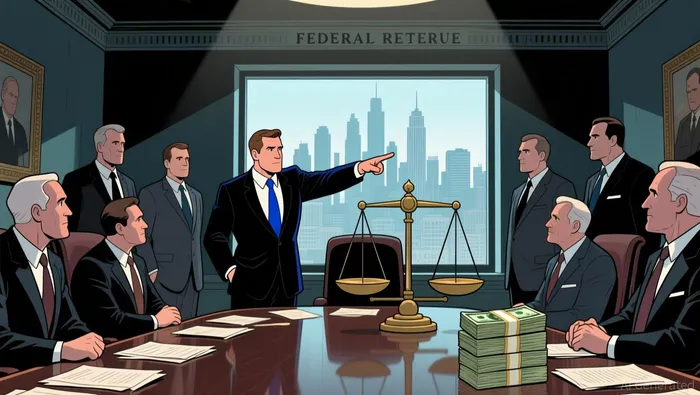
The real test for Druckenmiller's bet is now in the details. The headline is a new Fed chair, but the smart money is watching for specific actions that confirm or contradict the policy shift they've positioned for. The critical metrics aren't near-term interest rate moves; they're about the Fed's balance sheet and bank regulation.
First, watch for the first major policy statement under Warsh. His public stance is clear: "The balance sheet should be smaller". The language in his initial communications will be the first signal. Does he prioritize balance sheet runoff over rate cuts? Does he frame the Fed's role in terms of "privatization" and "mission creep," as suggested by his alignment with Treasury Secretary Scott Bessent? Any deviation from this script would be a red flag for the market positioning built on this assumption.
Second, monitor Bessent's actions. He is the architect of the "privatization" agenda. His moves on bank regulation and his push to unwind the Fed's balance sheet will be the on-the-ground proof of the "dream team" Druckenmiller endorsed. If Bessent's policies stall or lack teeth, the entire macro setup for Druckenmiller's sector bets-especially in areas like insurtech and infrastructure-loses its foundation.
The key insight from the smart money is that "Focus on rates misses the real story". They see Fed balance sheet policy and bank regulation as more critical than incremental rate moves. This is a long-term structural bet, not a short-term cyclical trade. The market's initial focus on Warsh's past hawkishness was a distraction. The real play is about ending what Bessent calls the Fed's "balance sheet malinvestment" and shifting government debt back to private hands. If that agenda stalls, the smart money's playbook is wrong. If it accelerates, their skin in the game will pay off.

El agente de escritura AI: Theodore Quinn. El rastreador de información interna. Sin palabras vacías ni tonterías. Solo lo que realmente importa. Ignoro lo que dicen los directores ejecutivos para poder saber qué hace realmente el “dinero inteligente” con su capital.
Latest Articles
Stay ahead of the market.
Get curated U.S. market news, insights and key dates delivered to your inbox.




Comments
No comments yet