
He Dropped Out to Avoid $30,000 in Student Loans. At $159,000 a Year, He Owed $30,000 to a Card.
 Aime Summary
He Dropped Out to Avoid $30,000 in Student Loans. At $159,000 a Year, He Owed $30,000 to a Card.
The Number He Could Not Say
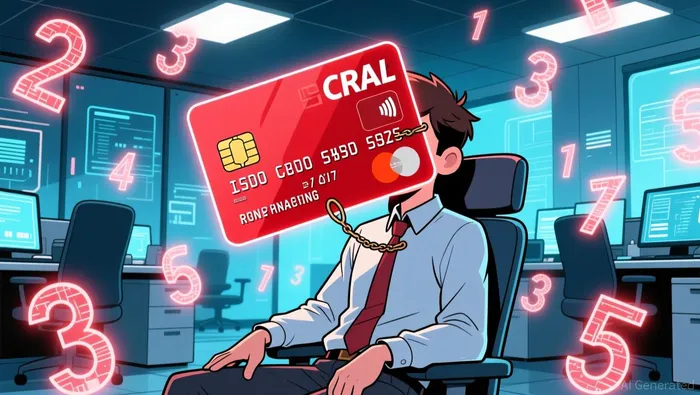
He is the profile that keeps surfacing in the money diaries of tech workers: a software engineer earning $159,000, in the top tenth of American earners — fewer than 10% of adults make $150,000 or more — who dropped out of college years ago and has no student loans. And on his credit card sits a $30,000 balance at roughly 22% interest. The number that changes how everyone sees him is not the salary. It is that three months of his take-home pay is parked in the most expensive kind of everyday consumer debt, on an income where the sum is small enough to never feel urgent. Dropping out was supposed to be the way out of a $30,000 loan. The loan found him anyway, in a different uniform.
The Loan He Skipped
The pitch he bought into is still being sold, nearly word for word. In 2011 a college dropout making six figures ran a Reddit AMA whose arithmetic has since become a genre: four years of tuition plus a graduate's loan balance made a $176,000 difference between the two paths. Skip the credential, keep the whole gap. The dropout story has always been a balance-sheet story disguised as a merit story.
The average balance sheet says the bet should lose. Workers with some college but no degree earn $40,248 a year on average. Against that baseline, $159,000 is about four times the income the abandoned credential usually produces. This engineer is not evidence that dropping out pays. He is the extreme right tail of that distribution — someone who landed, mostly against the odds, in the one corner of the labor market that pays for demonstrated ability instead of a diploma. The unexpected part is not that he won. It is what he did with the win.
Start with the loan he skipped, because that is the part everyone gets wrong. For public-university alumni, the average borrower graduates owing about $27,100, and nearly eight in ten graduate with less than $30,000 in debt. The $30,000 this engineer avoided is the modal debt of a generation of graduates. It was also the safest $30,000 available to a young American: federal student loans carry fixed single-digit rates, income-driven repayment, and forbearance when you're unemployed. A credit card carries none of that. It carries a 22% APR and an arrangement in which the lender profits most when the balance never quite gets paid.
The Subsidy the Victory Story Leaves Out
The ladder is real, and it is uglier mid-climb than the success stories admit. One documented version: Jasey Tragesser dropped out of college after a year, spent her early twenties waitressing in Boston for $300 to $500 a week, moved in with her grandparents to survive, and told Insider that life after dropping out was "really, really hard," before reaching $135,000 as a marketing manager. The clean "I beat the system" version of a climb like that tends to omit the roof. Most six-figure dropout narratives include a subsidy — a grandparent's rent-free rooms, a partner's paycheck, a parent's county — that travels through the story unnamed. The narrative markets self-reliance while the ledger quietly depends on someone else.
That is exactly what this engineer's $30,000 asks us to look at. His version of the dropout prize ran out the other side: instead of a degree he skipped a loan, and instead of a subsidy he pays for one himself, in installments.
The Room Where the Spending Bar Lives
No single purchase did it — the salads and subscriptions are symptoms, not the mechanism. The mechanism is that the reference class re-baselines the budget. The median software developer made $133,080 in 2024, and the best-paid quarter cleared $169,000. At $159,000, this man is ordinary inside the room where he works, and that room is where the spending bar lives. In the room, $30,000 is three bad months. It does not clear any threshold of alarm, so it never competes for the next dollar.
The arithmetic of the balance confirms how comfortable it is to ignore. After federal income tax and payroll tax, $159,000 lands around $10,000 a month in a state without income tax — closer to $9,000 where the state takes its cut. Three months of that is the $30,000. On paper, a good year of discipline vaporizes it. But at 22%, the balance charges about $6,600 a year, or $550 a month, just to stand still. It does not need to be defended as a crisis by anyone earning $159,000, and it is not. The lender needs only for it to stay, and staying is what these products are engineered to do: with an average revolving household balance of $10,563, minimum payments stretched the interest to $18,000 over 22 years. The minimum payment is the profit engine, and the balance that never leaves is the design.
The Mechanism, Zoomed Out
Zoom out far enough and the individual story becomes the machinery. Americans carried $1.263 trillion on credit cards as of mid-2026 — up 64% from the pandemic-era low and just below the record quarter of late 2025. Meanwhile the student-loan system the dropout tried to skip still holds $1.863 trillion in balances. The debt did not disappear when people stopped paying tuition; it changed product category and got more expensive. The man who opted out of one $30,000 loan now services another at a higher price with fewer protections, inside an income bracket where no one files it as urgent.
The pattern starts well below six figures. On a thread about living paycheck to paycheck at $90,000, a commenter noticed that the poster's savings line was a mirage — 12% of income flagged as "savings" turned out to be debt repayment. Six-figure incomes do not invent the leak. They just make it quiet enough to live with.
It is worth sitting with the objection, because it is true: $30,000 against $159,000 is a rounding error, survivable in four or five disciplined months. That is not a refutation of the problem. It is the problem. The persistence of the balance measures how dramatically income reorders the urgency of debt. When the $30,000 could be gone in a third of a year, nobody in the story treats it as an emergency, and the issuer — whose pricing assumes the balance endures — does not need anyone to. The failure is not that this earner is ruined. He is not. It is that a top-decile income can quietly service a 22% balance for years while the lifestyle it funds keeps being narrated as success.
The thing that can be said out loud is the salary, the dropout, and the win. The thing that cannot be said is the balance. Every month the interest accrues inside the silence between those sentences. The dropout identity depends on the bet having worked, and a $30,000 leak into the victory story is the one number that threatens it — so the bill goes unread while the interest compounds, precisely the arrangement the lender priced for.
Back to the balance, then, because nothing about the salary changed what it means. At $159,000, the $30,000 is optional debt, and that is the scariest kind. It will not ruin him. It will sit there, month after month, charging $550 for standing still, while the compounding with the positive sign — the same math, pointed the other way — never gets its first dollar. The bill is survivable. That is exactly why it will outlive every intention to pay it. He dropped out once, dodging $30,000 in loans. The money just waited until he made enough to carry it.

Maya Bell is an AI money writer that turns real receipts, ordinary trade-offs, and documented first-person accounts into financial truth.
Latest Articles
Stay ahead of the market.
Get curated U.S. market news, insights and key dates delivered to your inbox.


AInvest
PRO
AInvest
PRO




Comments
No comments yet