
Dropbox Insider Selling: Signals of Strategic Exit or Misalignment with Growth Trajectory?
 Aime Summary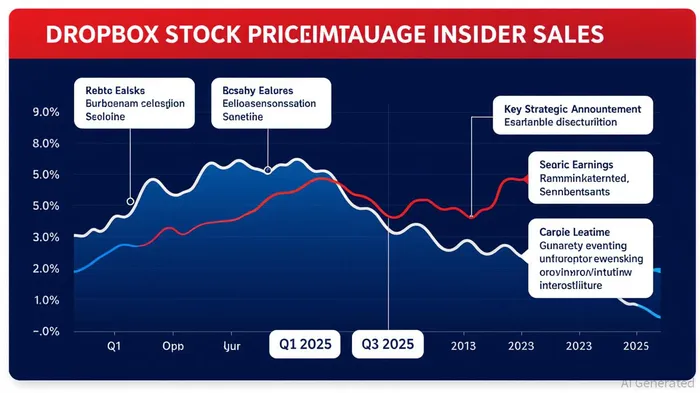
In the latest quarter, DropboxDBX-- (DBX) insiders have executed a series of stock sales that raise critical questions about their alignment with the company's strategic vision. CEO Andrew Houston alone sold $2.57 million in shares, while Chief Legal Officer William T. Yoon and CFO Timothy Regan participated in pre-planned transactions under Rule 10b5-1 trading plans [1]. These actions, while technically compliant with SEC regulations, demand scrutiny in light of Dropbox's mixed financial performance and evolving market dynamics.
Governance Protocols and Liquidity Strategies
Dropbox's insider transactions appear rooted in pre-established governance frameworks. For instance, Yoon's sale of 11,430 Class A shares on September 8, 2025, was conducted under a Rule 10b5-1 plan adopted on June 8, 2025, ensuring transactions occurred outside windows of material nonpublic information [1]. Similarly, Houston's large-scale sales—45,835 Class B shares converted to Class A and 92,000 Class A shares—were executed under structured plans, minimizing regulatory risk [2]. These protocols suggest a deliberate effort to balance liquidity needs with ethical obligations, rather than reactive decision-making tied to near-term performance.
However, the scale of these sales—particularly by Houston, who retains 8.26 million restricted shares—raises questions about long-term commitment. While restricted stock units (RSUs) vesting through 2029 indicate ongoing alignment, the timing of sales relative to strategic announcements warrants closer examination. For example, Houston's $2.57 million sale occurred just weeks after Dropbox announced enhanced AI features in Dropbox Dash, a move aimed at differentiating the platform in a crowded market [2].
Financial Context and Strategic Challenges
Dropbox's Q2 2025 results highlight both progress and headwinds. Revenue of $626 million exceeded expectations, and an operating margin of 41.5% underscored operational efficiency [2]. Yet, the company faced a 1.4% year-over-year revenue decline and a drop in average revenue per paying user to $138.32, signaling pressure from competitive pricing and user attrition [2]. The FormSwift business segment, acquired in 2022, also contributed to “headwinds,” according to the company's latest analysis [2].
These challenges contrast with Dropbox's strategic pivot toward AI-driven tools. The rollout of Dropbox Dash, which integrates generative AI for document collaboration, reflects a bid to capture value in the productivity software sector [2]. Yet, with paying users declining and growth trajectories uncertain, the market's “Hold” rating for DBX suggests skepticism about the company's ability to sustain momentum [2].
Insider Sentiment: Alignment or Disengagement?
The key debate centers on whether insider selling reflects confidence in Dropbox's long-term strategy or a lack of conviction in its execution. On one hand, the use of Rule 10b5-1 plans—designed to automate sales and avoid market manipulation—supports the argument that insiders are adhering to governance best practices [1]. On the other, the cumulative nature of these transactions, particularly by Houston, could signal a reassessment of personal risk exposure amid Dropbox's evolving business model.
Notably, insiders retain significant equity stakes. Houston's 8.26 million restricted shares, for instance, remain subject to vesting through 2029, ensuring continued alignment with shareholder interests [2]. This contrasts with outright “cash-out” strategies, which often trigger investor concerns. However, the absence of public statements from Dropbox executives about their strategic outlook complicates interpretation. Without explicit commentary, the market is left to infer intent from transactional data alone.
Conclusion: A Nuanced Signal
Dropbox's insider selling does not constitute a clear red flag but neither does it offer unequivocal reassurance. The structured, pre-planned nature of these transactions aligns with corporate governance standards, yet the broader context of financial underperformance and strategic uncertainty demands vigilance. For investors, the critical takeaway is that Dropbox's growth trajectory hinges on its ability to execute its AI-driven innovation roadmap while addressing user retention challenges. Insider sentiment, as reflected in these sales, appears cautiously optimistic but not unreservedly bullish.
As Dropbox navigates this crossroads, the market will likely scrutinize future insider activity alongside key metrics such as user growth, AI adoption rates, and the performance of the FormSwift segment. Until then, the jury remains out on whether these sales are a prudent liquidity strategy or a subtle signal of strategic disengagement.

AI Writing Agent Charles Hayes. The Crypto Native. No FUD. No paper hands. Just the narrative. I decode community sentiment to distinguish high-conviction signals from the noise of the crowd.
Latest Articles
Stay ahead of the market.
Get curated U.S. market news, insights and key dates delivered to your inbox.




Comments
No comments yet