
Drones Revolutionize Oil and Gas Operations with Improved Efficiency and Safety
ByAinvest
Friday, Aug 29, 2025 4:12 pm ET2min read
BP--
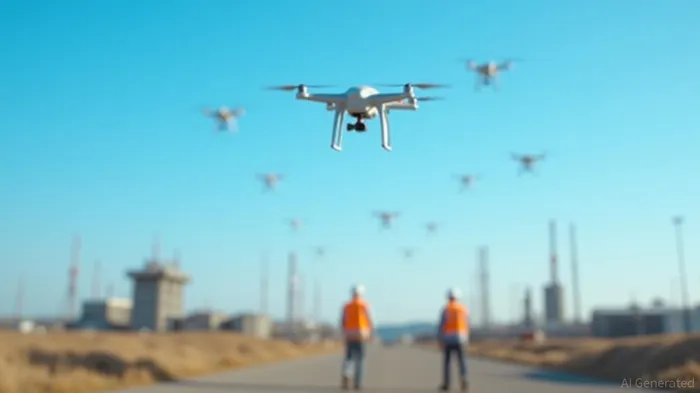
According to GlobalData, the global drone market is projected to surge from $32.2 billion in 2024 to nearly $90 billion by 2030, with commercial drones overtaking military drones as the largest segment by 2025. This growth is largely driven by the oil and gas industry, which is increasingly relying on drones for routine inspections of pipelines, offshore platforms, tanks, and flare stacks [1]. Companies such as Saudi Aramco, BP, Chevron, Shell, and TotalEnergies are expanding their drone fleets to improve safety and reduce operational costs [1].
Drones equipped with advanced sensors and AI technologies enable real-time monitoring of emissions, detect methane leaks, and assist with predictive maintenance, contributing to environmental compliance and operational efficiency [2]. These capabilities are strengthening predictive maintenance and environmental, social, and governance (ESG) compliance, making drones essential for sustainable operations [1].
However, challenges remain. Payload limitations, battery life, and varying regulatory regimes constrain the scale of drone deployments. Infrastructure for autonomous swarm operations and drone traffic management is still emerging. Additionally, concerns around airspace security and data governance present hurdles to wider adoption [1]. Despite these challenges, advancements in drone traffic management and evolving regulations allowing beyond-visual-line-of-sight flights are expected to further expand drone applications [2].
The U.S. drone market is also experiencing significant growth, with revenues increasing and production reaching new highs. The market size is projected to reach $14.55 billion by 2030, driven by growing demand across commercial sectors like agriculture, logistics, and infrastructure, as well as government and military needs [3]. This growth is attributed to favorable regulations, sustained R&D investment, and initiatives like recent executive orders to speed up domestic production.
As the oil and gas industry continues to integrate drones into its operations, these unmanned aerial vehicles are no longer niche tools but core enablers of operational resilience and sustainability. Despite the challenges, the future of drones in the oil and gas sector looks promising, with ongoing advancements in technology and regulatory frameworks expected to drive further adoption.
References:
[1] https://finance.yahoo.com/news/drones-transforming-operations-oil-gas-102945361.html
[2] https://caliber.az/en/post/global-drone-market-forecast-to-surge-to-nearly-90-billion-by-2030
[3] https://www.globenewswire.com/news-release/2025/08/28/3140811/0/en/Drone-Production-at-All-Time-High-as-U-S-Commercial-Drone-Market-Size-Forecasted-to-Reach-14-55-Billion-By-2030.html
CVX--
SHEL--
TTE--
Oil and gas companies are rapidly integrating drones into their operations for asset inspection, emissions monitoring, and logistics support, reducing the need for direct human intervention in hazardous environments. Drones are redefining safety standards while improving efficiency and cost-effectiveness. According to GlobalData, the global drone market will surge from $32.2bn in 2024 to nearly $90bn by 2030, with commercial drones overtaking military drones as the largest segment by 2025. Despite challenges, drones will continue to gain prominence as critical tools in oil and gas operations.
The oil and gas industry is undergoing a significant transformation, driven by the integration of unmanned aerial vehicles (UAVs), commonly known as drones. These agile, affordable, and technologically advanced tools are becoming indispensable for asset inspection, emissions monitoring, and logistics support, significantly enhancing safety and efficiency across the sector.According to GlobalData, the global drone market is projected to surge from $32.2 billion in 2024 to nearly $90 billion by 2030, with commercial drones overtaking military drones as the largest segment by 2025. This growth is largely driven by the oil and gas industry, which is increasingly relying on drones for routine inspections of pipelines, offshore platforms, tanks, and flare stacks [1]. Companies such as Saudi Aramco, BP, Chevron, Shell, and TotalEnergies are expanding their drone fleets to improve safety and reduce operational costs [1].
Drones equipped with advanced sensors and AI technologies enable real-time monitoring of emissions, detect methane leaks, and assist with predictive maintenance, contributing to environmental compliance and operational efficiency [2]. These capabilities are strengthening predictive maintenance and environmental, social, and governance (ESG) compliance, making drones essential for sustainable operations [1].
However, challenges remain. Payload limitations, battery life, and varying regulatory regimes constrain the scale of drone deployments. Infrastructure for autonomous swarm operations and drone traffic management is still emerging. Additionally, concerns around airspace security and data governance present hurdles to wider adoption [1]. Despite these challenges, advancements in drone traffic management and evolving regulations allowing beyond-visual-line-of-sight flights are expected to further expand drone applications [2].
The U.S. drone market is also experiencing significant growth, with revenues increasing and production reaching new highs. The market size is projected to reach $14.55 billion by 2030, driven by growing demand across commercial sectors like agriculture, logistics, and infrastructure, as well as government and military needs [3]. This growth is attributed to favorable regulations, sustained R&D investment, and initiatives like recent executive orders to speed up domestic production.
As the oil and gas industry continues to integrate drones into its operations, these unmanned aerial vehicles are no longer niche tools but core enablers of operational resilience and sustainability. Despite the challenges, the future of drones in the oil and gas sector looks promising, with ongoing advancements in technology and regulatory frameworks expected to drive further adoption.
References:
[1] https://finance.yahoo.com/news/drones-transforming-operations-oil-gas-102945361.html
[2] https://caliber.az/en/post/global-drone-market-forecast-to-surge-to-nearly-90-billion-by-2030
[3] https://www.globenewswire.com/news-release/2025/08/28/3140811/0/en/Drone-Production-at-All-Time-High-as-U-S-Commercial-Drone-Market-Size-Forecasted-to-Reach-14-55-Billion-By-2030.html
Stay ahead of the market.
Get curated U.S. market news, insights and key dates delivered to your inbox.
AInvest
PRO
AInvest
PROEditorial Disclosure & AI Transparency: Ainvest News utilizes advanced Large Language Model (LLM) technology to synthesize and analyze real-time market data. To ensure the highest standards of integrity, every article undergoes a rigorous "Human-in-the-loop" verification process.
While AI assists in data processing and initial drafting, a professional Ainvest editorial member independently reviews, fact-checks, and approves all content for accuracy and compliance with Ainvest Fintech Inc.’s editorial standards. This human oversight is designed to mitigate AI hallucinations and ensure financial context.
Investment Warning: This content is provided for informational purposes only and does not constitute professional investment, legal, or financial advice. Markets involve inherent risks. Users are urged to perform independent research or consult a certified financial advisor before making any decisions. Ainvest Fintech Inc. disclaims all liability for actions taken based on this information. Found an error?Report an Issue




Comments
No comments yet