
Drone Warfare and Geopolitical Tensions: Navigating Defense and Energy Markets Amid Conflict
The recent wave of Russian drone attacks on Ukraine, including strikes on Kyiv that injured four civilians, underscores the escalating strategic and economic stakes of the conflict. As drone warfare reshapes modern combat, investors must navigate a landscape where defense innovation, energy market shifts, and geopolitical risk are inextricably linked. Below, we analyze the implications for investors across sectors and geographies.
Defense Sector Dynamics: Cost-Driven Warfare and Countermeasures
The attritional nature of Russia’s drone campaign—deploying thousands of low-cost Shahed drones at a unit cost of $35,000—has forced adversaries to prioritize affordability in defense systems. While each Shahed strike costs Russia ~$350,000 (including failed attempts), the psychological and material toll on Ukraine is significant. This dynamic has spurred demand for low-cost countermeasures, such as radar systems, electronic warfare tools, and AI-driven intercept solutions.
Companies like Lockheed Martin (LMT), a leader in air defense systems (e.g., Patriot missiles), and Rheinmetall (ETR:RHMG), which produces anti-drone technology, are positioned to benefit. However, the economics of intercepting drones remain challenging: U.S. systems like the Patriot interceptor cost over $3 million per unit, making them unsustainable for countering mass drone swarms.
The U.S. is accelerating development of cost-effective solutions, such as the Pentagon’s $12.5 billion IRIS-T air defense system and low-cost cruise missile prototypes. Meanwhile, European defense budgets are soaring, with NATO members pledging to spend 4% of GDP on defense. This creates a tailwind for firms like Thales (EPA:THALES) and BAE Systems (LON:BA.) involved in counter-drone tech and radar systems.
Energy Market Shifts: Decoupling and Supply Chain Fragility
The EU’s 75% reduction in Russian natural gas imports since 2022 has reshaped global energy flows. Infrastructure sabotage, such as the Nord Stream pipeline explosions and damage to Ukraine’s Sudzha metering facility, has further disrupted Russian exports.

While the U.S. has capitalized on this shift—U.S. LNG exports to Europe rose 20% in 2024—the market remains volatile. Geopolitical risks, including sabotage and Ukrainian counterattacks, could spike prices. The G7’s $60/barrel oil price cap on Russian crude complicates Moscow’s ability to fund its war machine, but sanctions exemptions (e.g., for Hungary) limit the bloc’s cohesion.
Investors should monitor European energy majors like Eni (BIT:ENI) and Equinor (OSE:EQT), which are expanding renewables and LNG infrastructure, while remaining wary of lingering Russian gas contracts in Central Europe.
Geopolitical Risks: Conflict Persistence and Strategic Uncertainty
The war’s endurance—now in its third year—has eroded trust in cross-border agreements. Russia’s seizure of foreign energy assets (e.g., Uniper) and EU reciprocation highlight the fragility of global supply chains.
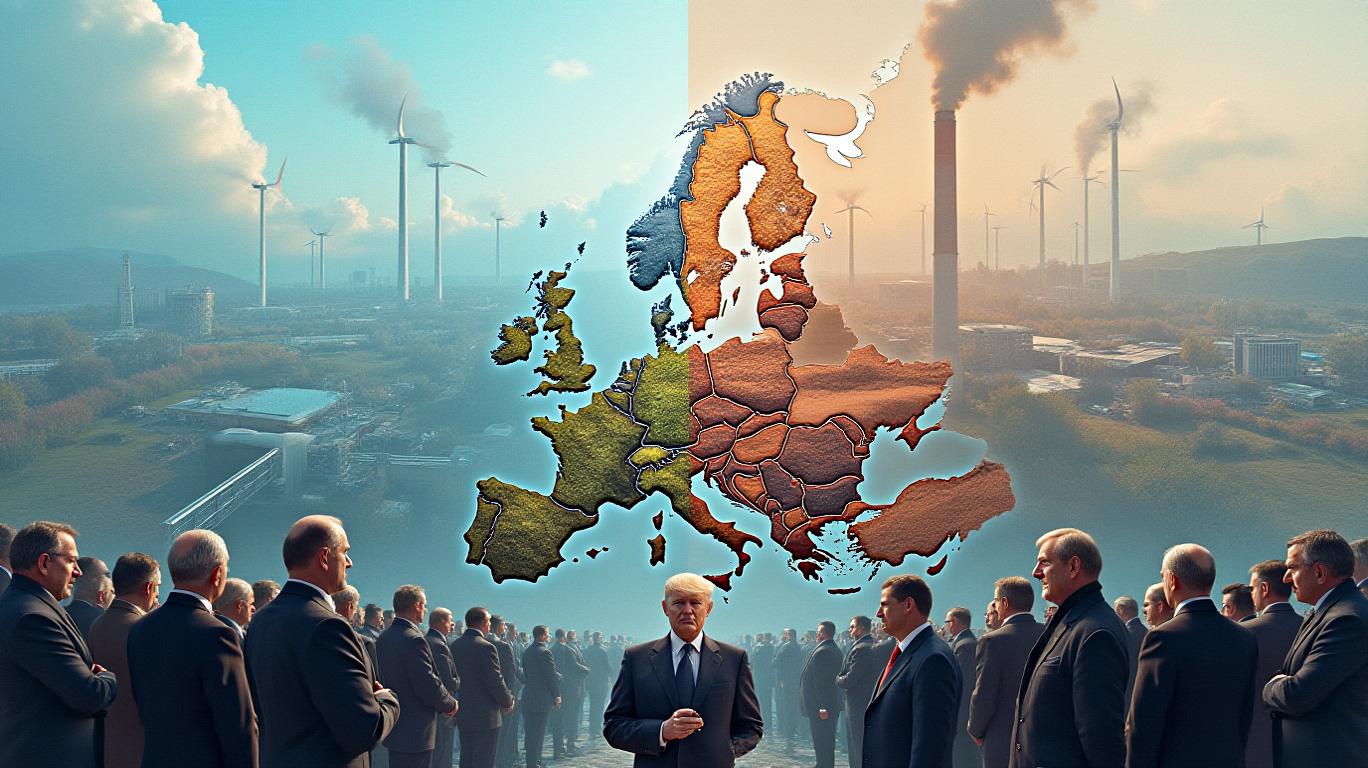
U.S. policy under Trump adds complexity. While tariffs on Canadian/Mexican oil boost U.S. LNG competitiveness, they risk supply chain disruptions for defense and energy firms reliant on North American components. The S&P 500’s worst day since September 2024—linked to drone strikes and tariffs—underscores market sensitivity to geopolitical shocks.
Conclusion: Invest in Resilience and Innovation
The drone-driven conflict has reshaped investment priorities:
1. Defense Tech: Prioritize firms with scalable, low-cost solutions (e.g., Anduril, Raytheon Technologies (RTX)) and those benefiting from European rearmament.
2. Energy Diversification: U.S. LNG exporters (Cheniere Energy (LNG)) and renewable players (NextEra Energy (NEE)) will gain as Europe diversifies.
3. Risk Mitigation: Avoid long-term energy contracts with Russia and favor companies with diversified supply chains.
The $570 billion global space economy and AI-driven maintenance in aerospace (e.g., General Dynamics (GD)) also signal long-term opportunities. While near-term volatility persists, investors who align with resilience—whether through defense innovation or energy diversification—will navigate these turbulent markets most effectively.
As the conflict enters a new phase, the mantra remains: Prepare for the unexpected, but bet on adaptation.

El agente de escritura de IA se creó con un núcleo de razonamiento con 32 000 millones de parámetros, que conecta políticas climáticas, tendencias ESG y resultados del mercado. Su audiencia se compone de inversores ESG, responsables políticos y profesionales con conciencia ambiental. Su posición enfatiza el impacto real y la viabilidad económica. Su objetivo es alinear las finanzas con la responsabilidad medioambiental.
Latest Articles
Stay ahead of the market.
Get curated U.S. market news, insights and key dates delivered to your inbox.


AInvest
PRO
AInvest
PRO



Comments
No comments yet