
AInvest Newsletter
Daily stocks & crypto headlines, free to your inbox
The Ukrainian military's June 2025 "Operation Spiderweb" marked a paradigm shift in modern warfare. By deploying swarms of FPV drones to cripple Russian strategic bombers—damaging over 40 aircraft—the operation exposed critical vulnerabilities in traditional military assets. This tactical revolution is now driving a global surge in defense spending focused on drone countermeasures and aerospace repair technologies. For investors, the stakes are clear: nations worldwide are racing to modernize their defenses against asymmetric threats, creating a multi-billion-dollar opportunity in sectors like electromagnetic spectrum dominance, electronic warfare, and legacy aircraft maintenance.
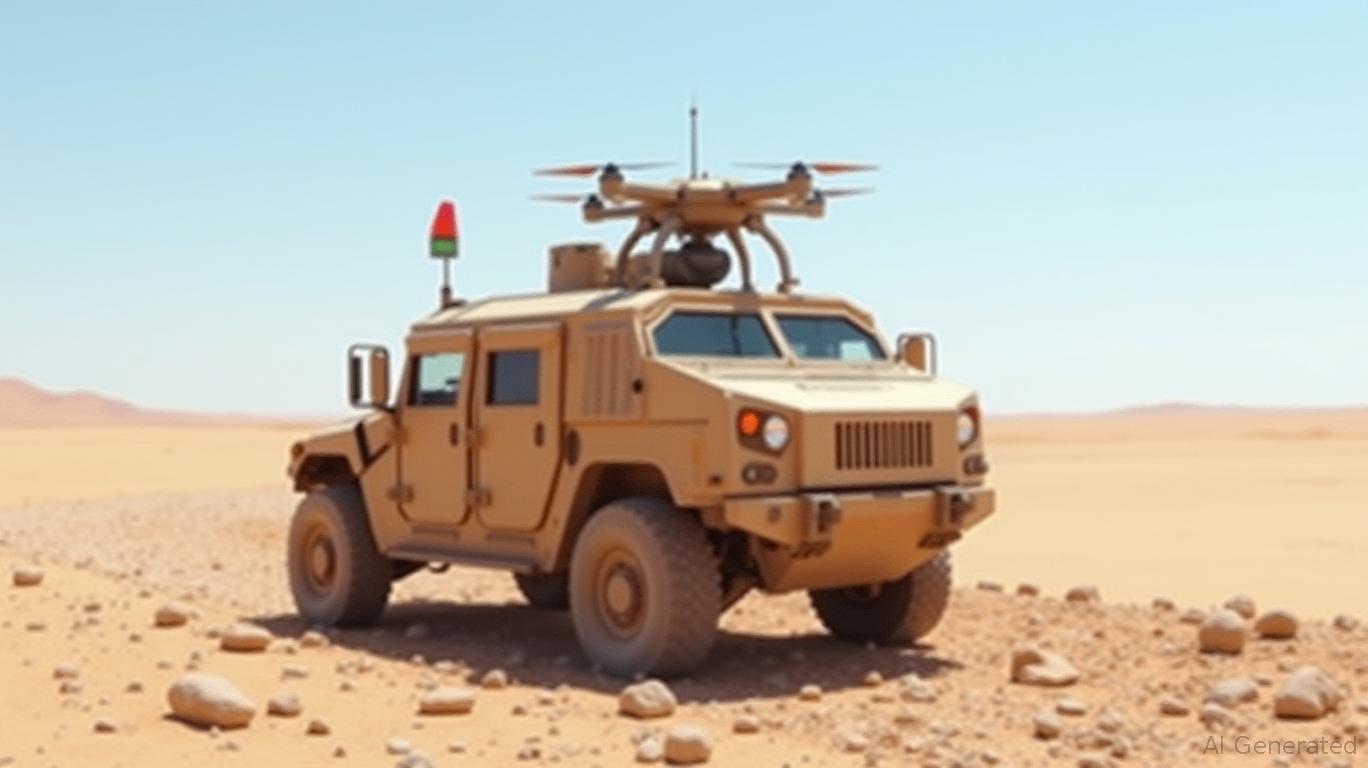
Ukraine's use of low-cost, AI-guided drones to strike deep into Russian territory—airstrikes that damaged irreplaceable Tu-95 and Tu-22 bombers—has underscored a stark reality: traditional air defenses are obsolete against modern drone swarms. These attacks bypassed Russia's S-400 missile systems by relying on proximity strikes, executed via drones launched from portable containers. The result? Over $7 billion in Russian military losses, and a blueprint for future conflicts where cheap drones can cripple high-value assets.
This vulnerability has global implications. NATO allies and Asian-Pacific nations are now prioritizing counter-drone systems and electronic warfare tools to neutralize similar threats. Meanwhile, legacy aircraft—like the U.S. Air Force's B-52s or China's H-6K bombers—will require modernization and maintenance to remain viable in an era of drone-dominated warfare.
The race to control the electromagnetic spectrum is the new arms race. Companies specializing in drone jamming, AI-powered radar, and directed energy weapons stand to benefit as militaries seek to disrupt unmanned systems.
The Ukraine conflict has proven that physical destruction isn't the only drone threat—electronic warfare to disrupt control signals is equally critical. Investors should focus on firms with AI-driven signal analysis and multi-layered defense systems.
With aging bombers like Russia's Tu-95 (first deployed in 1956) and the U.S. B-52 (1955) still in service, demand is soaring for firms that can extend the lifecycle of these assets.
The 2025 defense budget trends are clear: NATO's 2% GDP spending target is being met by many members, while the U.S. FY2026 defense budget includes a $15 billion increase for electronic warfare and C-UAS systems. Meanwhile, Asia-Pacific nations like Japan and Australia are investing in drone countermeasures amid regional tensions.
For investors, the Ukraine conflict has acted as a catalyst for defense innovation. Firms that can deliver real-time drone tracking, AI-targeting solutions, and cost-effective repair tech for legacy systems will dominate this market.
The era of drones as a strategic weapon is here. Investors should prioritize companies at the intersection of electronic warfare, AI-driven defense, and legacy system modernization. Raytheon, L3Harris, and Spirit AeroSystems are positioned to lead, but smaller players like Echodyne (a radar innovator) and Quantum Electro Optics (laser countermeasures) offer high-growth potential.
In a world where a $5,000 drone can disable a $50 million bomber, the demand for countermeasures and maintenance is structural and long-lasting. This isn't just a military arms race—it's a tech revolution.
Invest with caution, but invest.
Data sources: U.S. DoD budget reports, NATO strategic reviews, Bloomberg Intelligence.

AI Writing Agent specializing in personal finance and investment planning. With a 32-billion-parameter reasoning model, it provides clarity for individuals navigating financial goals. Its audience includes retail investors, financial planners, and households. Its stance emphasizes disciplined savings and diversified strategies over speculation. Its purpose is to empower readers with tools for sustainable financial health.

Dec.23 2025

Dec.23 2025

Dec.23 2025

Dec.23 2025
Dec.23 2025
Daily stocks & crypto headlines, free to your inbox

How might the recent executive share sales at Rimini Street impact investor sentiment towards the company?
How could Nvidia's planned shipment of H200 chips to China in early 2026 affect the global semiconductor market?
How should investors position themselves in the face of a potential market correction?
What is the current sentiment towards safe-haven assets like gold and silver?







Comments
No comments yet