
Driving into New Territory: Amazon's Bold Play to Disrupt Automotive and Fuel Retail
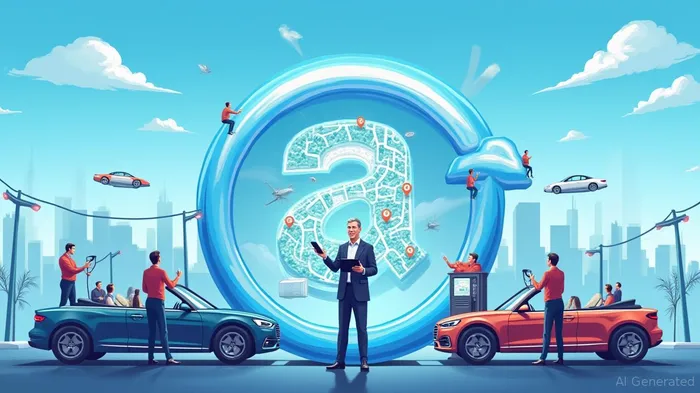
Amazon, the e-commerce titan, has long mastered the art of disruption. Now, it's turning its sights to two of the world's largest and most entrenched industries: automotive retail and fuel distribution. By leveraging its logistical prowess, Prime ecosystem, and data-driven insights, AmazonAMZN-- is positioning itself to redefine how consumers buy cars and refuel them. The question for investors is whether this expansion into “old economy” sectors signals a sustainable new growth frontier—or a costly detour into unfamiliar terrain.
The Automotive Play: Disrupting Dealerships, One Click at a Time
Amazon's foray into automotive began in late 2023 with its partnership with Hyundai Motor Co., launching the Amazon Autos platform. The initiative allows customers in 68 U.S. markets to browse, finance, and schedule pickups for new Hyundai vehicles—all while avoiding the haggling and friction of traditional dealership visits. By adhering to franchise laws, Amazon ensures compliance: purchases are finalized online, but customers must pick up their cars at local dealers, preserving the dealer relationship.
This model offers a win-win: Hyundai gains access to Amazon's 200 million Prime members, while dealers benefit from streamlined processes and a new customer pipeline. Dealers also avoid Amazon taking a cut of vehicle sales, instead paying listing fees and advertising revenue—a structure that could scale to other automakers.
But Amazon's ambitions stretch further. Plans to expand into used cars and additional brands by 2025 could disrupt platforms like Autotrader and Cars.com. Meanwhile, its partnership with AWS to digitize Hyundai's manufacturing and supply chain operations—along with Alexa integration in future Hyundai vehicles—hints at deeper synergies.
Fuel Retail: Prime Benefits as a Hook
Amazon's entry into fuel retail is subtler but equally strategic. Since 2023, Prime members have received 10 cents per gallon discounts at 7,000 BPBP--, Amoco, and AM/PM stations—a move to cement loyalty in a category where consumers spend over $400 billion annually in the U.S. alone.
The next phase, set for 2025, involves EV charging discounts through BP's network, BP Pulse. This aligns with Amazon's broader push to compete in discount retail, such as its planned “Low-Cost Store” targeting price-sensitive consumers. While not directly tied to fuel, this initiative underscores Amazon's willingness to innovate across verticals, leveraging its global supply chains and pricing power.
Market Trends Favoring Amazon's Strategy
The automotive industry is ripe for disruption. According to Amazon's 2025 report, EV buyers spend 241 days researching purchases, with 88% of EU consumers switching brands—a trend Amazon can exploit through its data-rich platform. Mobile-first shopping (75% of EV research occurs on phones) and streaming's growing influence (EV buyers spend double on content like Prime Video) position Amazon's ecosystem as a natural fit.
Moreover, Amazon's logistics network—handling over 10 billion items annually—could support future ventures like EV battery recycling or fleet management for ride-sharing companies.
Risks and Challenges
Regulatory hurdles loom large. State laws prohibiting direct-to-consumer auto sales require Amazon to navigate complex partnerships, while competition from Tesla's direct model and traditional dealers remains fierce. Execution risks also exist: scaling used-car listings without compromising quality, and integrating disparate dealer systems, could strain Amazon's resources.
The fuel sector poses its own challenges. BP's discounts may attract drivers, but EV adoption's slow pace—only 10% of U.S. vehicles are electric—means Amazon's EV charging benefits may not pay off immediately.
Investment Implications
Amazon's automotive and fuel plays are high-risk, high-reward bets. If successful, they could add billions in recurring revenue: auto retail is a $1.3 trillion U.S. market, while fuel retail is similarly vast. Amazon's Prime membership growth—now at 260 million globally—is a key lever to monetize these ventures.
Investors should monitor two key metrics:
1. Amazon Autos' expansion speed: Adding 5+ automakers by 2025 would signal scalability.
2. Fuel partnership penetration: BP's EV charging network growth and Prime's retention rates will determine long-term value.
Conclusion
Amazon's entry into automotive and fuel retail is less about today's profits and more about tomorrow's dominance. By embedding itself in high-margin, high-frequency industries, Amazon is ensuring its Prime ecosystem remains indispensable. While execution risks are real, the company's track record of turning disruptions into multibillion-dollar businesses—from AWS to Prime Video—suggests this could be another chapter in its long game. For investors, Amazon's automotive and fuel plays are a bet on its ability to redefine markets once again. The question isn't whether it will succeed, but how long it will take—and whether the market is patient enough to wait.
Investment Advice: Amazon's stock (AMZN) has outperformed competitors like Ford (F) and ExxonXOM-- (XOM) over the past decade. For a bullish stance, consider a gradual build in exposure if AMZNAMZN-- dips below $100/share—a level that tests its post-recession lows. For the cautious, wait until Amazon reports measurable traction in dealer partnerships or fuel revenue growth. Either way, this is a story to watch closely.
Amazon's next move could redefine the road ahead.

Delivering real-time insights and analysis on emerging financial trends and market movements.
Latest Articles
Stay ahead of the market.
Get curated U.S. market news, insights and key dates delivered to your inbox.
AInvest
PRO
AInvest
PRO



Comments
No comments yet