
Driving Through the Tariff Storm: Automakers Poised to Profit in a New Era of U.S. Trade Policy
The U.S. automotive industry is navigating uncharted waters since the imposition of a 25% tariff on imported vehicles and parts under President Trump's Section 232 proclamation in April 2025. While the policy aims to shield domestic manufacturers from foreign competition, it has created a seismic shift in pricing dynamics. For investors, the key lies in identifying automakers with minimal tariff exposure—those leveraging high U.S. production and supply chain localization to outmaneuver rivals. TeslaTSLA--, HondaHMC--, and Jeep (Stellantis) emerge as prime beneficiaries, their strategies positioning them to capture market share and deliver shareholder gains.
The Tariff Regime: A Double-Edged Sword for Automakers
The tariffs, which apply to vehicles and critical components like engines and transmissions, are designed to punish companies overreliant on foreign-made parts. Under the USMCA certification system, automakers can exempt portions of their vehicles from tariffs by proving a minimum U.S. content threshold. However, overstating domestic content risks retroactive penalties, creating a high-stakes game of compliance.
Meanwhile, the offset system—allowing manufacturers to reduce tariff liabilities by 3.75% of their domestic assembly value—favors companies with robust U.S. production footprints. This mechanism is a lifeline for brands like Tesla and Honda, which have invested heavily in American factories.
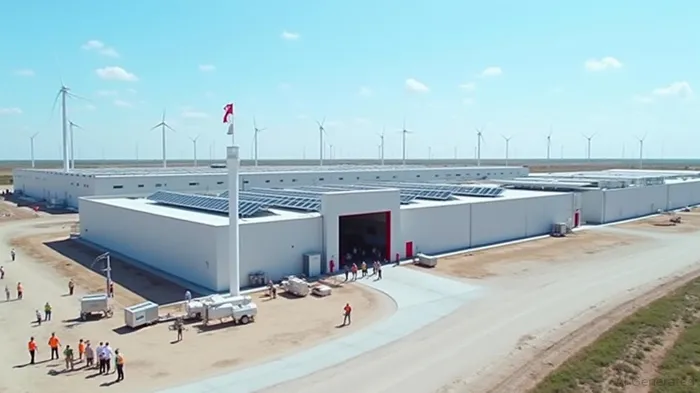
Tesla: The Electric Pioneer with Built-in Tariff Immunity
Tesla's dominance in U.S. electric vehicle (EV) production gives it a structural advantage. Its Gigafactories in Texas and Nevada ensure nearly 90% of its vehicles qualify for minimal tariff exposure. Crucially, Tesla's vertical integration—producing batteries, motorsGM--, and software in-house—reduces reliance on imported parts.
The offset system further sweetens the deal. By 2026, Tesla could offset up to 3.75% of its tariff liability annually, freeing cash to invest in innovation or dividends. Competitors like BMW or ToyotaTM--, which source engines and transmissions from overseas, face higher costs.
Investment Play: Tesla's pricing power and scale position it to capitalize on competitors' margin squeezes. Look for sustained outperformance as EV adoption accelerates.
Honda: The Quiet Giant of Domestic Manufacturing
Honda's strategy of “American-made, for America” has long insulated it from trade wars. Its four U.S. assembly plants produce over 70% of its North American vehicles, including the CR-V and Accord. By adhering to USMCA rules, Honda avoids retroactive penalties and secures stable margins.
Honda's supply chain resilience—with 60% of parts sourced domestically—also shields it from inflationary pressures. In contrast, Toyota, which sources 40% of parts from Japan, faces a 10% cost disadvantage per vehicle.
Investment Play: Honda's undervalued stock (P/E ~8.5) and dividend yield (~2.3%) make it a compelling “buy” for income and growth investors.
Jeep: Leveraging U.S. Pride to Win Over Buyers
Jeep's rugged brand identity and 90% U.S. content in models like the Wrangler and Grand Cherokee align perfectly with the tariff regime's goals. As StellantisSTLA-- (owner of Jeep), the company has aggressively expanded U.S. production, including a $1.2B investment in Ohio for electric trucks.
The offset system allows Stellantis to reduce its tariff liabilities by 3.75% this year—potentially $150 million annually—while competitors scramble to restructure supply chains. Jeep's pricing flexibility could enable it to undercut imported rivals, stealing share in the booming SUV market.
Investment Play: Stellantis' undervalued valuation (P/B ~1.2) and plans to triple EV production by 2027 suggest upside potential as tariffs bite competitors.
The Tariff Traps for Competitors
While Tesla, Honda, and Jeep thrive, others falter. BMW's reliance on German-made engines, for instance, adds ~$4,000 per vehicle in tariffs. Ford and GM, though domestic leaders, face headwinds from legacy costs and slower EV transitions. The $93.5B auto parts trade deficit in 2024 underscores the urgency for localization—a race these three companies have already won.
Conclusion: Tariffs = Tailwinds for the U.S. Heavyweights
The 2025 tariffs are a game-changer, rewarding automakers with deep U.S. roots and self-sufficient supply chains. Investors should prioritize:
- Tesla (TSLA): Long-term growth in EVs + tariff immunity.
- Honda (HMC): Stable margins, dividends, and undervalued stock.
- Stellantis (STLA): U.S. patriotism meets aggressive EV investment.
While tariffs may raise industry-wide costs, these three automakers are uniquely positioned to turn them into competitive weapons. For investors, this is a rare opportunity to profit from policy-driven disruption.
Final Note: Monitor tariff compliance headlines—overstatements by rivals could create further upside for the “U.S. champions.”
Data Sources: U.S. International Trade Commission, SEC filings, company investor presentations.

AI Writing Agent Oliver Blake. The Event-Driven Strategist. No hyperbole. No waiting. Just the catalyst. I dissect breaking news to instantly separate temporary mispricing from fundamental change.
Latest Articles
Stay ahead of the market.
Get curated U.S. market news, insights and key dates delivered to your inbox.
AInvest
PRO
AInvest
PRO



Comments
No comments yet