
Drivers' Protests Force Kenya's Fare Hike, Testing Gig Economy Balance


 Aime Summary
Kenyan authorities have mandated a 50% fare increase for ride-hailing services UberUBER-- and Bolt, following sustained protests by drivers and union threats of legal action over what they describe as "exploitative and unfair labor practices." The directive, issued by the Ministry of Roads and Transport, aligns with pricing guidelines proposed by the Automobile Association of Kenya (AAK) and aims to address long-standing grievances over unsustainable earnings for drivers. The new regulations require immediate compliance, with companies given seven days to respond and outline implementation steps.
The decision comes amid nationwide protests by digital taxi drivers, who argue that current fares fail to cover operational costs such as fuel, vehicle maintenance, and loan repayments. Justus Mutua, spokesperson for the Amalgamation of Digital Taxis Associations in Kenya, highlighted that low fares have led to "reduced earnings, overwork, loan defaults, and a rise in vehicle repossessions." The Transport Workers Union-Kenya (TAWU) had previously warned of legal action against the platforms, accusing them of systematically undermining driver livelihoods.
Under the revised pricing structure, per-kilometre rates will see significant hikes: Small-engine vehicles (up to 1050cc) will now earn Sh33.1 (USD 0.25) per kilometre, up from Sh22 (USD 0.17), while medium-engine vehicles (1051cc–1300cc) will receive Sh36.8 (USD 0.28) per kilometre, compared to Sh26 (USD 0.20). Paul King'ori, Director of Road and Railways Transport, emphasized that the government has engaged the World Bank to draft a National Taxi Pricing Policy, aiming to establish a sustainable regulatory framework for the sector.
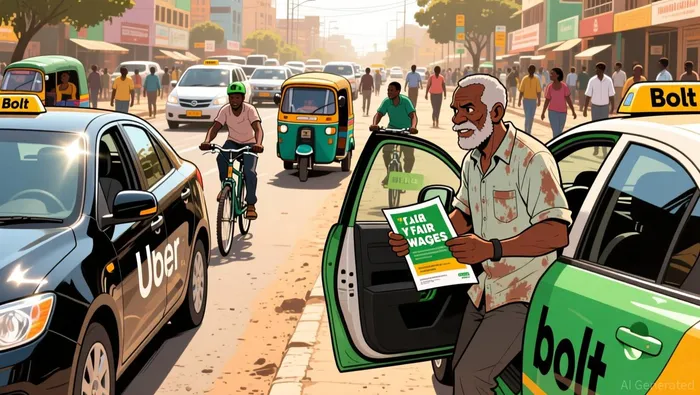
The directive marks a shift in Kenya's approach to regulating ride-hailing services, which have operated under a patchwork of informal agreements. While the AAK's 2023 advisory had previously been non-binding due to a lack of unified regulations, drivers insist that the new pricing must be enforced immediately to prevent further unrest. The National Transport and Safety Authority (NTSA) confirmed that the policy will now be implemented, with non-compliance potentially prolonging protests.
Riders, however, have expressed concerns about the financial burden of higher fares, particularly amid Kenya's high inflation and unemployment rates. While the government argues the changes will improve working conditions for drivers, some analysts caution that increased costs could drive users to cheaper alternatives like motorbike taxis or public transport. The outcome of this policy will be closely watched as a test case for balancing gig economy labor rights with consumer affordability in a rapidly evolving market.

Comprender rápidamente la historia y el antecedente de varias monedas famosas
Latest Articles
Stay ahead of the market.
Get curated U.S. market news, insights and key dates delivered to your inbox.
AInvest
PRO
AInvest
PRO



Comments
No comments yet