
Drift Protocol Suffers $285M Exploit as Security Measures Face Scrutiny
 Aime Summary
Drift Protocol, a Solana-based DeFi platform, suffered a $285 million exploit on April 1, 2026, as an attacker manipulated oracles and compromised administrative controls.
The attacker created a fraudulent token, CarbonVote Token ($CVT), and used durable nonce accounts to pre-sign transactions weeks in advance, enabling unauthorized access to Drift's admin controls.
Stolen assets were transferred to Ethereum, with blockchain analytics firms like Elliptic identifying patterns consistent with North Korean state-sponsored cyber operations.
Drift Protocol, a major perpetual trading platform on SolanaSOL--, was compromised on April 1, 2026, with deposits and withdrawals suspended as a result. The incident involved weeks of preparation, during which the attacker created a fake token and manipulated oracle systems to inflate withdrawal limits.
The attack bypassed platform security through compromised administrator keys, allowing the attacker to list the worthless $CVT token and use it as collateral to systematically drain real assets from the protocol's vaults.
After draining the funds, the attacker moved the stolen assets to Ethereum using a cross-chain bridge, splitting the funds across multiple wallets to avoid detection. The DRIFT token price dropped over 21% following the incident, amplifying broader fear in the crypto market.
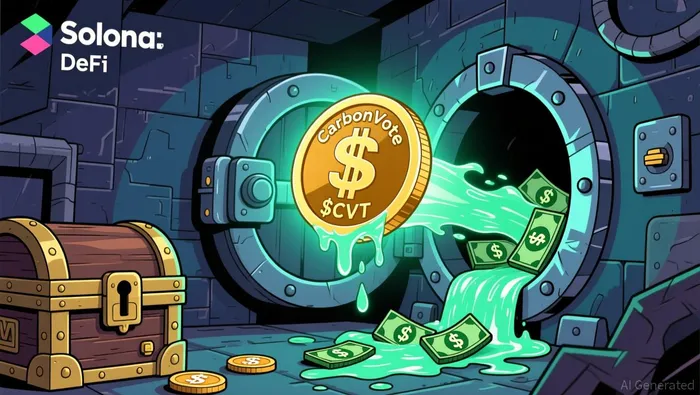
The exploit did not result from a smart contract flaw but rather compromised multi-signature controls and admin key leaks. This highlights growing human-centric vulnerabilities in DeFi security, such as social engineering and phishing.
Elliptic, a blockchain analytics firm, identified attack patterns similar to those used by North Korean groups, particularly the Lazarus Group. The attack raised concerns about the increasing threat of state-backed attacks to DeFi protocols and the need for improved security measures.
What Caused the Exploit?
The attack was premeditated and involved weeks of preparation, including the creation of a fake token and manipulation of oracles to inflate withdrawal limits. The attacker used durable nonce accounts to pre-sign transactions, ensuring unauthorized access to admin controls. This allowed for the systematic draining of real assets such as $USDC and $USDT.
The attack was not the result of any smart contract bug but rather a compromise of multi-signature and admin key security measures. This suggests a failure in key management and operational protocols rather than a flaw in the platform's code.
Who Might Be Behind the Attack?
Blockchain analytics firm Elliptic identified patterns in the attack consistent with North Korean state-sponsored operations, particularly those attributed to the Lazarus Group. Ledger CTO Charles Guillemet suggested the attack resembled tactics used by North Korea-linked threat actors, though no formal attribution has been confirmed.
The connection between the Drift Protocol exploit and North Korean hackers raises concerns about the growing sophistication of state-backed cyber operations. If confirmed, this incident could trigger compliance and sanctions-related concerns for exchanges and bridges involved in the movement of the stolen funds.
What Are the Implications for the DeFi Sector?
The Drift Protocol hack highlights the vulnerabilities in DeFi security, particularly the risks associated with multi-signature and admin key management. The incident underscores the need for robust protocol safeguards, including thorough audits of multisig structures and vault models.
The attack also emphasizes the need for improved blockchain analysis capabilities and regulatory responses to mitigate the risks of sophisticated cyber attacks. DeFi protocols must implement stronger monitoring systems and operational security measures to prevent similar incidents in the future.
The broader implications for the DeFi sector include increased scrutiny of security practices and a potential shift toward more centralized control mechanisms to prevent unauthorized access and manipulation. This incident may lead to a reevaluation of trust models and the adoption of more secure key management practices across DeFi platforms.

Blending traditional trading wisdom with cutting-edge cryptocurrency insights.
Latest Articles
Stay ahead of the market.
Get curated U.S. market news, insights and key dates delivered to your inbox.


AInvest
PRO
AInvest
PRO



Comments
No comments yet