
Dredging Beyond Depths: Sustainability and Restoration in Coastal and Riverbed Management
ByAinvest
Saturday, Jul 12, 2025 11:57 am ET2min read
WM--
One of the key areas where dredging companies are making a difference is in waste management. Dredged sediments (DS) are a growing concern in global waste management, particularly in port and harbor maintenance operations [1]. These sediments often contain heavy metals, nutrients, and organic pollutants, making their disposal a challenge. Traditional disposal methods, such as landfilling and ocean disposal, are increasingly restricted by environmental regulations and public concerns [2].
To address this challenge, dredging companies are exploring innovative solutions. One promising approach is the conversion of contaminated DS into sintered artificial aggregates (AAs) by adding recycled glass waste. This process involves sintering the DS at high temperatures (1150 °C) with a 10% addition of glass waste. The resulting AAs exhibit excellent engineering properties, including high compressive strength (20 MPa), low water absorption (3%), and minimal porosity (4.67 %), making them suitable for use in construction [2].
The environmental benefits of this approach are substantial. The leaching tests and the Community Bureau of Reference Sequential Extraction Procedure (BCR-SEP) confirmed the low leachability of toxic metals under acidic and marine conditions. Additionally, the pollution toxicity and human health risk indices demonstrated that AAs are non-toxic and safe for reuse. Although the production of AAs is energy-intensive, its carbon footprint is offset by the avoided impacts from landfill and ocean disposal [2].
Beyond waste management, dredging companies are also contributing to environmental restoration. For instance, the Upper Barataria Marsh Creation Project, led by NOAA and partners, is a 1,200-acre marsh creation project in Louisiana’s Barataria Basin. This project aims to restore land lost from the Deepwater Horizon oil spill, support healthier fisheries, and enhance storm protection [3]. The project's completion and the commencement of monitoring activities underscore the importance of long-term sustainability and adaptive management strategies in large-scale restoration efforts.
In conclusion, dredging companies are not just deepening harbors and riverbeds; they are also recycling and repurposing materials, restoring eroded beaches, and reclaiming damaged wetlands. These activities support both economic growth and environmental sustainability, positioning dredging as a vital player in the circular economy.
References:
[1] Chiang Mai News in English | Another inspection of the Ping River dredging works today, July 9 per GPT-4o
[2] Dredging is essential for maintaining ports worldwide, but disposing of contaminated dredged sediments (DS) containing toxic metals poses a major environmental challenge. Conventional disposal methods, such as landfilling and ocean disposal, are increasingly restricted by environmental regulations and public concerns. This study offers a sustainable waste management solution by converting hazardous DS into sintered artificial aggregates (AAs) by adding recycled glass waste.
[3] Upper Barataria Marsh Creation Project NOAA and partners are leading a massive 1,200-acre marsh creation project in Louisiana’s Barataria Basin.
Dredging companies perform various tasks beyond deepening harbors and riverbeds, including recycling and repurposing dredged materials, restoring eroded beaches, and reclaiming damaged wetlands. These activities support domestic and global trade, as well as environmental restoration.
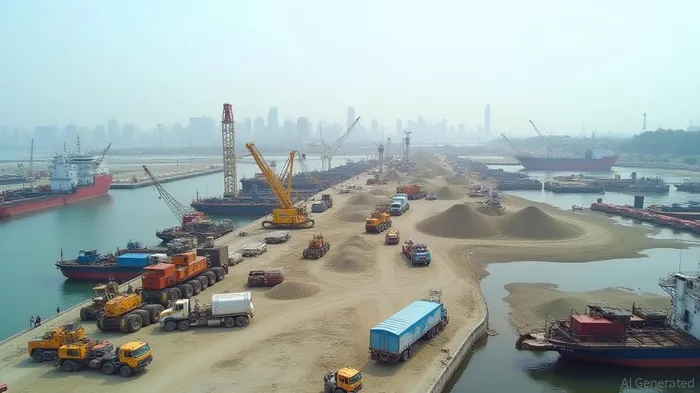
Dredging companies play a pivotal role in maintaining navigable waterways and enhancing port infrastructure, but their responsibilities extend beyond these primary functions. They are increasingly involved in recycling and repurposing dredged materials, restoring eroded beaches, and reclaiming damaged wetlands. These activities not only support domestic and global trade but also contribute to environmental restoration, making dredging a multifaceted industry with significant economic and ecological impacts.One of the key areas where dredging companies are making a difference is in waste management. Dredged sediments (DS) are a growing concern in global waste management, particularly in port and harbor maintenance operations [1]. These sediments often contain heavy metals, nutrients, and organic pollutants, making their disposal a challenge. Traditional disposal methods, such as landfilling and ocean disposal, are increasingly restricted by environmental regulations and public concerns [2].
To address this challenge, dredging companies are exploring innovative solutions. One promising approach is the conversion of contaminated DS into sintered artificial aggregates (AAs) by adding recycled glass waste. This process involves sintering the DS at high temperatures (1150 °C) with a 10% addition of glass waste. The resulting AAs exhibit excellent engineering properties, including high compressive strength (20 MPa), low water absorption (3%), and minimal porosity (4.67 %), making them suitable for use in construction [2].
The environmental benefits of this approach are substantial. The leaching tests and the Community Bureau of Reference Sequential Extraction Procedure (BCR-SEP) confirmed the low leachability of toxic metals under acidic and marine conditions. Additionally, the pollution toxicity and human health risk indices demonstrated that AAs are non-toxic and safe for reuse. Although the production of AAs is energy-intensive, its carbon footprint is offset by the avoided impacts from landfill and ocean disposal [2].
Beyond waste management, dredging companies are also contributing to environmental restoration. For instance, the Upper Barataria Marsh Creation Project, led by NOAA and partners, is a 1,200-acre marsh creation project in Louisiana’s Barataria Basin. This project aims to restore land lost from the Deepwater Horizon oil spill, support healthier fisheries, and enhance storm protection [3]. The project's completion and the commencement of monitoring activities underscore the importance of long-term sustainability and adaptive management strategies in large-scale restoration efforts.
In conclusion, dredging companies are not just deepening harbors and riverbeds; they are also recycling and repurposing materials, restoring eroded beaches, and reclaiming damaged wetlands. These activities support both economic growth and environmental sustainability, positioning dredging as a vital player in the circular economy.
References:
[1] Chiang Mai News in English | Another inspection of the Ping River dredging works today, July 9 per GPT-4o
[2] Dredging is essential for maintaining ports worldwide, but disposing of contaminated dredged sediments (DS) containing toxic metals poses a major environmental challenge. Conventional disposal methods, such as landfilling and ocean disposal, are increasingly restricted by environmental regulations and public concerns. This study offers a sustainable waste management solution by converting hazardous DS into sintered artificial aggregates (AAs) by adding recycled glass waste.
[3] Upper Barataria Marsh Creation Project NOAA and partners are leading a massive 1,200-acre marsh creation project in Louisiana’s Barataria Basin.
Stay ahead of the market.
Get curated U.S. market news, insights and key dates delivered to your inbox.
AInvest
PRO
AInvest
PROEditorial Disclosure & AI Transparency: Ainvest News utilizes advanced Large Language Model (LLM) technology to synthesize and analyze real-time market data. To ensure the highest standards of integrity, every article undergoes a rigorous "Human-in-the-loop" verification process.
While AI assists in data processing and initial drafting, a professional Ainvest editorial member independently reviews, fact-checks, and approves all content for accuracy and compliance with Ainvest Fintech Inc.’s editorial standards. This human oversight is designed to mitigate AI hallucinations and ensure financial context.
Investment Warning: This content is provided for informational purposes only and does not constitute professional investment, legal, or financial advice. Markets involve inherent risks. Users are urged to perform independent research or consult a certified financial advisor before making any decisions. Ainvest Fintech Inc. disclaims all liability for actions taken based on this information. Found an error?Report an Issue




Comments
No comments yet