
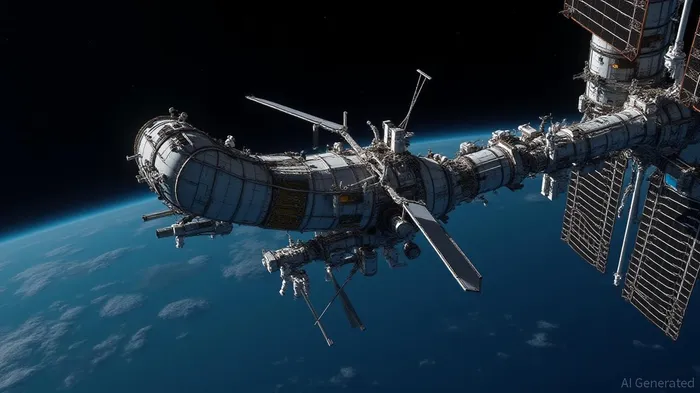
Dragon is docked with Space Station
Dragon is docked with Space Station
SpaceX Crew-12 Successfully Docks with International Space Station, Restoring Full Crew Capacity
On February 14, 2026, SpaceX’s Crew Dragon capsule Freedom docked with the International Space Station (ISS) at 3:15 p.m. EST (2015 GMT), completing a 34-hour journey to restore the orbiting laboratory's crew to seven members. The mission, part of NASA’s Commercial Crew Program, underscores the agency’s reliance on private-sector partnerships to reduce costs and maintain continuous human presence in low Earth orbit according to mission reports.
The Crew-12 astronauts—NASA’s Jessica Meir (commander) and Jack Hathaway (pilot), ESA’s Sophie Adenot, and Roscosmos’ Andrey Fedyaev—launched from Cape Canaveral on February 13 aboard a Falcon 9 rocket. Their arrival follows an unplanned reduction in ISS staffing after the Crew-11 mission returned to Earth in January due to a medical evacuation, the first of its kind in the station's 24-year history. The extended gap in crew size highlighted operational risks and potential cost overruns associated with unexpected mission adjustments.
The docking event aligns with NASA’s strategy to leverage commercial providers like SpaceX for routine crew rotations, a model that has significantly reduced per-mission expenses compared to earlier reliance on Russian Soyuz spacecraft. The Crew Dragon’s automated docking system and reusable Falcon 9 booster further contribute to cost efficiency, a critical factor as NASA shifts focus to deep-space exploration initiatives like Artemis.
Financial stakeholders may note the broader implications of sustained ISS operations, including international collaboration costs and the economic value of microgravity research. The mission also reflects the growing role of multinational partnerships, with contributions from NASA, ESA, and Roscosmos, which share development and operational expenses.
Hatch opening between the Dragon and the ISS’s Harmony module is scheduled for 5 p.m. EST, followed by a welcome ceremony. The Crew-12 mission is expected to last eight months, extending beyond the typical six-month rotation, potentially influencing future budgetary planning for crewed missions.
This successful docking reinforces the reliability of commercial crew transportation, a cornerstone of NASA’s long-term strategy to balance cost, safety, and scientific output in human spaceflight.
Stay ahead of the market.
Get curated U.S. market news, insights and key dates delivered to your inbox.


AInvest
PRO
AInvest
PRO



Comments
No comments yet