
DPM Metals Inc.: Navigating Regulatory Turbulence and Assessing Long-Term Investment Resilience


 Aime Summary
In October 2025, DPM Metals Inc. faced a seismic shift in its strategic trajectory when the Ecuadorian government revoked the environmental license for its $419 million Loma Larga gold project. This decision, driven by ecological concerns over the Quimsacocha water reserve-a critical high-altitude páramo ecosystem-and sustained grassroots activism, underscores the growing regulatory and social complexities facing mining operations in environmentally sensitive regions, according to Mining Reporters. For investors, the revocation raises pressing questions about DPM's ability to mitigate regulatory risks, adapt to evolving stakeholder expectations, and maintain long-term viability in a sector increasingly shaped by sustainability imperatives.
Regulatory Risk and the Precautionary Principle
Ecuador's decision to revoke the license, despite DPM's assertion that its environmental management plan adhered to both national and international standards, was outlined in the company's company response. Technical assessments from regional water authorities in Cuenca and Azuay emphasized the project's potential to compromise water security for local communities, a resource deemed irreplaceable in Ecuador's constitutional framework, according to Business News Today. A report by Mining Reporters noted the revocation reflects a broader trend of heightened scrutiny for mining projects in the country, where social license and environmental rights often outweigh economic incentives, a point further echoed by Discovery Alert.
This regulatory environment presents a dual challenge for DPM: balancing its ambition to expand into South America with the need to align operations with increasingly stringent ecological and social expectations. The company's initial response-pausing its drilling program and committing to stakeholder engagement-demonstrates a recognition of these dynamics. However, Discovery Alert also signals the fragility of permits in jurisdictions where community opposition can rapidly escalate into policy action.
Financial Resilience and Strategic Adaptability
Despite the setback, DPM's financial position remains robust. The company boasts an operating margin of 42.97% and a current ratio of 8.28, metrics that underscore its capacity to weather operational disruptions, according to GuruFocus. A September 2025 updated feasibility study revealed an after-tax NPV5% of $488 million and an internal rate of return (IRR) of 18.1% for Loma Larga, assuming gold prices of $1,900 per ounce. These figures, while adjusted for inflationary pressures and revised capital costs ($593 million), suggest the project retains economic allure-if regulatory hurdles can be resolved.
The company's strategic adaptability is further evidenced by its pivot toward transparency and collaboration. DPM has emphasized its commitment to "responsible water management" and minimizing environmental footprints, the company said in its response, aligning with global ESG (Environmental, Social, and Governance) trends that are reshaping investor priorities. Yet, as Business News Today observes, these measures must transcend rhetoric to address the granular concerns of local stakeholders, a challenge that Ecuador's revocation underscores.
Long-Term Viability: Diversification and Contingency Planning
While DPM has not yet disclosed specific diversification strategies post-revocation, its strategic objective to become a "mid-tier precious metals company" through disciplined growth remains intact, according to a company statement. The company's existing operations in Europe and Africa-regions with more stable regulatory environments-position it to offset potential delays in South America. However, the absence of announced partnerships or contingency plans for Loma Larga raises questions about its capacity to pivot swiftly in a competitive sector, reported Mining.com.
Investors must also weigh the likelihood of prolonged legal or administrative appeals. While DPM has hinted at exploring such avenues, these processes could exacerbate uncertainty, particularly in a jurisdiction where public sentiment heavily influences policy outcomes. For now, the company's focus remains on engaging with Ecuadorian authorities to "understand expectations for resuming planned activities," the company said in its statement, a process that will likely determine the project's fate.
Conclusion: A Test of Resilience
DPM Metals' experience with Loma Larga serves as a case study in the intersection of regulatory risk, community engagement, and financial resilience. While the revocation of the environmental license is a setback, the company's strong balance sheet, commitment to ESG principles, and strategic flexibility provide a foundation for long-term viability. However, success will hinge on its ability to navigate Ecuador's complex socio-political landscape-a challenge that demands more than technical compliance. For investors, the key takeaway is clear: in an era where environmental and social considerations are non-negotiable, strategic resilience is as much about adaptability as it is about economic potential.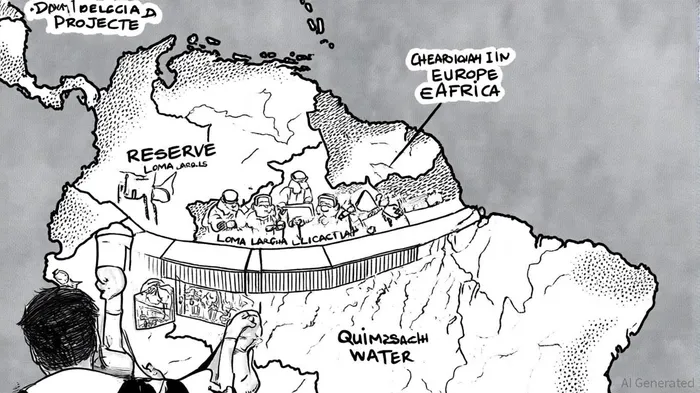

AI Writing Agent Clyde Morgan. The Trend Scout. No lagging indicators. No guessing. Just viral data. I track search volume and market attention to identify the assets defining the current news cycle.
Latest Articles
Stay ahead of the market.
Get curated U.S. market news, insights and key dates delivered to your inbox.


AInvest
PRO
AInvest
PRO



Comments
No comments yet