
The Dow's Volatile Crossroads: Tariffs, Leadership, and Fed Uncertainty
The Dow Jones Industrial Average’s nine-day winning streak—its longest in nearly two decades—came to an abrupt end on May 5, 2025, as investors grappled with a perfect storm of trade policy risks, leadership transitions, and Federal Reserve uncertainty. The index dropped 0.2% to 41,218.83, erasing gains fueled by strong earnings and tariff optimism, and underscoring how fragile the recovery remains in an era of geopolitical and economic turbulence.
The Streak Ends—But Why?
The Dow’s losing streak followed nine consecutive sessions of gains, driven by a rare confluence of factors: robust corporate earnings, hopes of U.S. tariff relief under the Trump administration, and a belief that the Federal Reserve might cut interest rates to offset economic headwinds. Yet by May 5, optimism crumbled.
- Trade Policy Uncertainty: A surprise 100% tariff on foreign-produced films—targeting tax incentives for U.S. productions abroad—sparked panic in media and tech sectors. While not directly impacting Dow components, companies like Disney (DIS) and Netflix (NFLX) fell 1% and 3%, respectively, as investors worried about broader supply chain disruptions.
- Fed’s Delicate Balancing Act: The central bank’s May 6 policy meeting loomed large. Fed Chair Jerome Powell emphasized the need for “more clarity on how tariffs are feeding through the economy” before adjusting rates, leaving markets split on whether a cut would materialize.
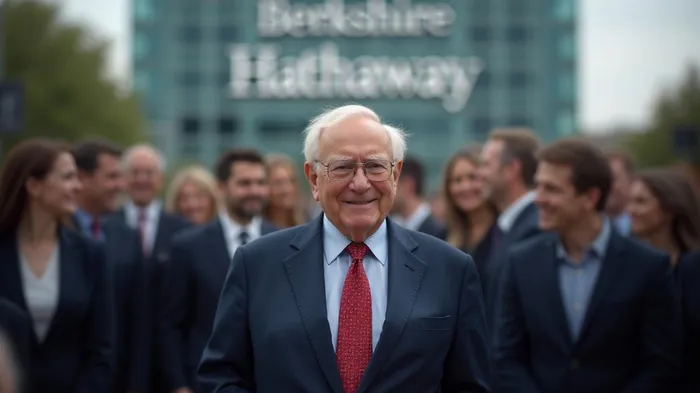
Berkshire Hathaway’s Leadership Transition: A Test of Stability
Warren Buffett’s announcement on May 5—stepping down by year-end after 60 years as Berkshire Hathaway’s CEO—sent shockwaves through markets. The stock fell 3% premarket to $524, erasing earlier gains and briefly pressuring the Dow.
- Investor Psychology: Analysts noted Berkshire’s shares faced critical support levels at $519 and $490, with upside potential only if Greg Abel, his successor, can reassure investors about the conglomerate’s future.
- Sector Impact: The decline highlighted the Dow’s vulnerability to individual component volatility. With Berkshire accounting for nearly 10% of the index’s weight, its stumble underscored how leadership changes at blue-chip firms can ripple across the broader market.
Tariffs and the Energy Tech Divide
While the Fed and Berkshire dominated headlines, the energy and tech sectors revealed deeper fault lines.
- Energy’s Downward Spiral: Crude oil futures fell to $57.40 per barrel—their lowest since 2021—after OPEC+ boosted production. Chevron and Exxon each dropped 2%, reflecting broader sector weakness.
- Tech’s Mixed Signals: Apple cited $900M in tariff-related costs for Q2, dragging its shares down over 2%. Microsoft and Alphabet, however, rose modestly on AI-driven optimism, illustrating how companies are diverging in their resilience to trade pressures.
The Fed’s Crossroads—and What’s Next
The Fed’s decision, expected by mid-May, became a critical pivot point. A rate cut could buoy markets, but analysts warned of risks:
- Inflation Concerns: The 10-year Treasury yield rose to 4.35%, suggesting investors remain divided on whether the Fed should prioritize cooling prices or supporting growth.
- Year-to-Date Performance: The Dow’s 3.1% YTD decline contrasts with the tech-heavy Nasdaq’s 3.9% drop, highlighting how tariff-sensitive sectors are disproportionately bearing the strain.
Conclusion: Navigating the Crossroads
The Dow’s May 5 stumble was more than a technical correction—it was a reckoning with the limits of optimism in an era of escalating trade wars and leadership transitions. Investors now face three critical questions:
- Will the Fed cut rates? With inflation still elevated but economic data mixed, the central bank’s decision could either stabilize markets or deepen uncertainty.
- Can Berkshire’s transition avoid long-term damage? If Abel’s leadership fails to reassure investors, Berkshire’s weight in the index could amplify broader volatility.
- How will tariffs reshape corporate strategies? Firms like Apple, already reeling from $900M in tariff costs, may accelerate reshoring or innovation—moves that could redefine industries.
For now, the Dow’s path remains unclear. But one thing is certain: in 2025, the markets are no longer betting on hope alone. They’re pricing in the cost of doing business in a world where every policy decision—from the Fed to the White House—has become a high-stakes gamble.

Stay ahead of the market.
Get curated U.S. market news, insights and key dates delivered to your inbox.






Comments
No comments yet