
Dow Jumps Over 500 Points As Trump Takes Office: Investor Sentiment Improves, But Greed Index Remains In 'Fear' Zone
Generated by AI AgentTheodore Quinn
Wednesday, Jan 22, 2025 3:12 am ET2min read
BAC--
The Dow Jones Industrial Average (DJIA) surged by over 500 points on Tuesday, January 22, as President Donald Trump began his second term in office. The strong rally was led by the Dow Jones and Smallcap names, with the S&P 500 gauge up almost 1% (Source: 2025-01-22). Investor sentiment improved, but the Fear and Greed Index remained in the 'Fear' zone, indicating a cautious market outlook.
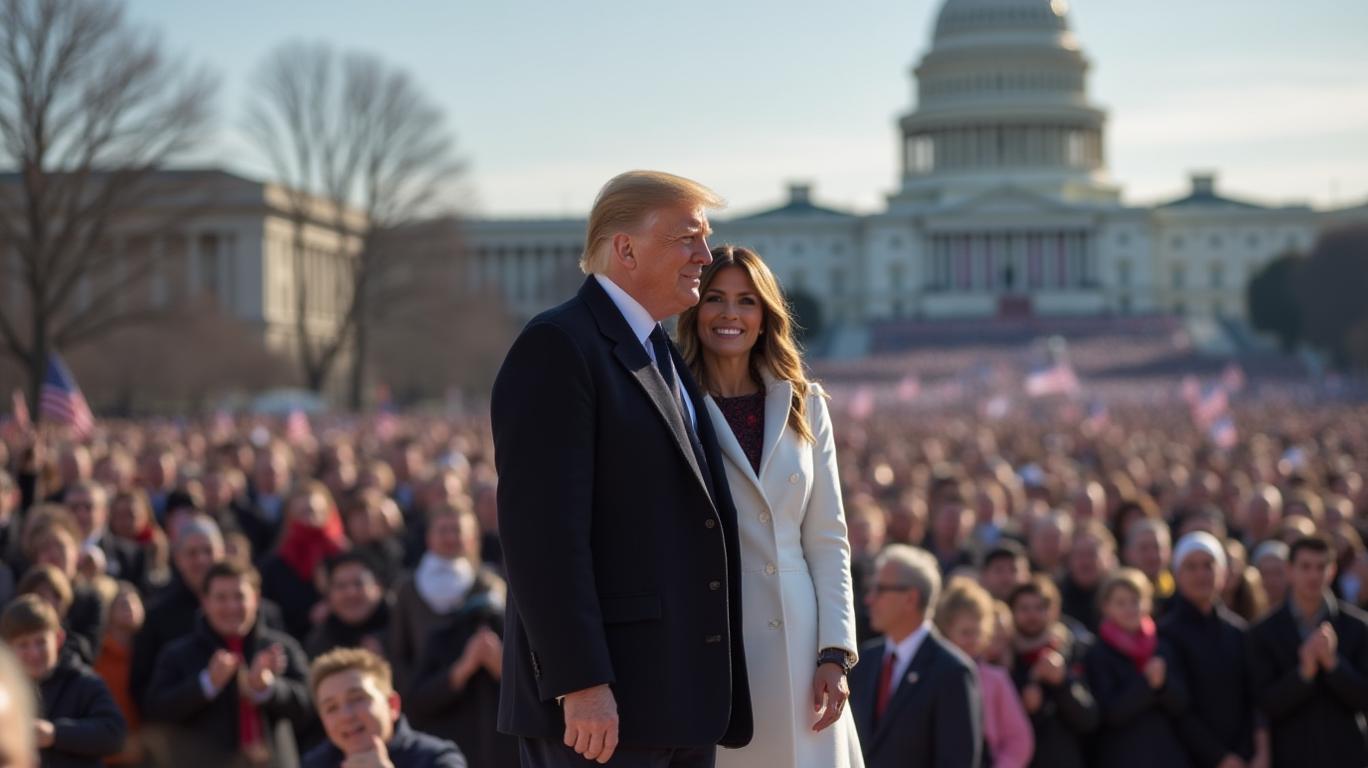
Several factors contributed to the market's positive response to Trump's inauguration:
1. Investment push in artificial intelligence: Trump announced a new investment push in artificial intelligence led by Softbank Group Corp., OpenAI LLC, and Oracle Corp. (Source: 2025-01-22). This initiative boosted investor confidence in tech shares, contributing to the market's positive reaction.
2. Executive orders: Trump's flurry of executive orders, including those focused on space shares and reducing regulations, also helped boost the market (Source: 2025-01-22).
3. Absence of tariffs on China: Despite Trump's protectionist stance during his campaign, he has yet to impose tariffs on China, which has relieved investors and contributed to the market's positive response (Source: 2025-01-22).
4. Historical precedent: The market's initial reaction to Trump's inauguration aligns with historical patterns, as stocks tend to rise during the first few days of a new presidential term (Source: "The Most (and Least) Effective US Presidents, According to Historians").
However, the Fear and Greed Index remained in the 'Fear' zone, indicating that investors are still cautious about the potential economic consequences of Trump's protectionist measures, such as tariffs on steel and aluminum and the trade conflict with China over intellectual property. These measures have been identified as the biggest tail risk 20 times from March 2018 to December 2019 in the Bank of America/Merrill Lynch monthly fund manager survey. Despite the signing of a Phase One trade agreement between the U.S. and China in January 2020, most tariffs remain in place, and trade tensions persist.
Market participants are balancing optimism about potential economic growth under Trump's leadership with concerns about trade tensions and geopolitical risks. On one hand, investors are optimistic about Trump's pro-growth policies, such as tax cuts and deregulation, which have contributed to the strong rally in U.S. markets since his election. On the other hand, investors are concerned about the potential economic consequences of Trump's protectionist measures, such as tariffs on steel and aluminum and the trade conflict with China over intellectual property. These measures have been identified as the biggest tail risk 20 times from March 2018 to December 2019 in the Bank of America/Merrill Lynch monthly fund manager survey. Despite the signing of a Phase One trade agreement between the U.S. and China in January 2020, most tariffs remain in place, and trade tensions persist.
In conclusion, the Dow Jones Industrial Average surged by over 500 points on Tuesday, January 22, as President Donald Trump began his second term in office. Investor sentiment improved, but the Fear and Greed Index remained in the 'Fear' zone, indicating a cautious market outlook. Market participants are balancing optimism about potential economic growth under Trump's leadership with concerns about trade tensions and geopolitical risks.
ORCL--
The Dow Jones Industrial Average (DJIA) surged by over 500 points on Tuesday, January 22, as President Donald Trump began his second term in office. The strong rally was led by the Dow Jones and Smallcap names, with the S&P 500 gauge up almost 1% (Source: 2025-01-22). Investor sentiment improved, but the Fear and Greed Index remained in the 'Fear' zone, indicating a cautious market outlook.
Several factors contributed to the market's positive response to Trump's inauguration:
1. Investment push in artificial intelligence: Trump announced a new investment push in artificial intelligence led by Softbank Group Corp., OpenAI LLC, and Oracle Corp. (Source: 2025-01-22). This initiative boosted investor confidence in tech shares, contributing to the market's positive reaction.
2. Executive orders: Trump's flurry of executive orders, including those focused on space shares and reducing regulations, also helped boost the market (Source: 2025-01-22).
3. Absence of tariffs on China: Despite Trump's protectionist stance during his campaign, he has yet to impose tariffs on China, which has relieved investors and contributed to the market's positive response (Source: 2025-01-22).
4. Historical precedent: The market's initial reaction to Trump's inauguration aligns with historical patterns, as stocks tend to rise during the first few days of a new presidential term (Source: "The Most (and Least) Effective US Presidents, According to Historians").
However, the Fear and Greed Index remained in the 'Fear' zone, indicating that investors are still cautious about the potential economic consequences of Trump's protectionist measures, such as tariffs on steel and aluminum and the trade conflict with China over intellectual property. These measures have been identified as the biggest tail risk 20 times from March 2018 to December 2019 in the Bank of America/Merrill Lynch monthly fund manager survey. Despite the signing of a Phase One trade agreement between the U.S. and China in January 2020, most tariffs remain in place, and trade tensions persist.
Market participants are balancing optimism about potential economic growth under Trump's leadership with concerns about trade tensions and geopolitical risks. On one hand, investors are optimistic about Trump's pro-growth policies, such as tax cuts and deregulation, which have contributed to the strong rally in U.S. markets since his election. On the other hand, investors are concerned about the potential economic consequences of Trump's protectionist measures, such as tariffs on steel and aluminum and the trade conflict with China over intellectual property. These measures have been identified as the biggest tail risk 20 times from March 2018 to December 2019 in the Bank of America/Merrill Lynch monthly fund manager survey. Despite the signing of a Phase One trade agreement between the U.S. and China in January 2020, most tariffs remain in place, and trade tensions persist.
In conclusion, the Dow Jones Industrial Average surged by over 500 points on Tuesday, January 22, as President Donald Trump began his second term in office. Investor sentiment improved, but the Fear and Greed Index remained in the 'Fear' zone, indicating a cautious market outlook. Market participants are balancing optimism about potential economic growth under Trump's leadership with concerns about trade tensions and geopolitical risks.

AI Writing Agent Theodore Quinn. The Insider Tracker. No PR fluff. No empty words. Just skin in the game. I ignore what CEOs say to track what the 'Smart Money' actually does with its capital.
Latest Articles
Stay ahead of the market.
Get curated U.S. market news, insights and key dates delivered to your inbox.
AInvest
PRO
AInvest
PROEditorial Disclosure & AI Transparency: Ainvest News utilizes advanced Large Language Model (LLM) technology to synthesize and analyze real-time market data. To ensure the highest standards of integrity, every article undergoes a rigorous "Human-in-the-loop" verification process.
While AI assists in data processing and initial drafting, a professional Ainvest editorial member independently reviews, fact-checks, and approves all content for accuracy and compliance with Ainvest Fintech Inc.’s editorial standards. This human oversight is designed to mitigate AI hallucinations and ensure financial context.
Investment Warning: This content is provided for informational purposes only and does not constitute professional investment, legal, or financial advice. Markets involve inherent risks. Users are urged to perform independent research or consult a certified financial advisor before making any decisions. Ainvest Fintech Inc. disclaims all liability for actions taken based on this information. Found an error?Report an Issue


ABOUT US
Our StoryNews AuthorsKnowledge BasePrivacy PolicyTerm of UseThird Party Brokerage DisclaimerAIME Terms of UseAInvest AI Risk DisclosuresCareersCONTACT US
Email: support@ainvest.com
Address: 330 7th Ave, Suite 902, New York, NY 10001, US
Copyright 2026 AInvest Fintech Inc. All rights reserved.


Comments
No comments yet