
Dow Jones Plummets 1,082 Points as Trump Pressures Fed
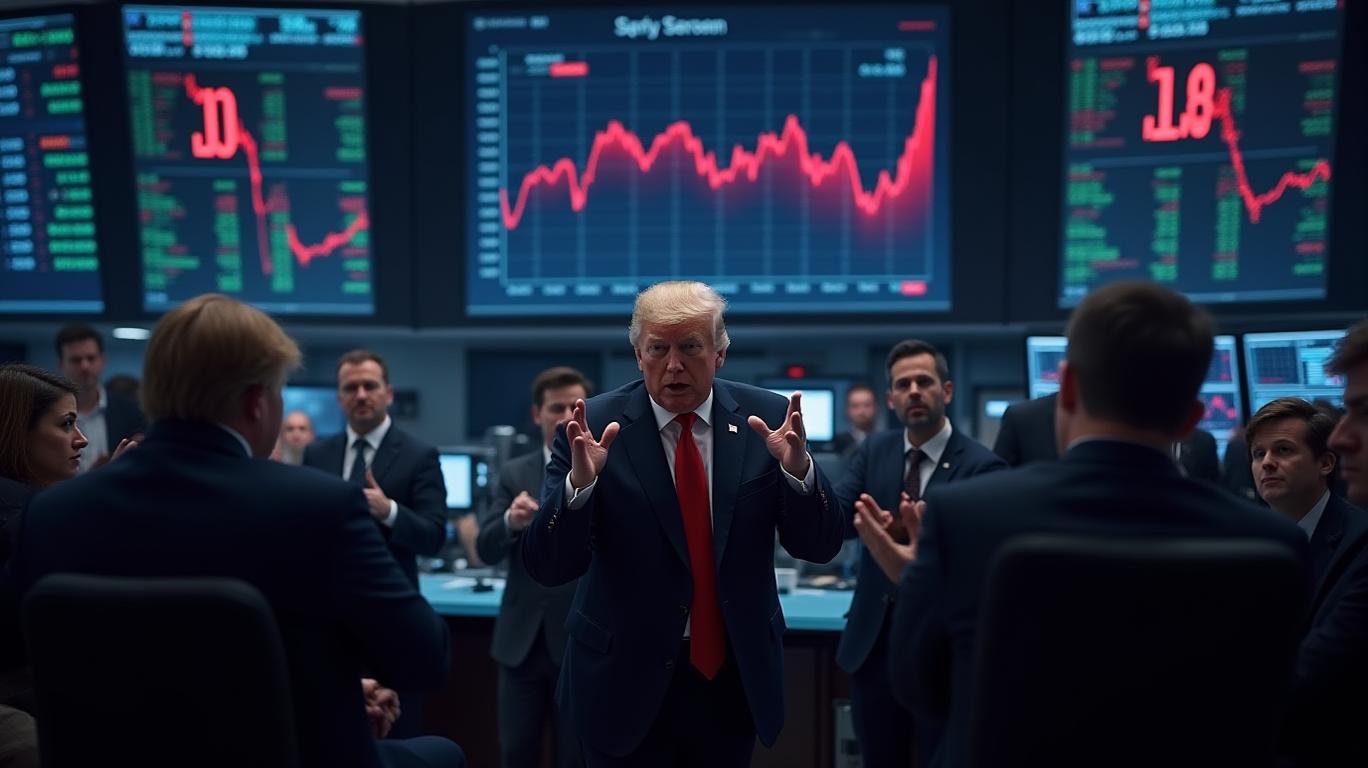
On April 22, during midday trading, U.S. stocks experienced a significant decline, with the Dow Jones Industrial Average plummeting over 1,000 points. This sharp drop was largely attributed to President Trump's renewed pressure on the Federal Reserve to lower interest rates, which raised concerns among investors about the potential erosion of the dollar's credibility and the broader implications for the U.S. economy. The simultaneous decline in stocks, the dollar, and bonds, coupled with a surge in gold prices to a new historical high of over $3,400 per ounce, underscored the market's heightened anxiety.
The Dow Jones Industrial Average fell by 1,082.18 points, or 2.76%, closing at 38,060.05 points. The Nasdaq Composite Index dropped by 508.71 points, or 3.12%, to 15,777.74 points, while the S&P 500 Index declined by 150.79 points, or 2.85%, to 5131.91 points. This downturn followed a week where the three major U.S. stock indices recorded three weekly declines. Despite a slight rebound on Thursday, the S&P 500 Index still ended the week with a cumulative loss of 1.5%. The Dow Jones and Nasdaq indices also saw declines of 2.66% and 2.62%, respectively.
NVIDIA's recent 6% drop added to the market's woes, as the company announced it would incur approximately $55 billion in quarterly expenses due to export restrictions on its H20 graphics processing units to other countries and regions. The upcoming earnings season is expected to be pivotal, with over 100 companies in the S&P 500 Index, including AlphabetGOOG-- (Google's parent company) and TeslaTSLA--, set to release their financial reports in the coming days. Other notable companies, such as BoeingBA--, are also scheduled to report.
Investor concerns about the uncertainty surrounding Trump's tariff policies have been a significant source of pressure on Wall Street. Since April 2, when Trump announced high tariffs on imported goods from other countries, the three major U.S. stock indices have collectively declined by approximately 7%. The recent comments by Austan Goolsbee, President of the Federal Reserve Bank of Chicago, added to the market's unease. Goolsbee warned that tariffs could lead to a slowdown in U.S. economic activity before the summer. Earlier, Federal Reserve Chairman Jerome Powell expressed concerns that Trump's tariffs could complicate the Fed's efforts to manage inflation and economic growth.
Trump's repeated calls for the Federal Reserve to lower interest rates have further exacerbated market volatility. In a post on his social media platform, Truth Social, Trump criticized Powell, warning that failure to lower rates could lead to an economic slowdown. He also highlighted the contrast between the Fed's inaction and the seven rate cuts implemented by the European Central Bank. Trump's comments led to further declines in the S&P 500 Index, which extended its losses to 2% for the day.
The market's reaction to Trump's statements underscored the growing concerns about the Fed's independence. The possibility of Trump removing Powell from his position has raised fears about the Fed's ability to operate without political interference. This uncertainty has added to the market's anxiety, which was already heightened by the ongoing trade war and its potential impact on the U.S. economy.
Trump's tariff policies have already disrupted financial markets and led to a sell-off in U.S. bonds and the dollar. The recent decline in the dollar index, which fell below 98 for the first time since February 2022, reflected investor concerns about the Fed's independence. The dollar's weakness pushed gold prices to a new historical high, with gold futures rising 2.4% to over $3,400 per ounce. The dollar has declined by approximately 4.6% so far this month, with the largest drops against the euro, yen, and Swiss franc.
All G10 currencies strengthened against the dollar, with the yen, euro, and Swiss franc leading the gains. The yen's strength also weighed on the Japanese stock market, with the Nikkei 225 Index falling by 1.3%. The Fed's independence is crucial for maintaining the dollar's credibility and the stability of the U.S. economy. Keynesian economists have long emphasized the importance of central bank independence in ensuring effective monetary policy. The recent comments by French Finance Minister Eric Lombard and Chicago Fed President Austan Goolsbee highlighted the potential risks to the dollar's credibility if Trump were to remove Powell from his position.
There are signs that investors are reducing their exposure to U.S. markets. Deutsche Bank reported that some Chinese clients have reduced their holdings of U.S. Treasuries and increased their investments in European bonds. European high-grade bonds, Japanese government bonds, and gold are seen as potential alternatives to U.S. Treasuries. The U.S. Treasury yield curve has also steepened, with short-term yields rising and long-term yields falling. This reflects market expectations of a potential rate cut by the Fed and growing concerns about the long-term outlook for U.S. assets.
On April 22, a key leading economic indicator for the U.S. economy showed a significant decline. The Conference Board's Leading Economic Index (LEI) fell by 0.7% in March, marking a sharp deterioration from the 0.2% decline in February. This data suggests that the U.S. economy may face slower growth in the coming months, particularly in light of the ongoing uncertainty surrounding tariff policies. The LEI has declined by 1.2% over the past six months, following a 2.3% contraction in the previous six months. The Conference Board's senior business cycle indicators manager, Zabinska-La Monica, attributed the decline to increased economic uncertainty, weaker consumer expectations, and a drop in manufacturing new orders. However, she noted that the data does not yet indicate an imminent recession.

Stay ahead of the market.
Get curated U.S. market news, insights and key dates delivered to your inbox.




Comments
No comments yet