
Dow Jones Market Selloff: AI Disruption Fear Spreads to Tech and Transportation Sectors
 Aime Summary
- Artificial intelligence is causing a broad selloff in the Dow Jones Industrial Average and other major U.S. stock indexes as investors worry about AI-driven disruption in software, logistics, and transportation.
- Companies like Cisco SystemsCSCO--, AppLovinAPP--, and Charles SchwabSCHW-- have seen steep declines amid fears that AI will replace workers and disrupt traditional business models.
- The sell-off has spread beyond tech to include concerns about increased borrowing costs and potential defaults in the junk-bond market due to AI's potential to reduce labor and margin pressures.
AI fears have shaken the market, turning once-cherished tech and logistics stocks into pariahs. Investors are now on a hunt for potential losers in the AI transition, and the ripple effect has extended far beyond software companies. The Dow Jones Industrial Average, S&P 500, and Nasdaq have all seen sharp declines in recent days as the market grapples with the disruptive power of AI. This is no longer a niche concern—it's reshaping how investors evaluate risk, returns, and long-term growth potential.
Why Is the Stock Market Down Today Amid AI Fears?
The market has been rattled by news of AI tools that can replace workers in logistics, financial advice, and software engineering. Algorhythm HoldingsRIME--, for example, recently announced an AI freight platform that allows customers to scale shipping volumes without hiring more staff. This has raised alarms about margin pressure and job displacement in supply chain businesses. The broader software sector has seen a sharp sell-off, with the S&P North American software index now trading below its long-term average multiple.
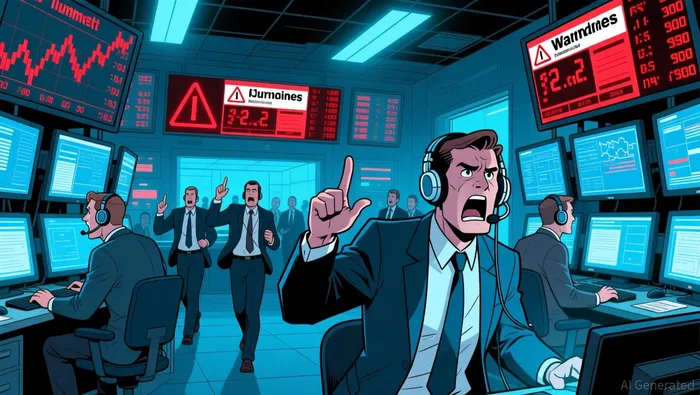
For investors, the key question is whether this disruption will translate into long-term gains or losses. While some see AI as a massive opportunity, others are betting against companies they believe will be negatively impacted. The selloff has been indiscriminate, punishing even high-performing firms like CiscoCSCO-- and AppLovin, despite strong earnings reports.
What Does the AI Selloff Mean for the Dow Jones and U.S. Markets?
The AI selloff has had far-reaching effects. The Dow Jones and S&P 500 have fallen into negative territory as companies like Apple, Microsoft, and Amazon see declines due to concerns about the return on their massive AI investments. The broader market is now questioning whether AI will deliver meaningful productivity gains or instead disrupt traditional industries.
Investors are also factoring in macroeconomic signals, including strong January jobs data and the upcoming U.S. CPI report, which could influence the Federal Reserve's interest rate outlook. For now, uncertainty reigns, and many are shifting into defensive positions.
Should Retail Investors Be Concerned About AI Disruption in the Stock Market?
For retail investors, the selloff raises questions about risk tolerance and portfolio balance. AI disruption is reshaping the landscape of many industries, and companies that fail to adapt could see significant losses. However, not all AI-related moves are negative—some firms, like Equinix and McDonald's, have benefited from the surge in demand for data infrastructure and value-driven offerings.
Market pros are starting to argue that the recent software sell-off has gone too far, creating potential buying opportunities for long-term investors. Still, the market is in a transition phase, and short-term volatility is likely to continue as investors adjust their strategies to the AI-driven landscape.
What's clear is that the AI narrative has shifted—from a market booster to a disruptive force. The next few weeks will be critical as the U.S. CPI data and Fed policy decisions take center stage. Until then, investors will likely continue to reassess their exposure to AI-adjacent and AI-vulnerable stocks.
What to watch next is the U.S. CPI report and the broader market reaction to it. If inflation comes in lower than expected, it could signal a delay in rate cuts, which could further pressure growth stocks. In the meantime, the market is likely to remain volatile as investors try to balance the long-term potential of AI with the near-term risks it poses to traditional business models.
The AI-driven selloff is a reminder that no industry is immune to disruption. For investors, the key is to stay informed and adaptable, weighing both the risks and the opportunities that AI brings to the table.

Stay ahead of the market.
Get curated U.S. market news, insights and key dates delivered to your inbox.


AInvest
PRO
AInvest
PRO



Comments
No comments yet