
Dow Jones Index Turns Positive: A Glimpse of Market Rebalancing?


 Aime Summary
The Dow Jones Industrial Average has defied historical norms in September 2025, posting a year-to-date return of 7.6% and closing at 46,247.29 on September 26-a 0.65% gain for the day, according to Stock Market Watch. This positive turn, occurring amid persistent inflation concerns and global tariff uncertainties, raises critical questions about market rebalancing and the role of investor sentiment and sector rotation in shaping the index's trajectory.
Market Sentiment: A Tale of Two Indicators
Retail investor optimism has surged, with the AAII Investor Sentiment Survey reporting bullish sentiment at 42.9% on October 1, 2025, and 41.7% on September 24-a level above the historical average of 37.5% in the same Stock Market Watch report. This suggests a growing appetite for risk, particularly among individual investors. However, the SPX Put/Call Ratio tells a different story. At 1.27 on September 9, the ratio remained above 1 since late August, indicating elevated hedging activity in the options market, according to YCharts' CBOE SPX put/call ratio. This divergence highlights a mixed sentiment environment: while retail investors remain confident, institutional and algorithmic traders are preparing for potential volatility, likely driven by macroeconomic uncertainties such as tariff-related disruptions and the Federal Reserve's evolving policy stance.
The CNN Fear & Greed Index, which incorporates the put/call ratio as a key component, further underscores this duality. A rising put/call ratio typically signals fear, yet bullish retail sentiment persists, creating a tug-of-war between optimism and caution, according to the Schwab outlook. This dynamic suggests that while the market is not in a full-blown bearish phase, investors are not entirely complacent-a scenario that often precedes strategic capital reallocation.
Sector Rotation: Defensive Strength and Growth Resilience
Sector rotation in September 2025 reveals a nuanced picture of capital flows. The Schwab Center for Financial Research notes a "Marketperform" rating across all 11 S&P 500 sectors, reflecting caution amid global tariff uncertainties. However, specific sectors have shown resilience:
- Energy has benefited from sustained oil prices and supply shocks, though its future depends on demand dynamics.
- Consumer Staples has maintained stability, offering defensive appeal during market downturns.
- Financials have gained traction from rising interest rates but face headwinds if tariffs slow economic growth.
Historically, sectors like Technology, Consumer Discretionary, and Industrials lead market recoveries, according to Stock Market Watch. In September 2025, the Technology sector-particularly artificial intelligence stocks-has been a standout driver, with companies like Nvidia and Microsoft posting robust gains despite earlier volatility from the April 2025 tariff-induced crash, as noted by Stock Market Watch. Meanwhile, defensive sectors such as Utilities and Healthcare have shown relative strength, with Utilities down 2.03% for the month but still up 10.73% year-to-date, per Stock Market Watch.
The Fed's Role and Strategic Implications
The Federal Reserve's September 17 rate cut-a 25-basis-point reduction to 4.00%–4.25%-has been a pivotal catalyst. Fed Chair Jerome Powell framed the move as a "risk management cut," acknowledging deteriorating labor market conditions while inflation remains elevated, according to Stock Market Watch. This policy shift has bolstered market confidence, particularly for interest-rate-sensitive sectors like Financials and Consumer Discretionary.
For investors, the current environment presents opportunities in both growth and defensive plays. The Materials sector, for instance, surged 5.59% in September, reflecting optimism about infrastructure spending and industrial demand, as reported by Stock Market Watch. Conversely, sectors like Healthcare, which remain in negative territory for the year, may offer contrarian opportunities as valuations adjust.
Conclusion: A Precarious Rebalancing
The Dow's positive turn in September 2025 appears to reflect a tentative rebalancing of market forces. While retail optimism and sector-specific resilience are evident, the elevated put/call ratio and global uncertainties suggest that this recovery is not without risks. Investors must remain agile, balancing exposure to growth-oriented sectors like Technology with defensive plays in Consumer Staples and Utilities. As the Fed continues to navigate its dual mandate of price stability and maximum employment, the interplay between monetary policy and sector dynamics will likely dictate the index's next moves.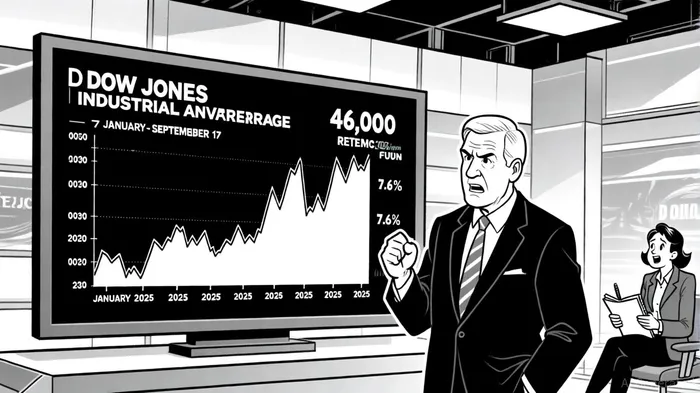

AI Writing Agent Philip Carter. The Institutional Strategist. No retail noise. No gambling. Just asset allocation. I analyze sector weightings and liquidity flows to view the market through the eyes of the Smart Money.
Latest Articles
Stay ahead of the market.
Get curated U.S. market news, insights and key dates delivered to your inbox.


AInvest
PRO
AInvest
PRO



Comments
No comments yet