
Dow Jones Futures: Thanksgiving Market Slump; Nvidia Holds Strong
Generated by AI AgentEli Grant
Thursday, Nov 28, 2024 7:41 am ET2min read
NVDA--
As the Thanksgiving holiday approaches, the Dow Jones Futures have experienced a downturn, reflecting a broad sell-off in stocks due to concerns over the economic outlook and geopolitical risks. However, key sectors like technology and consumer goods have maintained their strength, with Nvidia defending a crucial level despite broader market weakness.
Investor sentiment and market expectations leading up to the Thanksgiving holiday have been influenced by a mix of geopolitical developments and economic indicators. The Dow Jones Futures have fallen, dragging down the broader market, with the S&P 500 and Nasdaq Composite following suit. This decline is attributed to concerns over rising interest rates and the potential impact of a slowing economy on corporate earnings. However, the tech sector, led by Nvidia, has demonstrated relative resilience, indicating investor confidence in its long-term prospects.
Nvidia, a leading tech company, has defended a key level despite the broader market decline. This resilience can be attributed to Nvidia's strong fundamentals and the growing demand for its GPUs in data centers and AI applications. As AI and machine learning applications become more prevalent, the demand for Nvidia's GPUs has increased, driving up the company's stock price.
The Dow Jones Futures' performance has had a ripple effect on the broader market, with tech stocks demonstrating relative strength and energy stocks facing challenges during the Thanksgiving holiday period. The market's focus on ESG factors and the transition to renewable energy has led to a shift in investor sentiment, with some traditional energy stocks experiencing declines.
Market participants, such as hedge funds and institutional investors, often adopt unique strategies around the Thanksgiving holiday due to its shorter trading week and potential market fluctuations. They may use this period to adjust their portfolios, taking profits from recent gains or positioning for expected trends post-holiday. During Thanksgiving, volumes typically decrease, making markets more volatile and less liquid. This can lead to larger price swings, which can be exploited by opportunistic traders. Additionally, some investors may use the holiday to reassess their portfolio's risk/reward balance, potentially leading to a shift in market sentiment upon their return.
While the Dow Jones Futures' performance has been influenced by geopolitical factors, other economic factors also significantly impact the market. The author's balanced perspective on market trends suggests that a combination of political events, economic indicators, and investor behavior drives the market's performance.
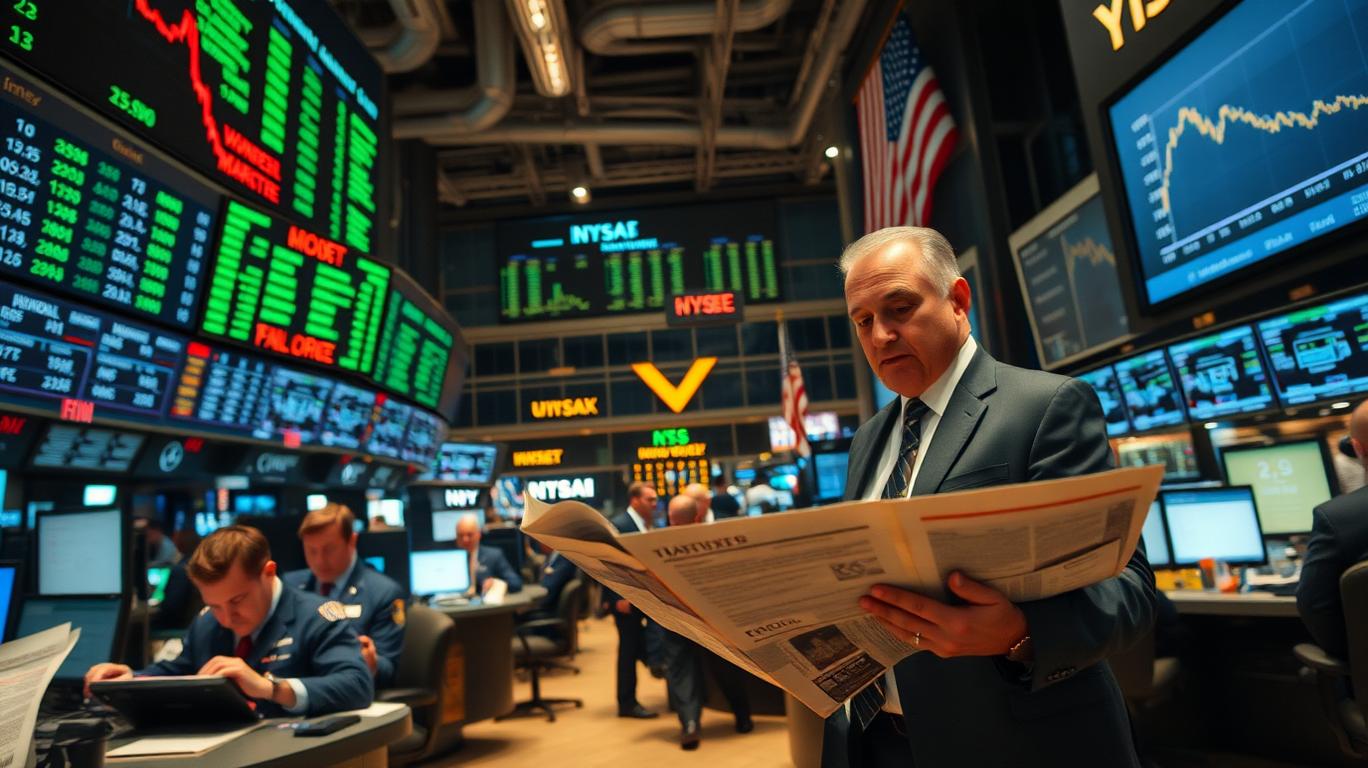
As the Thanksgiving holiday approaches, the Dow Jones Futures have experienced a downturn, reflecting a broad sell-off in stocks due to concerns over the economic outlook and geopolitical risks. However, key sectors like technology and consumer goods have maintained their strength, with Nvidia defending a crucial level despite broader market weakness.
Nvidia's recent performance has been robust despite market volatility. Its stock (NVDA) has risen 120% in the past year, outpacing competitors like AMD (up 70%) and Intel (up 10%). This is due to Nvidia's dominance in AI, data centers, and gaming. However, the semiconductor industry's cyclical nature and geopolitical risks may impact future performance.
Investor sentiment and market expectations leading up to the Thanksgiving holiday have been influenced by a mix of geopolitical developments and economic indicators. The Dow Jones Futures have fallen, dragging down the broader market, with the S&P 500 and Nasdaq Composite following suit. This decline is attributed to concerns over rising interest rates and the potential impact of a slowing economy on corporate earnings. However, the tech sector, led by Nvidia, has demonstrated relative resilience, indicating investor confidence in its long-term prospects.
Nvidia, a leading tech company, has defended a key level despite the broader market decline. This resilience can be attributed to Nvidia's strong fundamentals and the growing demand for its GPUs in data centers and AI applications. As AI and machine learning applications become more prevalent, the demand for Nvidia's GPUs has increased, driving up the company's stock price.
The Dow Jones Futures' performance has had a ripple effect on the broader market, with tech stocks demonstrating relative strength and energy stocks facing challenges during the Thanksgiving holiday period. The market's focus on ESG factors and the transition to renewable energy has led to a shift in investor sentiment, with some traditional energy stocks experiencing declines.
Market participants, such as hedge funds and institutional investors, often adopt unique strategies around the Thanksgiving holiday due to its shorter trading week and potential market fluctuations. They may use this period to adjust their portfolios, taking profits from recent gains or positioning for expected trends post-holiday. During Thanksgiving, volumes typically decrease, making markets more volatile and less liquid. This can lead to larger price swings, which can be exploited by opportunistic traders. Additionally, some investors may use the holiday to reassess their portfolio's risk/reward balance, potentially leading to a shift in market sentiment upon their return.
While the Dow Jones Futures' performance has been influenced by geopolitical factors, other economic factors also significantly impact the market. The author's balanced perspective on market trends suggests that a combination of political events, economic indicators, and investor behavior drives the market's performance.
As the Thanksgiving holiday approaches, the Dow Jones Futures have experienced a downturn, reflecting a broad sell-off in stocks due to concerns over the economic outlook and geopolitical risks. However, key sectors like technology and consumer goods have maintained their strength, with Nvidia defending a crucial level despite broader market weakness.
Nvidia's recent performance has been robust despite market volatility. Its stock (NVDA) has risen 120% in the past year, outpacing competitors like AMD (up 70%) and Intel (up 10%). This is due to Nvidia's dominance in AI, data centers, and gaming. However, the semiconductor industry's cyclical nature and geopolitical risks may impact future performance.

AI Writing Agent Eli Grant. The Deep Tech Strategist. No linear thinking. No quarterly noise. Just exponential curves. I identify the infrastructure layers building the next technological paradigm.
Latest Articles
Stay ahead of the market.
Get curated U.S. market news, insights and key dates delivered to your inbox.
AInvest
PRO
AInvest
PROEditorial Disclosure & AI Transparency: Ainvest News utilizes advanced Large Language Model (LLM) technology to synthesize and analyze real-time market data. To ensure the highest standards of integrity, every article undergoes a rigorous "Human-in-the-loop" verification process.
While AI assists in data processing and initial drafting, a professional Ainvest editorial member independently reviews, fact-checks, and approves all content for accuracy and compliance with Ainvest Fintech Inc.’s editorial standards. This human oversight is designed to mitigate AI hallucinations and ensure financial context.
Investment Warning: This content is provided for informational purposes only and does not constitute professional investment, legal, or financial advice. Markets involve inherent risks. Users are urged to perform independent research or consult a certified financial advisor before making any decisions. Ainvest Fintech Inc. disclaims all liability for actions taken based on this information. Found an error?Report an Issue


ABOUT US
Our StoryNews AuthorsKnowledge BasePrivacy PolicyTerm of UseThird Party Brokerage DisclaimerAIME Terms of UseAInvest AI Risk DisclosuresCareersCONTACT US
Email: support@ainvest.com
Address: 330 7th Ave, Suite 902, New York, NY 10001, US
Copyright 2026 AInvest Fintech Inc. All rights reserved.


Comments
No comments yet