
Dow Jones Futures Rise As AI and Tariff Uncertainty Weigh on Market
 Aime Summary
- Dow Jones futures edged higher on February 24, 2026, recovering slightly after a sharp sell-off the previous day due to AI-driven market disruptions and new Trump tariffs.
- President Donald Trump announced a 10% global tariff, , causing uncertainty in trade relations with the EU and Japan.
- Anthropic's AI event and Citrini Research's bearish report amplified fears of economic disruption from AI.
- .
- Treasury yields rose slightly as investors priced in Trump's ongoing tariff policy uncertainty ahead of his State of the Union speech.
A volatile week for investors came to a tense but slightly more hopeful start as Dow Jones futures edged up on February 24, 2026. The market had tumbled the day before amid growing fears over AI disruption and new U.S. trade tariffs. The sell-off was triggered by a combination of factors: AI advancements, renewed tariff uncertainties under President Trump, and rising concerns about economic models being rewritten by automation. But by Tuesday, futures had rebounded slightly, offering a glimmer of cautious optimism.
What Drives the Volatility in Dow Jones Futures Today?
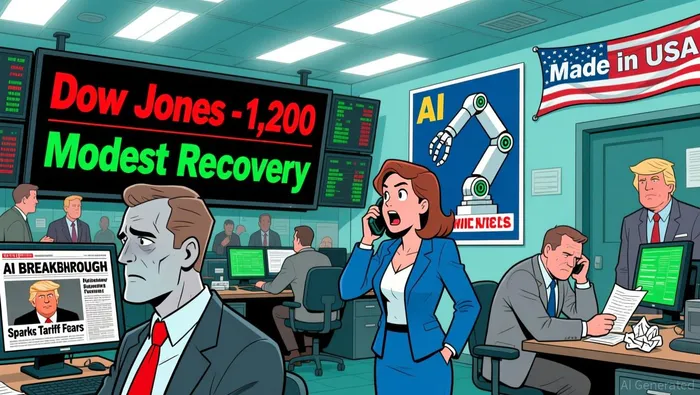
The recent selloff and subsequent partial recovery in futures were tied to a perfect storm of developments. At the center was a new 10% global tariff announced by President Trump, potentially rising to 15%. This move came after the Supreme Court invalidated his previous, broader tariff policies. The uncertainty caused investors to shift away from trade-sensitive sectors and toward defensive positions, contributing to a steep drop in the Dow Jones Industrial Average the prior day.
Compounding this was a surge in AI-related developments. , a major AI company, unveiled its Claude Code Security tool, which scans for code vulnerabilities. While this is a positive step in AI safety, it also signaled to investors that traditional cybersecurity jobs and companies could face disruption. This led to sharp declines in cybersecurity stocks like IBM, which . Meanwhile, a doomsday-style report from warned of long-term economic impacts from AI-driven automation, amplifying fears of structural unemployment and economic shifts.
How Is the Market Reacting to AI and Tariff Uncertainty?
The market's reaction has been one of risk aversion and short-term hedging. , . This overvaluation has prompted a reevaluation of risk exposure, with investors pulling back from high-growth tech stocks and trade-exposed firms.
However, Tuesday brought a modest rebound. While the blue-chip Dow and S&P 500 remained in negative territory for the year, early futures trading suggested a slight shift in sentiment. Investors appeared to be reassessing the immediate risks from AI and tariffs, with some moving back into equities and sectors not directly exposed to trade policy shifts.
Treasury yields also reflected investor caution. , . These moves signal a flight to perceived safety and uncertainty about the economic trajectory of Trump's trade policies.
What Should Investors Watch for in the Coming Week?
The coming week will be critical for both tariff policy and AI-related market sentiment. Trump's State of the Union address on February 25 will provide more clarity on his trade strategy, with analysts expecting either a confirmation of the 15% global tariff or a potential pivot. The speech will also be a key event for gauging the administration's stance on AI regulation and national security concerns.
Meanwhile, the market will closely monitor how the new tariffs affect global trade agreements. The EU has already paused its U.S. trade deal, and tensions with Japan and China could escalate if tariffs are maintained or increased. These developments could have ripple effects on supply chains and consumer prices.
On the AI front, investors are watching whether the market can stabilize without a rebound in tech stocks. , and further declines could signal a deeper correction. A strong earnings report from major tech companies like Nvidia and Salesforce could help restore some confidence.
In the short term, the market will likely continue to hover between cautious optimism and uncertainty. But for long-term investors, the broader trends—AI-driven economic shifts and the evolving landscape of global trade—suggest the need for a strategic, long-term approach rather than panic selling.
With AI reshaping industries and trade policy shifting under a new administration, the path forward will require both patience and vigilance.

Stay ahead of the market.
Get curated U.S. market news, insights and key dates delivered to your inbox.


AInvest
PRO
AInvest
PRO



Comments
No comments yet