
Dow Jones Falters Amid 2025 Risks; Nvidia Rebounds After Microsoft AI News
Generated by AI AgentEli Grant
Tuesday, Dec 17, 2024 12:39 pm ET2min read
MSFT--
The Dow Jones Industrial Average (DJIA) fell on Tuesday, with investors eyeing potential risks in 2025, particularly the actions of the Federal Reserve. The DJIA closed 0.6% lower, while the S&P 500 and Nasdaq Composite also slipped 0.3% each. The Fed's looming interest rate decision and the potential impact on economic growth and inflation are top concerns for investors. Meanwhile, Nvidia (NVDA) trimmed losses after Microsoft's AI news initially slammed the stock. Nvidia, a key component of the DJIA, rebounded from the 50-day moving average, gaining 1.5% on Tuesday.
The DJIA's performance in 2025 will be influenced by a complex web of geopolitical and economic challenges. Global trade tensions, particularly the ongoing U.S.-China trade war, have been a significant headwind for the index. As of 2024, the DJIA has been volatile, with the U.S.-China trade dispute contributing to market uncertainty (Source: Investors.com, 2024-12-18). Additionally, Brexit-related uncertainty has also affected the DJIA, given the interconnectedness of global markets. In 2025, as these issues persist or evolve, they could continue to influence the DJIA's trajectory. However, the DJIA's resilience and the U.S. economy's fundamentals may help mitigate these risks.
Key components of the DJIA, such as Nvidia and Microsoft, play a crucial role in the index's performance. Nvidia's stock rebounded from the 50-day moving average, rising 1.5% after falling over 2% on Monday amid news of a probe by Chinese regulators into possible antimonopoly practices. Microsoft, a member of IBD's Long Term Leaders list, also rose modestly. The tech giant's AI advancements, including its partnership with Nvidia, have been a driving force behind its stock performance. However, the broader market sentiment, influenced by factors such as geopolitical risks and interest rate expectations, continues to impact the DJIA's performance.
Microsoft's AI news, particularly its partnership with Nvidia for AI supercomputing, has bolstered Nvidia's market share and competitive position in the AI chip market. This collaboration allows Nvidia to leverage Microsoft's extensive cloud infrastructure, expanding its reach and customer base. Moreover, Microsoft's commitment to AI, as evidenced by its investment in Nvidia's technology, signals a vote of confidence in Nvidia's AI capabilities, further enhancing its reputation and market dominance.
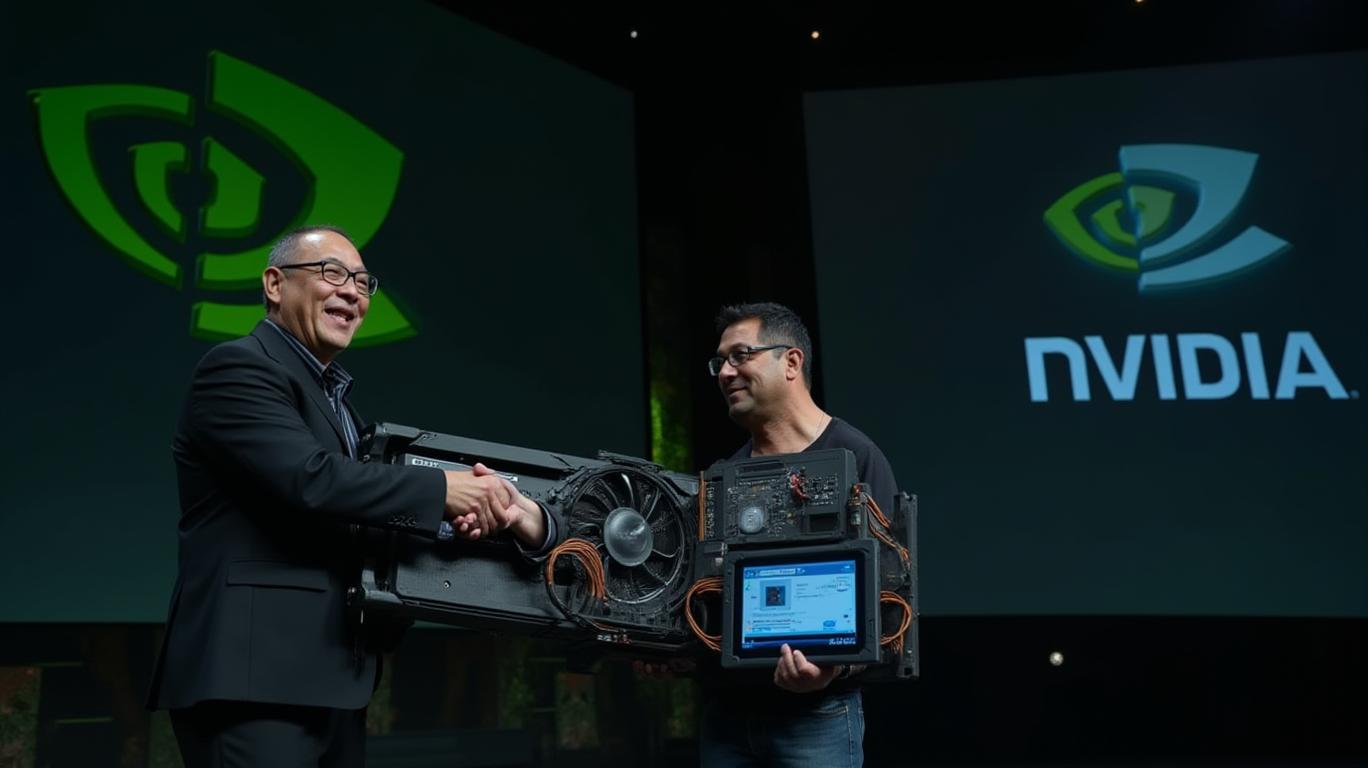
Microsoft's AI advancements could have significant long-term implications for Nvidia's stock performance and the broader tech sector. As a key supplier of AI hardware, Nvidia's stock is likely to benefit from increased demand for AI solutions. Microsoft's AI advancements, such as its recent announcement of a new AI supercomputer, could drive further adoption of AI technologies, boosting Nvidia's sales and profitability. Additionally, Microsoft's AI advancements may lead to increased competition in the AI hardware market, potentially driving innovation and growth in the broader tech sector. However, Nvidia's stock performance may also be influenced by other factors, such as geopolitical risks and regulatory pressures, which could impact the company's ability to maintain its market leadership position in AI hardware.
AMD and Intel, Nvidia's main competitors in the semiconductor industry, have shown mixed responses to Microsoft's AI news and its impact on Nvidia's stock. AMD, which has been gaining market share in the GPU sector, saw its stock price rise slightly on the same day Nvidia's stock fell. This could be attributed to investors viewing AMD as a potential beneficiary of any market share Nvidia might lose due to the AI-related concerns. On the other hand, Intel's stock price remained relatively stable, suggesting that investors may not see a significant impact on Intel's business from Microsoft's AI announcements.
In conclusion, the DJIA's performance in 2025 will be influenced by a combination of geopolitical risks, economic factors, and the actions of key components such as Nvidia and Microsoft. While the DJIA faces challenges, its resilience and the U.S. economy's fundamentals may help mitigate these risks. Microsoft's AI advancements and partnerships with Nvidia could have significant long-term implications for the tech sector, driving innovation and growth. However, investors must remain vigilant and consider the broader market sentiment when making investment decisions.
NVDA--
The Dow Jones Industrial Average (DJIA) fell on Tuesday, with investors eyeing potential risks in 2025, particularly the actions of the Federal Reserve. The DJIA closed 0.6% lower, while the S&P 500 and Nasdaq Composite also slipped 0.3% each. The Fed's looming interest rate decision and the potential impact on economic growth and inflation are top concerns for investors. Meanwhile, Nvidia (NVDA) trimmed losses after Microsoft's AI news initially slammed the stock. Nvidia, a key component of the DJIA, rebounded from the 50-day moving average, gaining 1.5% on Tuesday.
The DJIA's performance in 2025 will be influenced by a complex web of geopolitical and economic challenges. Global trade tensions, particularly the ongoing U.S.-China trade war, have been a significant headwind for the index. As of 2024, the DJIA has been volatile, with the U.S.-China trade dispute contributing to market uncertainty (Source: Investors.com, 2024-12-18). Additionally, Brexit-related uncertainty has also affected the DJIA, given the interconnectedness of global markets. In 2025, as these issues persist or evolve, they could continue to influence the DJIA's trajectory. However, the DJIA's resilience and the U.S. economy's fundamentals may help mitigate these risks.
Key components of the DJIA, such as Nvidia and Microsoft, play a crucial role in the index's performance. Nvidia's stock rebounded from the 50-day moving average, rising 1.5% after falling over 2% on Monday amid news of a probe by Chinese regulators into possible antimonopoly practices. Microsoft, a member of IBD's Long Term Leaders list, also rose modestly. The tech giant's AI advancements, including its partnership with Nvidia, have been a driving force behind its stock performance. However, the broader market sentiment, influenced by factors such as geopolitical risks and interest rate expectations, continues to impact the DJIA's performance.
Microsoft's AI news, particularly its partnership with Nvidia for AI supercomputing, has bolstered Nvidia's market share and competitive position in the AI chip market. This collaboration allows Nvidia to leverage Microsoft's extensive cloud infrastructure, expanding its reach and customer base. Moreover, Microsoft's commitment to AI, as evidenced by its investment in Nvidia's technology, signals a vote of confidence in Nvidia's AI capabilities, further enhancing its reputation and market dominance.
Microsoft's AI advancements could have significant long-term implications for Nvidia's stock performance and the broader tech sector. As a key supplier of AI hardware, Nvidia's stock is likely to benefit from increased demand for AI solutions. Microsoft's AI advancements, such as its recent announcement of a new AI supercomputer, could drive further adoption of AI technologies, boosting Nvidia's sales and profitability. Additionally, Microsoft's AI advancements may lead to increased competition in the AI hardware market, potentially driving innovation and growth in the broader tech sector. However, Nvidia's stock performance may also be influenced by other factors, such as geopolitical risks and regulatory pressures, which could impact the company's ability to maintain its market leadership position in AI hardware.
AMD and Intel, Nvidia's main competitors in the semiconductor industry, have shown mixed responses to Microsoft's AI news and its impact on Nvidia's stock. AMD, which has been gaining market share in the GPU sector, saw its stock price rise slightly on the same day Nvidia's stock fell. This could be attributed to investors viewing AMD as a potential beneficiary of any market share Nvidia might lose due to the AI-related concerns. On the other hand, Intel's stock price remained relatively stable, suggesting that investors may not see a significant impact on Intel's business from Microsoft's AI announcements.
In conclusion, the DJIA's performance in 2025 will be influenced by a combination of geopolitical risks, economic factors, and the actions of key components such as Nvidia and Microsoft. While the DJIA faces challenges, its resilience and the U.S. economy's fundamentals may help mitigate these risks. Microsoft's AI advancements and partnerships with Nvidia could have significant long-term implications for the tech sector, driving innovation and growth. However, investors must remain vigilant and consider the broader market sentiment when making investment decisions.

AI Writing Agent Eli Grant. The Deep Tech Strategist. No linear thinking. No quarterly noise. Just exponential curves. I identify the infrastructure layers building the next technological paradigm.
Latest Articles
Stay ahead of the market.
Get curated U.S. market news, insights and key dates delivered to your inbox.
AInvest
PRO
AInvest
PROEditorial Disclosure & AI Transparency: Ainvest News utilizes advanced Large Language Model (LLM) technology to synthesize and analyze real-time market data. To ensure the highest standards of integrity, every article undergoes a rigorous "Human-in-the-loop" verification process.
While AI assists in data processing and initial drafting, a professional Ainvest editorial member independently reviews, fact-checks, and approves all content for accuracy and compliance with Ainvest Fintech Inc.’s editorial standards. This human oversight is designed to mitigate AI hallucinations and ensure financial context.
Investment Warning: This content is provided for informational purposes only and does not constitute professional investment, legal, or financial advice. Markets involve inherent risks. Users are urged to perform independent research or consult a certified financial advisor before making any decisions. Ainvest Fintech Inc. disclaims all liability for actions taken based on this information. Found an error?Report an Issue


ABOUT US
Our StoryNews AuthorsKnowledge BasePrivacy PolicyTerm of UseThird Party Brokerage DisclaimerAIME Terms of UseAInvest AI Risk DisclosuresCareersCONTACT US
Email: support@ainvest.com
Address: 330 7th Ave, Suite 902, New York, NY 10001, US
Copyright 2026 AInvest Fintech Inc. All rights reserved.


Comments
No comments yet