
Why Dow Futures Tumbled as AI and Inflation Concerns Intensify
 Aime Summary
- Dow futures fell nearly 0.5% on February 26, 2026, as AI concerns and inflation pressures weighed on investor sentiment.
- The S&P 500 and Nasdaq posted their steepest monthly declines since March 2025, driven by worries about AI costs and geopolitical tensions.
- Nvidia's stock declined despite a strong outlook, raising questions about high valuations and the sustainability of AI hype.
Market rotation is shifting away from the Magnificent Seven tech stocks, which have fallen nearly 5% this year, toward sectors like energy and industrials. The energy sector alone is up 23.2% year to date, while industrials have gained 14%. This shift reflects growing uncertainty about the long-term impact of AI on traditional industries and labor markets.
What Drives Dow Futures as AI and Inflation Concerns Rise?
Dow futures dropped nearly 247 points on February 26, 2026, as investors grew wary of the pace of AI adoption and its economic consequences. 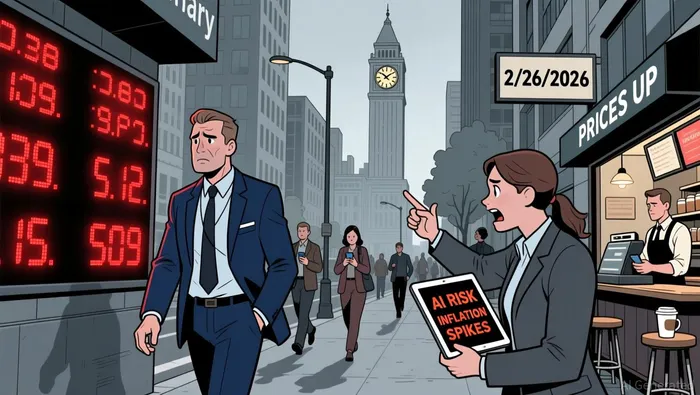 The decline was exacerbated by weak earnings from key tech players like Zscaler and Salesforce, as well as concerns over Nvidia's partnership with OpenAI. Analysts suggest that the market is taking a cautious stance as AI-driven valuations face scrutiny.
The Producer Price Index (PPI) reading for January, which showed a hotter-than-expected inflationary trend, added to the bearish sentiment. Investors are now pricing in a 94.1% probability that the Fed will keep rates unchanged at its next meeting, according to CME FedWatch data. This delay in rate cuts threatens to curb market growth, particularly for sectors that rely on low borrowing costs.
Is a Market Rotation Out of Tech Stock Futures Justified?
The recent drop in tech stocks is part of a broader market rotation toward more defensive and cyclical sectors. Energy, industrials, and consumer staples are outperforming the tech-heavy S&P 500, which is dominated by AI and tech stocks that now make up 32% of the index’s total value. With the top 10 companies accounting for nearly 40% of the index, concerns about overconcentration are rising.
The S&P 500’s heavy exposure to tech—particularly to firms like NvidiaNVDA--, Microsoft, and Apple—has led to increased volatility and systemic risk. If any of these companies experience a significant correction, the entire index could face ripple effects. This concentration bears similarities to the dot-com bubble of 1999, when tech accounted for 26% of the index. Today’s tech giants are more profitable, but the potential for a similar overvaluation remains a concern.
How Are Investors Adjusting Strategies Amid Market Volatility?
With AI reshaping the market and sector volatility increasing, investors are rethinking traditional passive strategies like the S&P 500 and Chill approach. Some young investors are diversifying into global markets or factor-based ETFs to reduce risk. The debate over whether to stick with broad index funds or seek more targeted exposure highlights the uncertainty of the current market environment.
Meanwhile, defensive sectors like healthcare and utilities are outperforming as investors adopt a risk-off stance. Block Inc.’s decision to cut nearly half of its workforce has further amplified fears about AI’s disruptive impact on labor markets. Energy stocks have also benefited from rising oil prices and U.S. military activity in the Middle East.
As the market continues to adjust to the AI-driven transformation, investors are advised to monitor key indicators like the PPI, earnings reports, and Fed policy. The path forward will likely depend on how quickly AI adoption stabilizes and whether macroeconomic pressures ease in the coming months.

Stay ahead of the market.
Get curated U.S. market news, insights and key dates delivered to your inbox.


AInvest
PRO
AInvest
PRO



Comments
No comments yet