
Dow Futures Drop as Oil Prices Rise Amid Iran War Uncertainty
 Aime Summary
The U.S. stock market is in its worst five-week slump since the start of the Iran war as uncertainty over a resolution and rising oil prices weigh on investor sentiment. , with analysts warning that prolonged conflict could send prices toward $200, exacerbating inflation and hurting economic growth. , while the Dow Jones Industrial Average dropped nearly 800 points in a single session, signaling heightened market stress. Market volatility has been amplified by elevated bond yields and investor concerns about the Fed delaying interest rate cuts into 2027. Experts suggest long-term investors should remain patient, as historical patterns show markets have recovered from similar downturns, even if it takes years.
U.S. stock futures are trading lower as global markets remain gripped by fears of a prolonged war in the Middle East. The Dow Jones Industrial Average closed nearly 800 points below its opening level on Friday, marking one of its worst drops since the conflict began. The S&P 500 also slid for its fifth consecutive week, raising concerns about the broader economic implications of ongoing geopolitical tensions. Analysts are watching oil prices closely, which have climbed above $99 per barrel, as they directly impact transportation costs and inflation expectations. These dynamics are creating a perfect storm for the market, where energy costs, inflation, and interest rate expectations are all shifting in tandem.
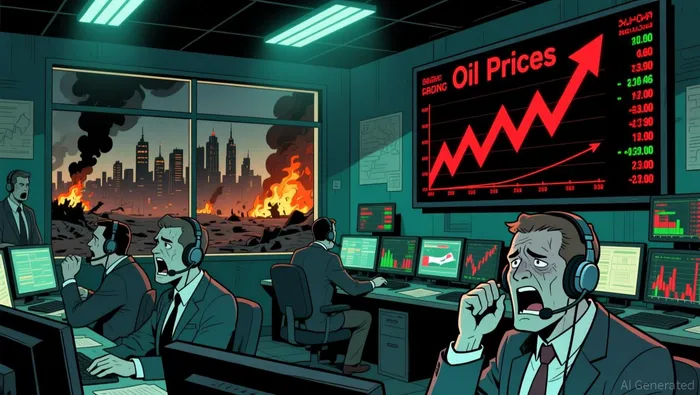
Why Is the Dow Falling as Iran War Uncertainty Rises?
The ongoing conflict between the U.S. and Iran has caused significant uncertainty in global markets. The , a critical oil export route, remains closed to unapproved vessels, leading to a supply disruption that has pushed oil prices to multi-month highs. Investors fear that without a clear resolution, the war could drag on for several weeks, further elevating energy costs and stoking inflation. The S&P Global Ratings report forecasts modest U.S. , signaling a tempered outlook for the economy amid potential macroeconomic headwinds.
Historically, major market downturns have often been followed by strong rebounds, but the timeline for recovery can vary. In the case of the 2008 financial crisis, the S&P 500 took nearly four years to return to pre-crisis levels. Experts suggest that investors with long-term horizons should consider staying the course rather than trying to time the market, as selling during a downturn can lock in losses and miss potential recovery gains. For those nearing retirement, however, the risk-reward balance shifts, and they may need to adjust their spending and withdrawal strategies to preserve capital.
How Are Oil Prices Affecting the S&P 500 and Nasdaq?
The S&P 500 and Nasdaq have been particularly vulnerable to recent volatility due to their sensitivity to interest rate expectations and economic growth forecasts. The Nasdaq, which is dominated by technology stocks, has entered correction territory faster than the broader S&P 500, as investors shift money away from high-growth stocks in favor of safer assets. This shift has been amplified by rising bond yields, which have made fixed-income investments more attractive relative to equities.
Oil prices are a key driver of inflation, and as prices continue to climb, analysts warn of a potential wave of price increases across sectors. The Federal Reserve may be forced to delay rate cuts until late 2027 if the conflict continues, further complicating the investment landscape. For now, the market is watching for any signs of a diplomatic breakthrough that could ease tensions and stabilize oil prices. Until then, volatility is expected to remain elevated, with investors likely to remain cautious.
What Should Investors Watch as Geopolitical Tensions Escalate?
Investors should keep an eye on several key indicators as the situation in the Middle East unfolds. These include:
- Oil Prices, and if fighting continues, some analysts predict prices could climb as high as $200.
- Federal Reserve Policy: The central bank's ability to respond with interest rate cuts could be constrained if inflation remains stubbornly high.
- Market Corrections: The S&P 500 has entered a correction phase, and while this is not uncommon, the duration of the correction will depend on how long the geopolitical tensions persist.
- Consumer Confidence: Rising energy prices could impact consumer spending, especially in sectors like transportation and manufacturing.
In summary, while the current market environment is challenging, history shows that markets tend to recover from significant downturns over time. Investors are being advised to remain patient and to avoid making emotional decisions that could lock in losses. For those with a long-term time horizon, market dips can present opportunities to buy at a discount. However, for those with retirement approaching, the risk of missing out on growth due to a prolonged downturn is higher, and a more cautious approach may be necessary.
Financial Media, "Economic Outlook U.S. Q2 2026: Curb Your Enthusiasm"Financial Media, "When Stock Markets Are Rattled, Even by War, It Usually Pays for Investors to Be Patient"Yahoo Finance, "Dow Tumbles 800 Points and the S&P 500 Posts Its Fifth..."

Stay ahead of the market.
Get curated U.S. market news, insights and key dates delivered to your inbox.


AInvest
PRO
AInvest
PRO



Comments
No comments yet