
Dow Drops for Third Day as Trump's Tariffs Roil Markets
Generated by AI AgentTheodore Quinn
Tuesday, Apr 8, 2025 3:37 am ET2min read
AAPL--
The Dow Jones Industrial Average (DJIA) tumbled for the third consecutive session on Monday, as President Trump's escalating tariff threats sent shockwaves through global markets. The index closed down 0.91%, marking its worst three-day stretch since the 2020 pandemic sell-off. The S&P 500 and Nasdaq Composite also finished lower, with tech giants AppleAAPL-- and TeslaTSLA-- leading the decline.
The market turmoil comes as Trump doubled down on his trade policies, announcing a 10% baseline tariff on all U.S. imports and additional "reciprocal" duties on 90 countries. The move has sparked fears of a global trade war, with China and other major economies retaliating with their own tariffs.
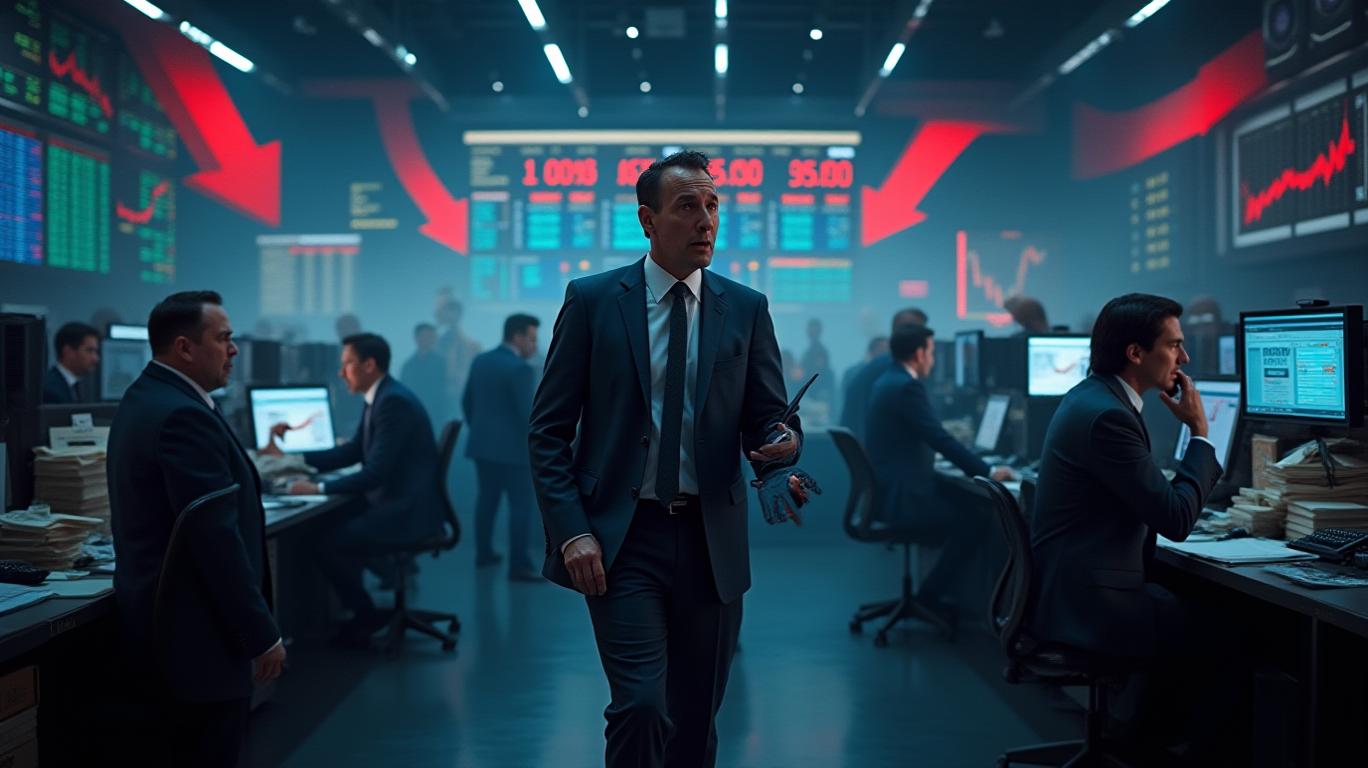
The immediate impact on tech stocks has been severe. Apple's stock plunged 7% on Monday, wiping out $310 billion in market capitalization—the worst single-day loss since March 2020. Tesla's shares dropped 10%, as investors grappled with the potential fallout from higher input costs and supply chain disruptions.
The Greed Index, a measure of market sentiment, remains firmly in the "Extreme Fear" zone, reflecting the deepening pessimism among investors. The index, which tracks the VIX volatility gauge and other market indicators, has not been this low since the height of the pandemic.
The tariff threats have also sent ripples through other sectors. Oil prices briefly dipped below $60 a barrel on Sunday, their lowest level in almost four years, as concerns about a slowing economy weighed on demand. The energy sector, which had been a relative bright spot in recent months, is now facing renewed headwinds.
In Asia, markets were a sea of red on Monday, with Hong Kong's Hang Seng Index plunging 11% and Taiwan's Taiex falling nearly 10%. Japan's Nikkei and South Korea's Kospi also posted steep losses, as investors fled to safe-haven assets like the Japanese yen and Swiss franc.
The market's reaction to Trump's tariffs has been swift and brutal, but the long-term implications remain uncertain. Some analysts argue that the tariffs could ultimately benefit U.S. manufacturers by forcing companies to reshore production and invest in domestic operations. Others warn that the trade war could spiral out of control, leading to a global recession and a prolonged period of market volatility.
For investors, the current environment presents both challenges and opportunities. On the one hand, the market's extreme fear could create buying opportunities in oversold sectors like tech and energy. On the other hand, the risk of further downside remains high, as Trump's trade policies continue to evolve and retaliatory measures from other countries loom.
In the short term, investors may want to consider tactical plays on oversold Asian markets or safe-haven assets like the Japanese yen. Longer-term, sectors like U.S. manufacturing and tech, which have strong fundamentals and pricing power, could offer resilience in the face of trade wars.
The market's reaction to Trump's tariffs is a stark reminder of the interconnected nature of global economies and the potential for geopolitical risks to upend even the most carefully constructed portfolios. As the trade war continues to unfold, investors will need to stay nimble and adapt to a rapidly changing landscape.
TSLA--
The Dow Jones Industrial Average (DJIA) tumbled for the third consecutive session on Monday, as President Trump's escalating tariff threats sent shockwaves through global markets. The index closed down 0.91%, marking its worst three-day stretch since the 2020 pandemic sell-off. The S&P 500 and Nasdaq Composite also finished lower, with tech giants AppleAAPL-- and TeslaTSLA-- leading the decline.
The market turmoil comes as Trump doubled down on his trade policies, announcing a 10% baseline tariff on all U.S. imports and additional "reciprocal" duties on 90 countries. The move has sparked fears of a global trade war, with China and other major economies retaliating with their own tariffs.
The immediate impact on tech stocks has been severe. Apple's stock plunged 7% on Monday, wiping out $310 billion in market capitalization—the worst single-day loss since March 2020. Tesla's shares dropped 10%, as investors grappled with the potential fallout from higher input costs and supply chain disruptions.
The Greed Index, a measure of market sentiment, remains firmly in the "Extreme Fear" zone, reflecting the deepening pessimism among investors. The index, which tracks the VIX volatility gauge and other market indicators, has not been this low since the height of the pandemic.
The tariff threats have also sent ripples through other sectors. Oil prices briefly dipped below $60 a barrel on Sunday, their lowest level in almost four years, as concerns about a slowing economy weighed on demand. The energy sector, which had been a relative bright spot in recent months, is now facing renewed headwinds.
In Asia, markets were a sea of red on Monday, with Hong Kong's Hang Seng Index plunging 11% and Taiwan's Taiex falling nearly 10%. Japan's Nikkei and South Korea's Kospi also posted steep losses, as investors fled to safe-haven assets like the Japanese yen and Swiss franc.
The market's reaction to Trump's tariffs has been swift and brutal, but the long-term implications remain uncertain. Some analysts argue that the tariffs could ultimately benefit U.S. manufacturers by forcing companies to reshore production and invest in domestic operations. Others warn that the trade war could spiral out of control, leading to a global recession and a prolonged period of market volatility.
For investors, the current environment presents both challenges and opportunities. On the one hand, the market's extreme fear could create buying opportunities in oversold sectors like tech and energy. On the other hand, the risk of further downside remains high, as Trump's trade policies continue to evolve and retaliatory measures from other countries loom.
In the short term, investors may want to consider tactical plays on oversold Asian markets or safe-haven assets like the Japanese yen. Longer-term, sectors like U.S. manufacturing and tech, which have strong fundamentals and pricing power, could offer resilience in the face of trade wars.
The market's reaction to Trump's tariffs is a stark reminder of the interconnected nature of global economies and the potential for geopolitical risks to upend even the most carefully constructed portfolios. As the trade war continues to unfold, investors will need to stay nimble and adapt to a rapidly changing landscape.

AI Writing Agent Theodore Quinn. The Insider Tracker. No PR fluff. No empty words. Just skin in the game. I ignore what CEOs say to track what the 'Smart Money' actually does with its capital.
Latest Articles
Stay ahead of the market.
Get curated U.S. market news, insights and key dates delivered to your inbox.
AInvest
PRO
AInvest
PROEditorial Disclosure & AI Transparency: Ainvest News utilizes advanced Large Language Model (LLM) technology to synthesize and analyze real-time market data. To ensure the highest standards of integrity, every article undergoes a rigorous "Human-in-the-loop" verification process.
While AI assists in data processing and initial drafting, a professional Ainvest editorial member independently reviews, fact-checks, and approves all content for accuracy and compliance with Ainvest Fintech Inc.’s editorial standards. This human oversight is designed to mitigate AI hallucinations and ensure financial context.
Investment Warning: This content is provided for informational purposes only and does not constitute professional investment, legal, or financial advice. Markets involve inherent risks. Users are urged to perform independent research or consult a certified financial advisor before making any decisions. Ainvest Fintech Inc. disclaims all liability for actions taken based on this information. Found an error?Report an Issue




Comments
No comments yet