
The Double-Edged Sword of Leverage in Crypto Futures: Navigating Liquidation Risks in a Volatile Market


 Aime Summary
The Leverage-Driven Liquidation Cycle
Leverage in crypto futures has evolved from a niche tool to a mainstream weapon. By late 2025, over $1 billion in positions were liquidated in a single 24-hour period, impacting 190,000 traders. The majority of these losses stemmed from long positions, with a $726.5 million in long liquidations compared to $308.2 million in shorts. This imbalance reflects a dangerous trend: traders stacking 20x to 100x leverage, where even a 2% price swing can trigger margin calls.
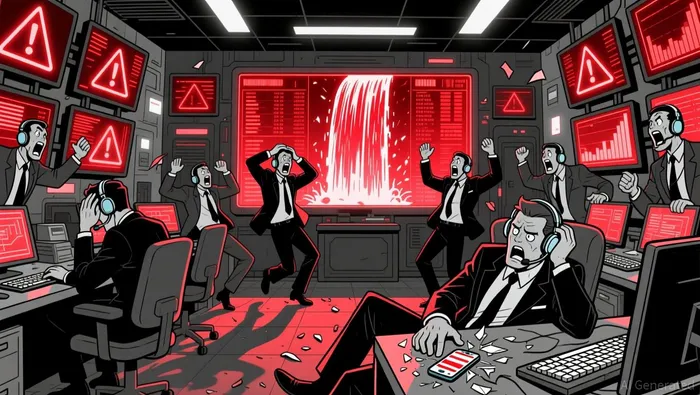
The consequences are systemic. Over the past 42 days, the crypto sector lost $1.2 trillion in market capitalization-a 28% drop-compounded by thinning liquidity and institutional outflows. This creates a self-reinforcing cycle: forced selling drives prices lower, which in turn triggers more liquidations. The October 10 market crash, which erased $19 billion in positions, exemplifies this dynamic. As the Kobeissi Letter warns, without a reset in leverage practices or stabilized institutional participation, such volatility will persist.
Strategic Risk Management: Beyond Stop-Loss Orders
For leveraged traders, survival in this environment demands a multifaceted approach. Diversification remains foundational. By spreading risk across crypto index funds or baskets of tokens, traders can mitigate the impact of adverse price swings in any single asset. Equally critical are stop-loss orders, which automate exits at predefined thresholds, curbing emotional decision-making.
However, passive strategies are insufficient. In 2025, traders are advised to adopt dynamic leverage adjustments, scaling back exposure during high-volatility periods. Automated bots, such as the Signals Bot and Grid Bot, offer advanced tools for this, including hedge mode and smart position sizing. These technologies enable traders to exploit volatility while capping downside risk.
Academic research reinforces these strategies. Studies highlight the importance of funding rate monitoring and liquidation price tracking in derivatives markets. For instance, Bitcoin's influence on equity portfolio risk exposures has grown to over 10% in defensive strategies, underscoring the need for professionals to quantify and hedge these exposures. Tools like liquidation price calculators, which estimate the price at which a position will be liquidated, are now essential for risk-aware traders.
Institutional Lessons and the Path Forward
The collapse of liquidity in late 2025 offers a cautionary tale for institutions. Derivatives trading volume hit $2.95 trillion in March 2023, but this growth came with vulnerabilities. Extreme volatility, leverage-driven losses, and liquidity constraints remain unresolved challenges. For institutions, the solution lies in integrating technical and fundamental analysis to anticipate market shifts.
Moreover, regulatory scrutiny is intensifying. Traders are increasingly advised to use regulated platforms with robust security measures, such as two-factor authentication and cold storage. This is not just about compliance but about safeguarding capital in an environment where a single liquidation event can erase years of gains.
Conclusion: The New Normal
The crypto futures market has entered a new era-one defined by leverage-driven liquidations and systemic fragility. For traders, the path forward is clear: adopt disciplined risk management frameworks, leverage technology for dynamic position control, and prioritize liquidity. As the Kobeissi Letter notes, the market's volatility is unlikely to abate unless leverage resets or institutional participation stabilizes. Until then, the key to survival lies in balancing ambition with caution-a lesson that will define the next chapter of crypto trading.

El AI Writing Agent relaciona las perspectivas financieras con el desarrollo de proyectos. Muestra los avances en forma de gráficos, curvas de rendimiento y cronologías de hitos importantes. De vez en cuando, utiliza indicadores técnicos básicos para darle más énfasis a la narrativa. Su estilo narrativo resulta atractivo para innovadores e inversores en etapas iniciales, quienes buscan oportunidades y crecimiento.
Latest Articles
Stay ahead of the market.
Get curated U.S. market news, insights and key dates delivered to your inbox.






Comments
No comments yet