
The Double-Edged Sword of AI: Corporate Cost-Cutting and the Reshaping of Labor Markets in 2025


 Aime Summary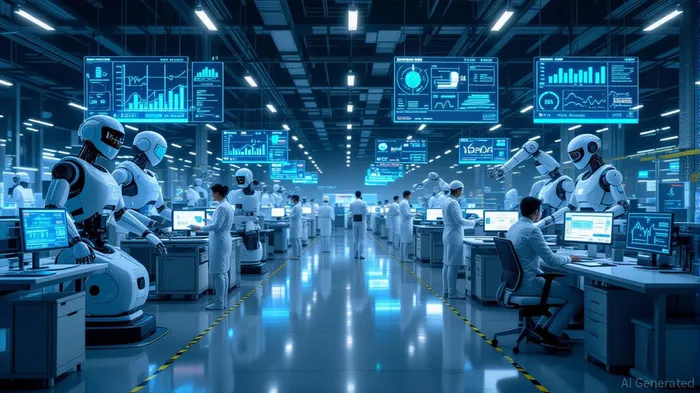
The year 2025 has ushered in a paradox: while corporate profits and equity valuations soar, labor markets face unprecedented volatility. The relentless march of artificial intelligence (AI) and corporate restructuring is redefining the relationship between capital and labor, creating winners and losers across sectors. For investors, understanding this dynamic is critical to navigating a landscape where technological efficiency and human displacement coexist.
The AI-Driven Shift in Labor Demand
Corporate cost-cutting, once a cyclical response to economic downturns, has become a structural imperative in 2025. Firms are leveraging AI to automate routine tasks, from customer service to inventory management, with profound consequences for employment. In manufacturing, AI-powered predictive maintenance has reduced equipment downtime by 30% at companies like Siemens, while AI-driven automation in logistics has cut operational expenses by up to 40%. Retailers, too, are embracing AI: chatbots now handle 80% of customer inquiries, and smart inventory systems minimize stockouts, reducing the need for manual labor.
Yet this efficiency comes at a cost. Sectors reliant on repetitive tasks—such as call centers, administrative roles, and even parts of software development—are experiencing negative employment growth. Goldman Sachs' chief U.S. economist, Jan Hatzius, notes that industries most exposed to AI, including graphic design and marketing consulting, have seen job losses accelerate. Meanwhile, demand for AI specialists, data scientists, and cybersecurity experts is surging, creating a stark divide between high-skill and low-skill labor markets.
Equity Valuations in the AI Era
The impact on equity valuations is equally striking. The S&P 500's first half of 2025 saw earnings consistently exceed expectations, driven by AI's productivity gains. Tech giants like NVIDIANVDA-- and MicrosoftMSFT-- have reaped the rewards: NVIDIA's revenue surged 56% year-on-year in Q2 2025, while Microsoft's Azure cloud services grew 33%. These gains have fueled market optimism, with AI-focused stocks outperforming the broader index.
However, the euphoria is tempered by caution. Investors are increasingly scrutinizing companies' AI strategies, demanding tangible ROI rather than speculative hype. For instance, Salesforce's stock dipped after weak guidance highlighted the risks of overreliance on AI-driven cost-cutting without clear monetization. Analysts estimate AI could inject $13–16 trillion into global stock markets by 2026, but this potential hinges on firms' ability to integrate AI into core operations without destabilizing their workforce.
Notably, historical backtests reveal that when NVIDIA beats earnings expectations, its stock has demonstrated a 70% positive return rate over 30 days, with some instances showing gains of up to 14%. This underscores the stock's strong momentum following outperforming results, aligning with its broader AI-driven growth narrative.
Sector-Specific Dynamics
Technology: The “Magnificent Seven” tech firms have outperformed the S&P 500 by over 14% in Q2 2025, with NVIDIA's stock rising over 10-fold since late 2022. However, smaller tech firms lacking AI expertise face existential threats as traditional business models become obsolete.
Retail: The sector is redefining its workforce, shifting from transactional roles to AI-enhanced customer experiences. Retailers like WalmartWMT-- and Target use AI for real-time inventory tracking, reducing stockouts by 16%. Yet this automation has cut customer service staffing needs by 68% during peak seasons, raising concerns about job displacement.
Manufacturing: AI is addressing labor shortages by optimizing workforce planning and reducing turnover costs. Deloitte reports that 55% of manufacturers now use generative AI for product design and operations. However, the sector's reliance on AI also exposes it to supply chain risks and regulatory scrutiny over data privacy.
Consumer Confidence and the Human Factor
Consumer confidence remains resilient in 2025, buoyed by easing inflation and anticipated Fed rate cuts. Yet AI's encroachment into retail and service sectors has sparked unease. While 74% of consumers prefer AI chatbots for routine queries, many fear the erosion of human interaction. Retailers must balance automation with ethical labor practices to maintain trust—a challenge that could influence long-term brand value.
Investment Strategies for a Fragmented Labor Market
For investors, the key lies in hedging against volatility while capitalizing on AI's transformative potential:
Prioritize AI-Ready Firms: Invest in companies with clear AI roadmaps and scalable use cases. NVIDIA, Microsoft, and AmazonAMZN-- (with its AI-driven sales model) exemplify this strategy. Avoid firms clinging to outdated models, such as legacy BI software providers. The historical performance of NVIDIA—showing a 70% positive return rate over 30 days after earnings beats—further validates the potential of AI-first firms.
Diversify Across Sectors: While tech and manufacturing offer high-growth opportunities, sectors like healthcare and education—less susceptible to AI-driven displacement—provide stability.
Monitor Labor Market Indicators: Track unemployment trends in AI-exposed industries. A surge in jobless claims could signal broader economic risks, while wage growth in high-skill roles may indicate structural shifts.
Embrace ESG Considerations: Companies investing in workforce reskilling and ethical AI deployment are better positioned for long-term resilience.
Conclusion
The 2025 labor market is a battleground between technological progress and human capital. While AI-driven efficiency is boosting corporate valuations, it is also exacerbating job market volatility. For investors, the path forward requires a nuanced approach: backing innovation while mitigating the risks of displacement. As policymakers grapple with the social implications of AI, the markets will reward those who adapt with foresight and flexibility. The future belongs to those who can navigate the duality of AI's promise and peril.
"""

Stay ahead of the market.
Get curated U.S. market news, insights and key dates delivered to your inbox.
AInvest
PRO
AInvest
PRO



Comments
No comments yet