
The Double-Edged Jackpot: West Virginia's Lottery Boom and the Balancing Act of Fiscal Gain vs. Gambling Risks
West Virginia's lottery revenue hit a record $1.3 billion in fiscal year 2024, a 12% surge over projections, fueled by innovations like instant games and online platforms such as Jackpocket. This windfall has become a lifeline for state budgets, funding education scholarships, infrastructure projects, and senior services. Yet, beneath the glitter of jackpots lies a darker reality: the state ranks 8th in the nation for gambling861167-- addiction, with 1 in 50 residents grappling with dependency. The question for investors and policymakers alike is clear: Can West Virginia sustain its fiscal gains without exacerbating societal costs?
The Fiscal Lifeline: Lottery Revenue Powers State Initiatives
West Virginia's lottery has become a cornerstone of its public finance strategy. In 2024, $109.5 million flowed to education programs, while $46.1 million supported infrastructure—funding roads, bridges, and broadband upgrades. The state's legislative push to restore infrastructure funding to $40 million annually under stalled House Bill 2597 underscores its reliance on these funds. Even as the bill remains in legislative limbo, the lottery's 40% revenue allocation to public programs has enabled investments in areas like the Higher Education Improvement Fund, which receives $15 million yearly.
The lottery's growth defies demographic headwinds. Despite a 3.5% population decline since 2010, participation has surged, driven by accessibility. A network of 1,500 physical retailers, 1,200 video lottery terminals, and digital platforms like Jackpocket—where small wins are auto-credited—have broadened reach. Instant games, which now account for 40% of revenue, have boosted per capita sales to $0.15 weekly, rivaling states like Florida and Pennsylvania.
The Shadow Side: Gambling Dependency and Its Costs
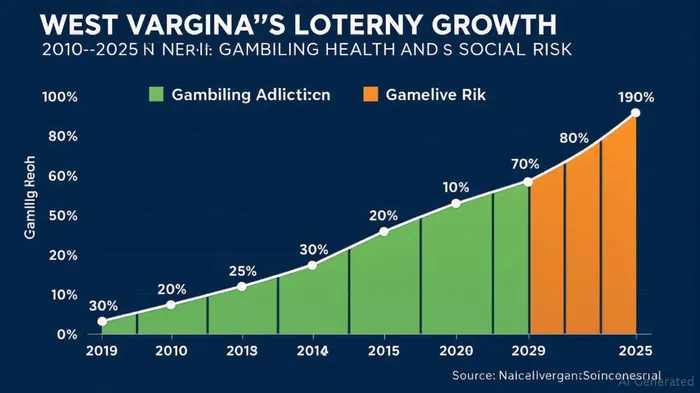
For every dollar the lottery generates, there are hidden costs. West Virginia's gambling addiction crisis is worsening. WalletHub's 2025 report ranked the state 8th in gambling addiction, with 1 in 50 residents affected. The Problem Gambling Help Network (1-800-GAMBLER) saw calls rise to 1,400 annually by 2025, up from 1,200 the prior year—a 17% increase. The shift in demographics is stark: Young men (18–40) now dominate calls, replacing the traditional middle-aged female demographic linked to slot machines.
College campuses are ground zero for this shift. A 2023 NCAA survey found 6% of students aged 18–22 exhibit problem gambling behaviors, with sports betting apps acting as entry points. Kathleen Servian of West Virginia University notes that 18–24-year-olds are the most vulnerable to addiction, driven by the adrenaline of instant wins and the illusion of control offered by digital platforms.
The human toll is dire. Sheila Moran of First Choice Services warns that gambling addiction has one of the highest suicide rates among addictions. State-funded programs, including self-exclusion tools and financial counseling, are overwhelmed. Meanwhile, the proliferation of online gambling—legalized in 2019—has accelerated the problem, with younger gamblers experiencing faster financial ruin and higher rates of theft to fuel their habits.
The Investment Crossroads: Riding the Boom or Bailing on the Bust?
For investors, West Virginia's lottery ecosystem presents opportunities—and risks. The state's fiscal stability has drawn interest in municipal bonds, particularly those tied to infrastructure projects funded by lottery proceeds. However, the stalled HB2597 highlights legislative uncertainty, with infrastructure funding hanging on political compromise.
Lottery technology providers like Scientific Games (SGMS) and International Game Technology (IGT) are key beneficiaries. Their software powers instant games and online platforms, and their stock performance correlates directly with lottery revenue trends.
Investors should also monitor gaming ETFs like the Global X Gaming ETF (GAMR), which tracks companies exposed to lottery and sports betting markets. Yet, these bets come with caveats: Overregulation or a public backlash against gambling could crimp growth.
A Path Forward: Balancing Fiscal Needs and Public Health
West Virginia must thread the needle between revenue generation and harm reduction. Key steps include:
1. Strengthening Addiction Resources: Expand funding for counseling, self-exclusion programs, and education campaigns targeting youth.
2. Age-Appropriate Regulation: Enforce strict ID checks for online platforms and consider higher age limits for sports betting.
3. Transparent Allocation: Tie lottery revenues to measurable outcomes, such as infrastructure completion rates or graduation rates from scholarship programs.
4. Diversify Revenue Streams: Reduce reliance on gambling by exploring other tax sources, such as carbon credits or tourism, to stabilize budgets.
Final Analysis: A Cautionary Gamble
West Virginia's lottery is a double-edged sword. Its revenue has been a fiscal savior, but its societal costs—particularly among young adults—are mounting. For investors, the state's bonds and lottery tech stocks offer upside, but they must weigh the risks of regulatory crackdowns or public outrage over addiction. The path forward demands a commitment to both fiscal pragmatism and public health—a balance as delicate as a poker hand at the table.
In the end, West Virginia's success hinges not just on selling more tickets, but on ensuring its citizens aren't paying too high a price to win.

Stay ahead of the market.
Get curated U.S. market news, insights and key dates delivered to your inbox.


AInvest
PRO
AInvest
PRO



Comments
No comments yet