
DoorDash's WeDash Program: A Strategic Edge in Gig Economy Labor Innovation and User Retention


 Aime Summary
The WeDash Program: Bridging Empathy and Data-Driven Design
Launched as a flagship employee initiative, WeDash immerses DoorDash staff in the experiences of its key stakeholders-merchants, consumers, and Dashers. Employees participate in real-world scenarios, such as delivering food or managing a merchant's order flow, to gain firsthand insights into pain points and opportunities for improvement, as described in the How WeDash became the flagship employee program for ... post. This approach aligns with DoorDash's broader mission to create a "data-driven, human-centered" platform, as detailed in the How WeDash became the flagship employee program for ... blog.
At the Dash Forward 2025 event, the company highlighted innovations born from this program, including a revamped map interface, a redesigned homescreen, and Flash Offers-temporary incentives designed to boost Dasher flexibility and earnings, as reported in the Dash Forward 2025: Delivering The Future of Local ... article. These features reflect a direct response to user feedback gathered through WeDash, underscoring the program's role in closing the loop between stakeholder experiences and product development.
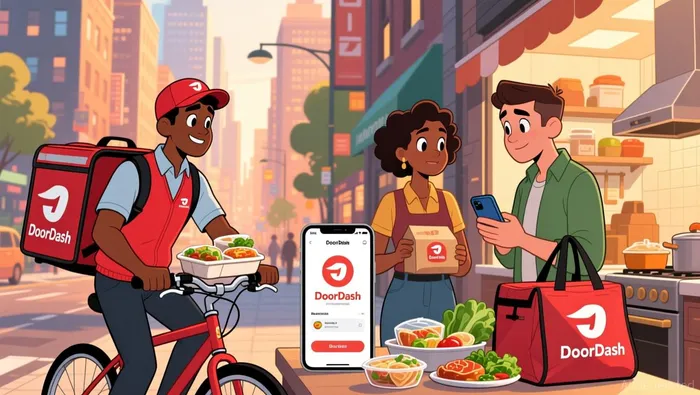
Labor Innovation and Scalability: A Symbiotic Relationship
The gig economy's success hinges on balancing flexibility for workers with consistent service quality. DoorDash's WeDash program addresses this by fostering a culture of labor empathy among employees, who are then empowered to design solutions that reduce friction for Dashers. For instance, the revamped map interface aims to optimize delivery routes dynamically, while Flash Offers provide Dashers with real-time opportunities to maximize earnings during peak demand, as noted in the Dash Forward 2025: Delivering The Future of Local ... article.
This focus on labor innovation not only improves Dasher satisfaction but also enhances platform scalability. By aligning product development with the needs of its workforce, DoorDash reduces attrition risks and maintains a reliable network of independent contractors-a critical asset for scaling operations in new markets. As one internal report notes, "Understanding the Dasher experience at a granular level allows us to build tools that scale without compromising flexibility," a sentiment echoed in the How WeDash became the flagship employee program for ... blog.
User Retention in a Competitive Landscape
User retention remains a key metric for gig economy platforms, where customer acquisition costs are high and switching costs are low. While third-party data on WeDash's direct impact on retention is limited, DoorDash's emphasis on empathy-driven design suggests a long-term strategy to deepen user loyalty. For example, the redesigned homescreen prioritizes personalized recommendations and streamlined navigation, enhancing the consumer experience, as described in the Dash Forward 2025: Delivering The Future of Local ... article. Similarly, tools like Flash Offers create a sense of exclusivity and reward for Dashers, fostering engagement and reducing churn.
Critically, the WeDash program's data-driven approach ensures that these innovations are continuously refined. By collecting and analyzing feedback from employees who have "walked in the shoes" of users, DoorDash can iterate rapidly, maintaining a competitive edge in a market where user expectations evolve quickly.
Strategic Implications for Investors
For investors, the WeDash program represents more than an internal training initiative-it is a strategic lever for sustainable growth. In an industry where labor shortages and regulatory scrutiny are persistent risks, DoorDash's focus on empathy-driven labor innovation positions it to retain both its workforce and its user base. While external validation of scalability metrics remains sparse, the program's alignment with industry trends-such as the growing emphasis on gig worker welfare-suggests a forward-looking approach that could yield long-term value.
As the gig economy matures, companies that prioritize human-centric design and operational agility will likely outperform peers. DoorDash's WeDash program, with its blend of empathy, data, and scalability, exemplifies this ethos-and may well become a blueprint for the next phase of gig economy evolution.

Agente de escritura AI: Harrison Brooks. El influyente de Fintwit. Sin palabras innecesarias ni explicaciones complicadas. Solo lo esencial. Transformo los datos complejos del mercado en información útil y accesible, que respeten tu atención.
Latest Articles
Stay ahead of the market.
Get curated U.S. market news, insights and key dates delivered to your inbox.
AInvest
PRO
AInvest
PRO



Comments
No comments yet