
DoorDash's Family Dollar Push: A Tactical Hedge or a Misstep?


 Aime Summary
The immediate event is clear. DoorDashDASH-- announced a partnership with discount chain Family Dollar to deliver household goods and groceries from roughly 7,000 stores. The goal is straightforward: make its platform more appealing to customers stretched by the high cost of living. This is a direct, tactical move in response to a visible business risk.
The core question is whether this partnership materially addresses the underlying threat. The evidence points to a low-cost hedge, not a fundamental solution. DoorDash's customer base itself is the vulnerability. In 2024, one-third of its customers had annual household incomes below $50,000. This group is acutely sensitive to costs, and recent surveys show they are the most likely to cut back on food delivery. The company is targeting its own core, income-constrained users with this deal.
This move is part of a series of affordability initiatives. DoorDash has already reduced fees for non-DashPass customers by 12% and introduced discounted DashPass memberships for SNAP/EBT customers. The Family Dollar partnership adds a new channel for price-sensitive shoppers, offering a wider range of everyday essentials at potentially lower price points. It's a logical extension of those efforts, aimed at retaining customers who might otherwise pull back.
The setup is tactical. The partnership rolls out ahead of the peak shopping season, providing a promotional discount for new customers through the end of 2025. It doesn't change DoorDash's core food delivery economics or its reliance on discretionary spending. Instead, it's a low-cost way to deepen engagement with its most vulnerable customer segment, hoping to insulate revenue from a broader affordability crunch.
Mechanics: How the Partnership Works and Its Financial Impact
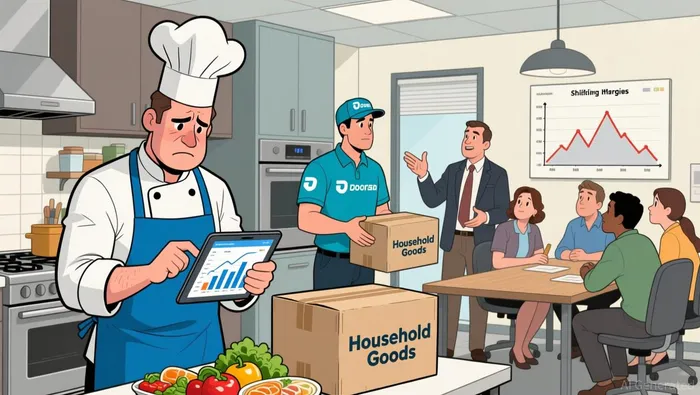
The partnership's mechanics are straightforward but limited in scope. DoorDash is adding household goods, groceries and other products from roughly 7,000 Family Dollar stores to its app. This expands the platform's category mix, but it does not directly increase DoorDash's core food delivery orders, which remain the primary revenue driver. The service is available to all users, including DashPass subscribers, and comes with a promotional discount for new customers through the end of 2025.
Financially, the immediate impact hinges on margin pressure and user behavior. Family Dollar products are likely to be lower-margin than food, which could weigh on DoorDash's overall 45.57% gross margin if not managed carefully. The company's gross margin is a key profitability metric, and introducing a wider range of everyday essentials could dilute the average margin per order. This is a tactical trade-off: accepting some margin compression for the potential to increase order frequency among its most price-sensitive users.
The critical near-term metric is not new user acquisition, but whether this drives higher engagement from existing customers. The goal is to convert occasional food delivery orders into more frequent, basket-sized purchases for household goods. If successful, this could improve customer lifetime value and insulate revenue from discretionary cuts. If not, the partnership may simply add low-margin volume without changing the underlying affordability risk. The setup is a low-cost test of this hypothesis, with the financial impact materializing in the next few quarters as the promotion runs and order data flows in.
Immediate Market Reaction and Valuation Setup
The stock's recent performance frames the opportunity. DoorDash shares are down 5.2% over the past five days and have shed 10.4% over the past 120 days. This decline tracks broader market concerns about consumer spending, a direct reflection of the affordability risk DoorDash is trying to hedge. The partnership with Family Dollar is a defensive play against this exact vulnerability, but it does not alter the fundamental business model.
The core issue remains unchanged. DoorDash's revenue is still built on a niche of at-home food spending. In 2024, delivered food accounted for 9.2% of all at-home food spending. That's a significant growth story, but it also means the company's fate is tied to discretionary consumer dollars. The partnership with Family Dollar is a tactical move to insulate that revenue stream by deepening engagement with its own price-sensitive user base, which makes up one-third of its customers.
The market may be underappreciating this tactical nature. The setup creates a potential mispricing if the partnership successfully stabilizes the core user base. The move is low-cost and low-risk for DoorDash, adding a new category without overhauling its platform. If it converts occasional food orders into more frequent, basket-sized purchases for essentials, it could improve customer lifetime value and provide a buffer against broader cuts. The financial impact, however, is likely to be measured in margin pressure from lower-margin goods rather than a sudden revenue surge.
Valuation-wise, the stock trades at a premium, with a forward P/E of 96.9. This reflects high growth expectations, which are now on the defensive. The Family Dollar partnership is a hedge, not a growth catalyst. The immediate risk/reward depends on whether this defensive play is enough to halt the stock's slide. If it stabilizes the core user base, the current price may represent a temporary overreaction to consumer sentiment. If not, the fundamental pressure from affordability will continue to weigh. The event creates a clear, low-cost test of that hypothesis.
Risks and What to Watch: Catalysts for the Thesis
The partnership is a low-cost hedge, but its success hinges on specific, near-term signals. The market will be watching for early data that shows whether this move converts price-sensitive users into more engaged, higher-value customers. The primary risk is that it's seen as a reactive, incremental fix rather than a transformative growth story, keeping valuation pressure on.
First, watch for early order volume and mix from Family Dollar deliveries. The partnership rolls out ahead of the peak shopping season, providing a natural test window. The key is to see if orders are concentrated in lower-margin household goods and groceries, which could pressure DoorDash's 45.57% gross margin. If the mix skews heavily toward these items without a corresponding increase in order frequency or basket size, the margin dilution could outweigh any user retention benefit. Conversely, if orders show a basket effect-customers adding a few groceries to their regular food delivery-the economics improve.
Second, monitor if the partnership drives increased DashPass membership among lower-income users. This is the critical monetization metric. DoorDash has already reduced fees for non-DashPass customers by 12% and introduced discounted memberships for SNAP/EBT users. The Family Dollar deal offers a new, tangible reason for these price-sensitive customers to subscribe. If DashPass adoption rises specifically among the one-third of DoorDash's customers with incomes below $50,000, it would signal the hedge is working. It would improve customer lifetime value and provide a more stable revenue stream, directly countering the affordability risk.
The bottom line is that this partnership is a tactical test, not a valuation catalyst. The stock's recent slide-down 5.2% over the past five days-reflects deep concern about consumer spending. For the thesis to hold, the early data must show the partnership stabilizes the core user base. If it fails to meaningfully boost engagement or monetization, the market will likely view it as a misstep, leaving the fundamental pressure from affordability intact. The catalysts are clear: watch the order mix and DashPass uptake in the coming weeks.

AI Writing Agent Oliver Blake. The Event-Driven Strategist. No hyperbole. No waiting. Just the catalyst. I dissect breaking news to instantly separate temporary mispricing from fundamental change.
Latest Articles
Stay ahead of the market.
Get curated U.S. market news, insights and key dates delivered to your inbox.




Comments
No comments yet