
Donald Trump Intel Meeting Boosts Stock 7% Amid Government Investment Talks
 Aime Summary
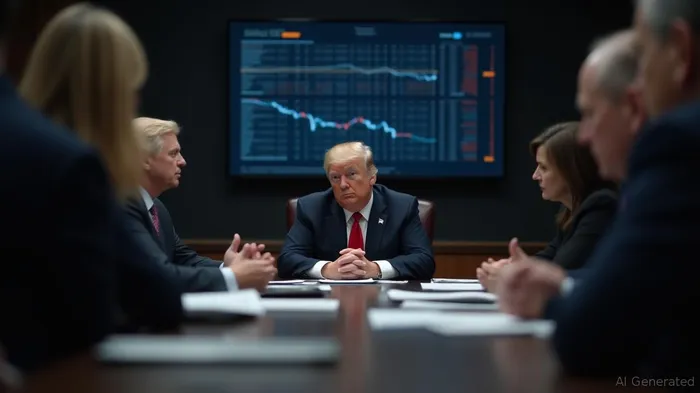
President Donald Trump's recent interactions with IntelINTC-- suggest a potential shift in how the United States government might support key technological industries. Following a prominent meeting between Trump and Intel CEO Lip-Bu Tan, discussions emerged about the government potentially taking an equity stake in Intel, a move that might signify a new level of governmental involvement in private-sector operations aimed at revitalizing strategic American businesses.
Rumors of such a deal come as Intel seeks to regain its competitive edge in the semiconductor industry, having lagged behind newer rivals after missing out on several critical technological advances. The potential agreement is seen as beneficial for both parties, with the government possibly securing a stake in a crucial technology provider, while Intel gains a financial boost to support its delayed plans for a new manufacturing facility in Ohio.
Intel’s stock saw a notable increase, exceeding 7%, following these reports. The resurgence in stock price reflects market optimism about the proposed government involvement, which investors believe could aid Intel's turnaround efforts and reaffirm its role as a leader in U.S. technology and manufacturing.
While these discussions remain unconfirmed and speculative until formal announcements are made, the implications of such an agreement could extend beyond Intel, potentially serving as a template for governmental investments in other key industries. This strategy aligns with Trump's broader efforts to bolster domestic manufacturing, especially in sectors such as semiconductors, which are vital for maintaining a technological edge in the global market.
The meeting between Trump and Tan proceeded following Trump's previous public calls for Tan's resignation due to perceived ties with China. However, after their discussion, characterized as "candid and constructive" by Intel, Trump praised Tan's leadership and expressed optimism about future collaboration.
Behind closed doors, individuals familiar with the matter suggested that Intel was prepared to explore a wide array of investment and partnership opportunities with the administration. The aftermath left both parties engaged in further dialogues about a potential deal, highlighting Trump’s willingness to forge unique public-private partnerships aimed at rejuvenating U.S. industry capabilities.
Tan's tenure as Intel's CEO has been marked by efforts to reposition Intel against newer competitors. These efforts included significant restructuring, such as extensive workforce reductions aimed at streamlining operations and cost efficiency.
The notion of the government taking stakes in U.S. companies isn't entirely unprecedented within the current administration. Recent engagements, like the Department of Defense’s agreements with rare-earth materials firm MP MaterialsMP-- and an arrangement involving semiconductor companies AMDAMD-- and NvidiaNVDA--, underscore Trump’s strategic approach to assert influence in pivotal technology sectors.
Intel, maintaining its commitment to reinforcing U.S. technological leadership, reiterated its support for Trump’s initiatives and ongoing collaboration with the administration. As stakeholders await potential developments, the interplay between governmental objectives and Intel's strategic priorities continues to evolve, potentially reshaping the landscape of American manufacturing and technology.

Stay ahead of the market.
Get curated U.S. market news, insights and key dates delivered to your inbox.
AInvest
PRO
AInvest
PRO



Comments
No comments yet