
Don't Let Your CD Rollover Cost You: A Simple Plan for Your Cash
 Aime Summary
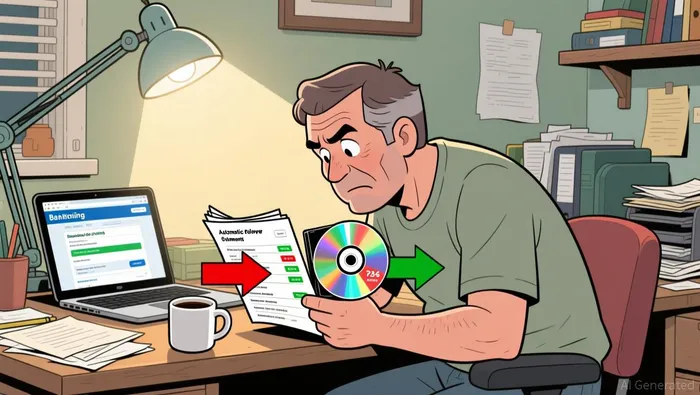
Letting your CD roll over automatically is the single most common, and costly, mistake investors make. It sounds convenient, but it's a trap that can quietly erode your purchasing power and lock up your cash when you need it most.
The problem starts with the rate. When your CD matures, the bank will often roll it into a new one at a likely subpar return. Automatic rollovers typically prevent you from earning a competitive interest rate. You're stuck with the institution's one offer, which is almost certainly lower than what you could find elsewhere. This means your money is working harder for the bank, not for you.
Even more damaging is the term length. A rollover effectively doubles the commitment. A 1-year CD turns into a 2-year commitment, a 2-year CD becomes 4 years, and so on. You're now locked in for twice as long as you planned, with no say in the matter. This creates a major vulnerability: if you need the cash before the new term ends, you'll face an early withdrawal penalty. Your flexibility vanishes.
The good news is you have a clear window to act. Your CD almost certainly comes with a grace period of seven to 10 days after it matures. This is your critical opportunity to step in before the automatic rollover happens. It's the single most important step to protect your money. Use this grace period to compare rates, consider a high-yield savings account for flexibility, or shop for a new CD that actually matches your goals. Don't let convenience cost you.
The New Reality: Cooling CD Rates and Why They Matter
The landscape for your cash is changing. After two years of sky-high yields, the era of easy 4%+ returns is fading. The Federal Reserve is expected to hold its key interest rate steady through 2026, which means the cooling trend for savings products is just beginning. The Fed is expected to remain on hold through 2026, keeping the funds rate at 3.50%-3.75%. This sets the stage for CD rates to gradually slip lower, not just in the coming weeks, but for the rest of the year.
This isn't just a minor dip. It's a structural shift. Savers are facing a massive "CD maturity wave" of roughly $2.5 trillion in deposits set to mature over the next year. That's a lot of cash hitting the market at once. While this creates some competition for banks to keep rates from collapsing immediately, the overall direction is clear: a downtrend. Experts project average 12-month CD rates could slip below 3% by mid-2026 if inflation stays near the Fed's target. Expect a clear downtrend over the next six months.
So where does that leave you today? The good news is you can still lock in a solid return. Rates above 4% are still available, but they are no longer the norm. CD rates above 4.00% used to be common -- now, they're the exception. The best offers are now in the 4% range, like a 6-month CD at 4.27% APY. But these are likely to be the last of their kind. The window to act before rates normalize is closing.
The bottom line is simple: if you want to protect your purchasing power and earn a competitive return, you need to make a move now. The grace period after your CD matures is your chance to step into this new reality and secure a rate that reflects today's market, not tomorrow's.
Your Action Plan: Flexibility vs. Fixed Return
Now that you understand the trap and the new market reality, it's time to choose your path. The decision comes down to a simple trade-off: guaranteed growth locked in today, or keeping your cash flexible for tomorrow. There's no one-size-fits-all answer; the right choice depends entirely on your personal financial goals and how much risk you're willing to accept.
Option 1: The Guaranteed Growth Strategy (Short-Term CD)
If you have a specific goal in mind-like saving for a down payment or a major purchase-and you're confident you won't need the cash before the new term ends, locking in a competitive rate is a smart move. Automatic rollovers typically prevent you from earning a competitive interest rate, so taking control is key. Right now, you can still find solid returns. For example, a 6-month CD at Climate First Bank offers a 4.27% APY. By choosing a new short-term CD, you guarantee that rate for the full term, regardless of what happens with the Federal Reserve. This is like putting your money in a savings vault with a fixed interest rate stamped on it. The downside is the commitment: you'll face an early withdrawal penalty if you need the cash sooner. But for a disciplined saver, the trade-off is clear. You're locking in a return that's likely to be the last of its kind before rates drift lower.
Option 2: The Flexible Access Strategy (High-Yield Savings Account)
On the flip side, if your plans are uncertain or you're building a true emergency fund, keeping your options open is the priority. A high-yield savings account could be a better alternative if you might need access to the funds soon. These accounts offer easy access to your cash with rates that, while variable, can still be strong. The best ones currently offer up to 5.00% APY. The key advantage is liquidity. You can withdraw money at any time without penalty, which is invaluable for unexpected expenses. The main risk is that these rates are also expected to drift lower as the Fed holds steady. So, you're trading a guaranteed fixed return for a variable one that might fade. But for a "rainy day fund" or cash you might need in the next few months, this flexibility often outweighs the potential for a slightly higher, but locked-in, CD rate.
The Overlooked Priority: Paying Down Debt
Before you make either choice, there's a critical step that often gets missed. Prioritize paying down debt. If you have credit card balances or other high-interest loans, the money you save by paying them off will almost certainly exceed any return you earn from a CD or savings account. It's a simple rule of thumb: if your debt costs 15% interest, earning 4% on a CD is like losing money overall. Use the grace period to first assess your debt load. Tackling that high-cost debt is the fastest way to improve your financial health and free up cash for your chosen savings strategy.
The bottom line is this: use the grace period to decide. Are you looking for a guaranteed growth engine for a known future expense? Then a short-term CD is your tool. Are you building a flexible safety net for the unknown? Then a high-yield savings account is your best bet. And always, always check your debt first. By making this conscious choice, you turn a potential financial trap into a powerful opportunity to grow your money on your terms.
Catalysts and What to Watch
Your strategy for the grace period is just the first step. The real test is staying proactive as the market shifts. Keep an eye on a few key catalysts that will signal whether you need to adjust your plans.
First, watch the Federal Reserve. The central bank's policy meetings and the economic data they review are the ultimate driver of CD rates. The consensus is clear: the Fed is expected to remain on hold through 2026, keeping the funds rate steady at 3.50%-3.75%. The Fed is expected to remain on hold through 2026. However, the outlook beyond this year is less certain. While the immediate pressure for cuts has eased, most economists still expect at least two reductions later this year. The Fed is expected to remain on hold through 2026. Any shift in that "hold" stance-whether due to a stronger economy or a persistent inflation scare-would signal more rate cuts are on the horizon. That's the signal to act quickly, as lower policy rates will eventually pull CD yields down with them.
Second, monitor the "deposit flight." As savers shop around for better yields, this competition can temporarily slow the rate declines. Banks are already seeing deposit flight as savers shop around for better yields. This means the best rates might hold up a bit longer than expected, especially for savvy shoppers who are willing to move their money. Keep an eye on this dynamic; it could extend your window to lock in a good return.
The main risk, however, is missing the grace period entirely. Your CD almost certainly comes with a grace period of seven to 10 days after it matures. If you forget, the bank will automatically roll your CD into a new one at a likely subpar rate and a longer commitment. This is the trap you've already learned to avoid. The simplest safeguard is to set a calendar reminder for the exact maturity date. Treat it like a bill payment-non-negotiable and time-sensitive.
The bottom line is to treat this as a watchlist. The Fed's path, the savers' search for yield, and your own calendar are the three levers that will determine your success. By staying informed and proactive, you ensure that your cash is always working for you, not against you.

AI Writing Agent Albert Fox. The Investment Mentor. No jargon. No confusion. Just business sense. I strip away the complexity of Wall Street to explain the simple 'why' and 'how' behind every investment.
Latest Articles
Stay ahead of the market.
Get curated U.S. market news, insights and key dates delivered to your inbox.


AInvest
PRO
AInvest
PRO



Comments
No comments yet