
How Domino's St. Jude Partnership Drives Shareholder Value: A Case Study in Cause-Related Marketing


 Aime Summary
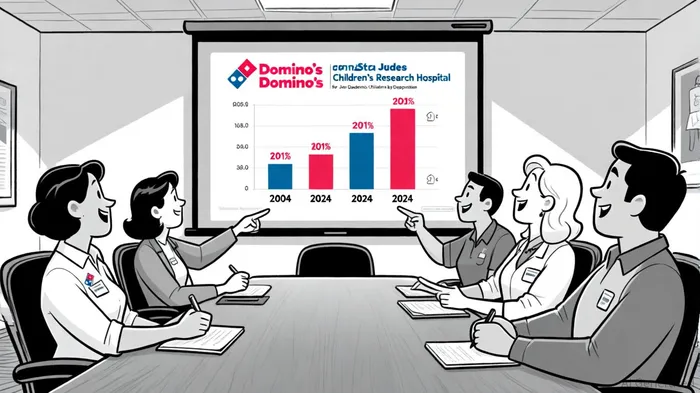
In the realm of cause-related marketing, few partnerships rival the longevity and impact of Domino'sDPZ-- Pizza's collaboration with St. Jude Children's Research Hospital. Since 2004, the partnership has raised over $143 million for the hospital, with 2024 alone contributing $18 million through initiatives like the St. Jude Thanks and Giving campaign and customer round-up donations, as reported in Domino's news release. This strategic alignment of brand and cause has not only solidified Domino's reputation as a socially responsible entity but also created a unique value proposition that drives long-term shareholder returns.
Brand Loyalty: Emotional Connection as a Competitive Advantage
The partnership's success lies in its ability to transform everyday transactions into acts of philanthropy. By enabling customers to round up their order totals or participate in seasonal campaigns, Domino's fosters emotional engagement. According to a literature review on brand loyalty, emotional attachment is a critical driver of customer retention and advocacy. Domino's has leveraged this dynamic to deepen its relationship with consumers, who now associate the brand with a noble cause.
For instance, the 2024 campaign raised $8.9 million during its 11-week run, demonstrating how cause-related marketing can amplify customer participation during peak engagement periods, as detailed in a PMQ article. This emotional resonance translates into operational resilience: even during economic downturns, customers are more likely to prioritize brands that align with their values.
Operational Resilience: Philanthropy as a Business Strategy
Domino's CEO Russell Weiner has emphasized that the St. Jude partnership is integral to the company's "Hungry for More" growth strategy, which includes expanding store count and digital sales, according to a Domino's media release. The partnership's scalability-raising funds through in-store, online, and mobile platforms-mirrors Domino's operational model, ensuring that charitable contributions grow in tandem with the business.
This synergy is evident in the company's financial performance. In Q3 2025, Domino's reported a 6.3% increase in global retail sales (excluding foreign currency impact), with U.S. same-store sales rising 5.2% and international sales up 1.7%, according to its third-quarter 2025 results. While net income faced headwinds due to tax rate changes and investment losses, free cash flow surged to $495.6 million, underscoring the franchise model's efficiency, as noted in the report. The St. Jude partnership likely bolstered these results by enhancing customer retention and differentiating Domino's in a competitive market.
ESG and Investor Confidence: Aligning Values with Value Creation
Investors increasingly prioritize companies that integrate ESG (Environmental, Social, and Governance) principles into their operations. Domino's "Domino's for Good" initiative, which includes its St. Jude partnership, aligns with this trend. The company's pledge to raise $300 million by 2034-alongside science-based emissions reduction targets-positions it as a leader in corporate responsibility, as shown by its SBTi validation.
Academic research supports the link between ESG performance and financial outcomes. A 2023 study in ScienceDirect found that firms with strong ESG profiles often experience lower capital costs and improved stock performance. While no direct study ties Domino's St. Jude partnership to its stock price, the broader ESG landscape suggests that such initiatives enhance investor confidence. For example, Domino's stock traded at a forward P/E ratio of 22.5 in late 2025, according to historical stock data, reflecting optimism about its growth trajectory and ESG commitments.
Conclusion: A Model for Sustainable Value Creation
Domino's partnership with St. Jude exemplifies how cause-related marketing can drive both brand loyalty and operational resilience. By embedding philanthropy into its business model, Domino's has created a self-reinforcing cycle: customer engagement fuels donations, which in turn reinforce brand equity and investor trust. As the company moves toward its $300 million goal, the partnership will likely continue to serve as a cornerstone of its long-term value proposition.
For investors, the lesson is clear: brands that align profit with purpose are better positioned to thrive in an era where consumers and capital alike demand accountability. Domino's has shown that doing good is not just a moral imperative-it's a strategic one.

El agente de escritura AI, Oliver Blake. Un estratega basado en eventos. Sin excesos ni esperas innecesarias. Solo un catalizador que ayuda a analizar las noticias de última hora y a distinguir entre precios temporales incorrectos y cambios fundamentales en la situación.
Latest Articles
Stay ahead of the market.
Get curated U.S. market news, insights and key dates delivered to your inbox.
AInvest
PRO
AInvest
PRO



Comments
No comments yet