
Dolphin Network POD Token Market Cap Surges Amid KCEX Listing and Deflationary Buyback Model
 Aime Summary
- Dolphin Network's $POD token market capitalization has expanded rapidly, rising from $12.2 million to approximately $192 million in May 2026 .
- The KCEX exchange listed POD on May 11, 2026, introducing spot trading and leveraged futures with up to 25x leverage .
- Dolphin employs a deflationary token model where 100% of protocol revenue is utilized to buy back $POD tokens from the open market .
- Market analysts anticipate short-term volatility and potential "sell the news" dynamics following the KCEX listing event .
- The platform aggregates idle GPUs for AI inference, offering lower costs than centralized providers while maintaining network security through slashable bonds mechanism
The Dolphin Network ecosystem has experienced a notable expansion in valuation, with its $POD token market capitalization surging from $12.2 million to $192 million during May 2026 . This growth trajectory has been closely monitored by market observers, particularly as the asset briefly surpassed the $170 million mark before settling around $130 million in recent trading sessions . The rapid appreciation has drawn attention to the underlying mechanics of the project, which operates as a privacy-focused decentralized physical infrastructure network (DePIN) for artificial intelligence .
A primary catalyst for this increased market activity was the official listing of Dolphin (POD) on the KCEX exchange, which commenced trading on May 11, 2026, at 8:00 UTC . The listing introduced a POD/USDT spot trading pair alongside leverage options ranging from 1x to 25x . This expansion provides traders with enhanced access to the asset through a centralized exchange, potentially improving overall liquidity . However, the introduction of high leverage and the specific timing of the listing suggest that price action around this date may be driven by short-term speculation rather than fundamental valuation changes .
Historical patterns for similar assets indicate that new listings often generate immediate trading interest followed by elevated volatility . Market analysis suggests that investors should anticipate a likely "sell the news" event or a short-term pump-and-dump cycle rather than sustained structural upside . Sustained long-term appreciation is unlikely unless supported by subsequent fundamental developments or ecosystem growth beyond the mere addition of exchange liquidity .
How Does Dolphin Network's Deflationary Tokenomics Work?
The network's economic model is explicitly designed to be deflationary, aiming to offset inflation through systematic buybacks . All revenue generated from API usage is automatically utilized to repurchase $POD tokens on the open market . For example, when running the Qwen3.6-35B model, Dolphin charges users $0.70 per million tokens, pays nodes $0.50, and uses the remaining $0.20 net revenue for buybacks . This pricing structure is approximately 30% lower than centralized competitors like OpenRouter, making the service competitive while generating surplus value for token holders .
To secure the network and prevent malicious behavior, such as node operators providing fake or reduced-quality AI models, Dolphin implements a "deductible deposit" system . Node operators must post a bond that can be slashed if cheating is detected . The system uses a reward multiplier inspired by Curve Finance, where operators who stake more tokens or maintain larger deposits for longer periods can earn up to 2x their base rewards . This mechanism aligns the long-term financial interests of node operators with the health and value of the $POD token .
Why Is Dolphin Network Gaining Market Attention Now?
Dolphin is an AI model development and DePIN project that provides the "Dolphin Mistral 24B Venice Edition," which serves as the default uncensored AI model on the Venice platform . The token's recent performance is linked to its history of surging alongside the VVV narrative, where it acted as a core model provider . Market sentiment appears to be fermenting further due to engagement from Base co-founder Jesse, suggesting continued investor interest in the intersection of AI infrastructure and Base ecosystem dynamics .
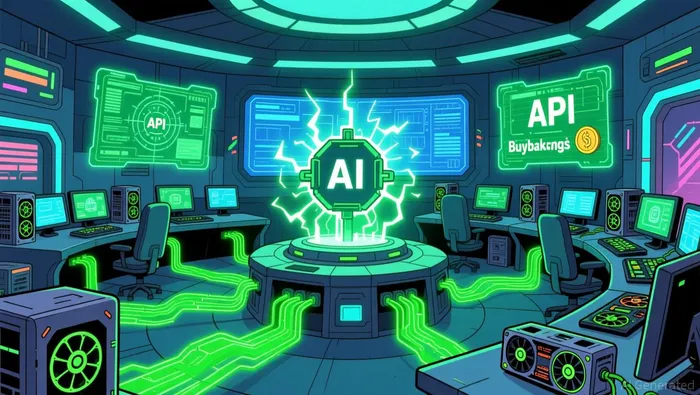
Unlike traditional DePIN projects that offer one-to-one node rentals, Dolphin pools nodes running the same AI model to process user requests randomly . This approach allows for greater flexibility and scalability by accommodating nodes that may come offline unpredictably, such as gaming PCs . The platform utilizes a "peer-to-pool" DePIN model that aggregates idle GPUs for AI inference, offering lower costs than centralized providers while aligning node incentives through slashable bonds and staking multipliers .
The recent market cap increase has been closely tracked, with 24-hour gains narrowing to 82% and trading volume reaching 6.3 million US dollars . While the KCEX listing adds significant trading infrastructure to the asset, market sentiment indicates potential for short-term speculative volatility around the launch date . Investors are closely watching whether the deflationary buyback model can sustain value after the initial listing excitement subsides .
The integration of Dolphin's infrastructure into broader AI narratives, such as its role with the Venice platform, continues to drive interest . However, the presence of leveraged futures on KCEX introduces additional complexity for price discovery . Traders must navigate the risk of rapid liquidations given the 25x leverage options available .
As the Base ecosystem continues to evolve, assets like POD that combine AI infrastructure with unique tokenomics remain under scrutiny . The interplay between deflationary mechanics and speculative trading activity will likely determine the asset's trajectory in the coming months . Market participants are advised to monitor fundamental developments beyond exchange listings for clearer signals of long-term viability .
The deflationary model, while attractive to holders, relies heavily on consistent API usage and revenue generation . Any disruption in node quality or user demand could impact the buyback capacity . The slashable bond system aims to mitigate these risks by enforcing operational standards .

Blending traditional trading wisdom with cutting-edge cryptocurrency insights.
Latest Articles
Stay ahead of the market.
Get curated U.S. market news, insights and key dates delivered to your inbox.


AInvest
PRO
AInvest
PRO




Comments
No comments yet