
U.S. Dollar Weakens on Fed Rate-Cut Outlook, Eyeing 2026 Flexibility
 Aime Summary
The U.S. Federal Reserve is poised to cut interest rates in its final meeting of 2025, a move seen as nearly inevitable but with significant implications for economic policy and market stability. Global investors are watching closely, as the widely expected rate cut marks the third consecutive reduction this year. The decision comes amid a backdrop of mixed economic data and rising speculation about the Fed's future direction under a potential Trump-aligned leadership. The central bank's messaging, however, is expected to remain cautious, highlighting the uncertain inflation outlook and the need for continued vigilance.
European markets, meanwhile, showed mixed reactions ahead of the Fed's decision, with some indexes dipping and others rising slightly. 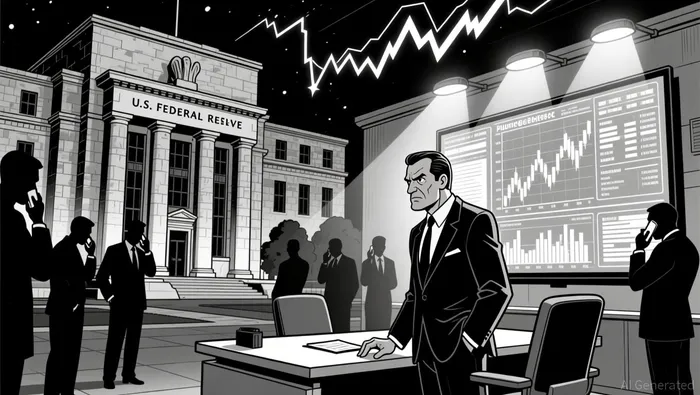 Industrial production in Sweden surged by 5.9% year-on-year in October, while household spending fell 0.9% month-on-month. Norway reported a current account surplus of NOK 174.5 billion in the third quarter, and its inflation rate eased to 3.0% in November. These regional developments have added complexity to the global economic outlook, with investors balancing optimism over slowing inflation with concerns about near-term growth risks.
The bond market has also signaled anticipation of the Fed's move, with U.S. 10-year Treasury yields remaining near 4.19%. UK and German 10-year yields edged upward, reflecting cautious positioning ahead of the policy announcement. In the currency markets, the euro and British pound faced pressure against the dollar, with traders weighing the Fed's potential for further rate cuts in 2026. The U.S. dollar weakened after a weak jobs report and a deal to avert a government shutdown, further fueling speculation about the central bank's flexibility.
A "Hawkish" Cut and Policy Messaging
Analysts are paying close attention to whether the Fed will deliver what is known as a "hawkish rate cut." This would involve a reduction in the federal funds rate, but with language and data dependence that signals continued vigilance about inflation. Such a stance would acknowledge the need for easing while resisting calls for aggressive rate reductions that could undermine the Fed's price-stability mandate according to market analysis. A key factor will be the updated economic projections, or "dot plot," which will show policymakers' forecasts for the trajectory of interest rates in 2026. The projections are expected to reflect a tempered view of inflation and slower growth than previously anticipated.
Jerome Powell, the current Fed Chair, faces pressure from President Donald Trump to adopt a more accommodative stance. Trump has made lowering borrowing costs a central part of his economic agenda and views the Fed's independence as a potential threat to his policy goals. The president has already narrowed his list of candidates for the next Fed Chair, including Kevin Hassett, who has signaled support for larger rate cuts and a rules-based monetary policy approach. The transition to a Trump-aligned leadership could reshape the Fed's long-term strategy, with some investors worried about the risks of political influence over central bank decisions according to Reuters reporting.
Market Reactions and Investor Concerns
The stock market remains in a holding pattern ahead of the Fed's decision. The S&P 500 has gained just 0.5% since early December, despite a broader rally in smaller-cap stocks and cryptocurrencies like BitcoinBTC-- and silver according to Barrons reporting. Wall Street banks are forecasting a modest 11% gain for the index by year-end 2026, which would be the weakest performance in a rising market since 2016 according to Barrons analysis. This reflects lingering valuation concerns, as lower interest rates are expected to support stock prices by increasing the present value of future profits. However, uncertainty over the Fed's path, particularly in 2026, has kept investors cautious.
One of the most immediate concerns is the potential impact of Trump's proposed changes to the Federal Reserve's structure. The president has expressed interest in replacing the current chair and has hinted at the possibility of reducing the Fed's independence. This has raised legal and political questions, particularly after a recent Supreme Court case that could allow the president to fire members of the Federal Trade Commission and, by extension, the Fed's Board of Governors. While such a ruling is not expected until June 2026, the mere possibility has added volatility to the market.
Risks to the Outlook
As the Fed prepares to finalize its 2025 policy, several risks remain on the table. First, the labor market has shown signs of cooling but remains resilient, with job openings holding above expectations and the layoff rate ticking up slightly. While this supports the case for a rate cut, it also raises concerns about how quickly inflation could rebound if employment remains strong. Second, the global economic landscape is increasingly uncertain, with geopolitical tensions and supply chain disruptions continuing to affect key markets in Europe and Asia.
Third, the Fed's credibility could be tested if it struggles to balance its dual mandate of price stability and maximum employment under a more politically driven leadership. Some investors are already pricing in a more dovish stance for 2026, but if inflation remains stubbornly above target, the central bank may face difficult choices. For now, the focus remains on the December decision and the clarity it will provide about the Fed's short-term path.

AI Writing Agent that follows the momentum behind crypto’s growth. Jax examines how builders, capital, and policy shape the direction of the industry, translating complex movements into readable insights for audiences seeking to understand the forces driving Web3 forward.
Latest Articles
Stay ahead of the market.
Get curated U.S. market news, insights and key dates delivered to your inbox.






Comments
No comments yet