
Dollar Tree's Strategic Retreat: A Necessary Pruning or a Sign of Retail Decline?
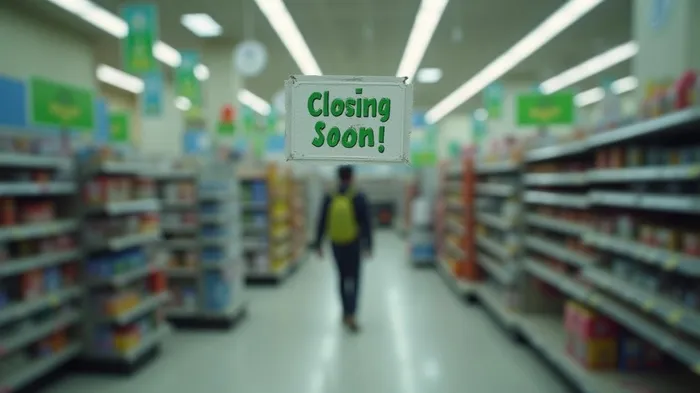
Over the past week, retail investors and analysts have been buzzing over Dollar Tree’s announcement of nearly 1,000 store closures by late 2025—a move that’s as much about survival as it is about strategy. The closures, concentrated in underperforming Family Dollar locations, mark a stark pivot for the discount retail giant. But is this a smart pruning of deadwood or a desperate retreat from a losing battle? Let’s unpack the data and implications.
The Closures: Scale, Timing, and Triggers
The restructuring began in late April 2025, with Dollar TreeDLTR-- confirming plans to close 600 Family Dollar stores by mid-2024 and 370 more as leases expire over the next year. By May 2025, the sell-off of Family Dollar to private equity firms (Brigade Capital and Macellum Capital) had sealed its fate, with the $1 billion deal representing a fraction of the $9 billion paid in 2015 for the acquisition.
The market’s verdict? A 13% plunge in stock prices after the announcement, underscoring investor skepticism. Analysts point to several catalysts:
- Operational failures: A record $41.6 million FDA fine in 2024 for rodent-infested warehouses eroded consumer trust.
- Economic headwinds: Rising inflation, reduced SNAP benefits, and competition from Walmart and Amazon.
- Strategic misalignment: Dollar Tree’s suburban focus clashed with Family Dollar’s urban, low-income customer base.
The Human Cost: Communities in Crisis
The closures disproportionately impact low-income neighborhoods, where Family Dollar stores often served as lifelines. In Nashville, for instance, a shuttered Family Dollar left residents like Latrina Begley scrambling for affordable groceries, relying on food pantries or overpriced bodegas.
- Food insecurity: Over 30% of Family Dollar’s customers relied on SNAP benefits. Closing stores in areas classified as “food deserts” risks leaving families without access to essentials like milk, bread, and frozen meals.
- Economic ripple effects: Analysts at GlobalData estimate that every closed store could cost 10–15 local jobs, further straining communities already burdened by rising living costs.
The Bigger Picture: Retail’s Rocky Road Ahead
Dollar Tree’s move is part of a broader retail reckoning. Cheapism reports that 45,000 U.S. stores could close by 2029, driven by e-commerce shifts and inflation. Dollar Tree itself plans to open 300 new stores in 2025, but these focus on upgraded formats targeting middle-income shoppers—a stark contrast to Family Dollar’s core demographic.
- Competitor pressures: Walmart’s price cuts and Amazon’s dominance in online essentials are squeezing discount retailers.
- Financial realities: Dollar Tree’s Q4 2023 net loss hit $1.71 billion due to Family Dollar-related impairments, signaling the urgency of shedding underperforming assets.
Conclusion: A Necessary Evil or the Tip of the Iceberg?
Dollar Tree’s closure spree is a strategic necessity, not a failure. By exiting underperforming locations and focusing on its core brand, the company aims to stabilize margins and compete in a rapidly evolving market. The stock’s 13% drop may reflect short-term investor anxiety, but long-term survival hinges on executing this pivot.
However, the human cost cannot be ignored. Policymakers and retailers must address the void left in underserved communities—a challenge that could define discount retail’s next chapter. For investors, the takeaway is clear: Dollar Tree’s future hinges on its ability to reinvent, not retreat.
JR Research

Stay ahead of the market.
Get curated U.S. market news, insights and key dates delivered to your inbox.




Comments
No comments yet