
Dollar Tree's Q2 2026: Contradictions Emerge on Consumer Value Perception, Pricing Strategies, and Tariff Impact
 Aime Summary
Date of Call: September 03, 2025
Financials Results
- Revenue: $4.6B net sales, up 12.3% YOY
- EPS: $0.77 adjusted EPS, coming in ahead of prior outlook
- Gross Margin: 34.4%, up 20 bps YOY
- Operating Margin: 5.2% adjusted operating margin, down 20 bps (adjusted operating income $236M, up 7.4% YOY)
Guidance:
- Full‑year 2025 comps expected 4%–6%.
- Adjusted EPS guidance $5.32–$5.72 assuming current tariff rates.
- Gross margin improvement of ~50 bps driven by pricing and freight (partially offset by higher tariffs).
- Dollar Tree segment adjusted SG&A expected to deleverage ~120 bps YOY.
- Corporate SG&A prior to TSA up ~11%–12%; TSA proceeds ~$55M–$60M.
- Net interest ~$100M; effective tax rate ~25%; capex $1.2B–$1.3B (~400 new stores).
Business Commentary:
* Strong Revenue and Sales Growth: - Dollar Tree reported a12.3% increase in net sales to $4.6 billion for Q2, driven by a 6.5% increase in comparable store sales. - Growth was balanced with increases of 3% in traffic and 3.4% in ticket, reflecting strong performance across both lower and higher income cohorts.- Expansion of Assortment and Customer Gains:
- The company added
2.4 millionnew customers on a last 12 months basis, with nearlytwo-thirdsfrom households earning$100,000or more.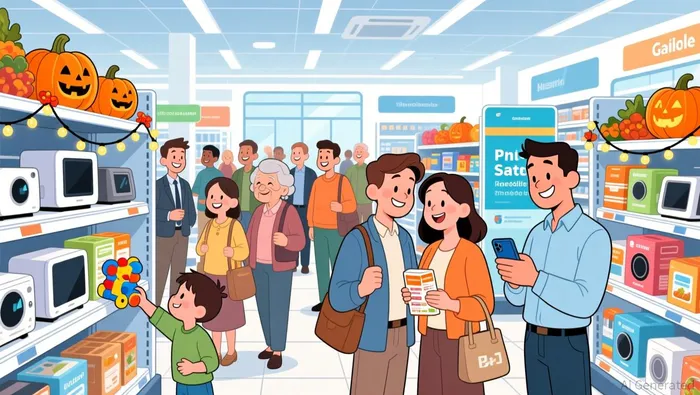
The strong performance is attributed to the expanding assortment leading to increased discovery and relevance across a broader customer base.
Impact of Tariffs and Cost Mitigation Strategies:
- Tariffs were identified as a significant challenge, with strategic mitigation efforts including negotiations with suppliers, product re-specification, and pricing actions.
Despite these pressures, the company maintained strong financial performance, leveraging tactics that ensured customer value and margin stability.
Investment in Customer Experience and Store Network:
- Dollar Tree completed
3,600store conversions to the 3.0 format by the end of Q2 and opened254new stores so far this year. - These efforts were aimed at enhancing the customer experience and supporting the rollout of the expanded assortment, contributing to positive store performance.

Sentiment Analysis:
Overall Tone: Positive
- Management repeatedly emphasized outperformance and momentum: "results exceeding the high end of our expectations," "adjusted EPS of $0.77 coming in ahead of our outlook," and upgraded full‑year comps/EPS guidance to 4%–6% and $5.32–$5.72 respectively, while highlighting market share gains and expanded assortment traction.
Q&A:
- Question from Michael Lasser (UBS): There's a perception that as you have more fully rolled out some of your tariff mitigation strategies, including raising price points across your assortment, the consumer has pushed back, your comps have slowed and the perception of relative value has decreased. Why are those points wrong, especially given moving pieces within your full year guidance suggesting the business remains somewhat volatile?
Response: Customers are accepting the pricing actions; comps remain strong with balanced traffic and ticket and an increasing share of higher‑income customers, indicating limited pushback and limited long‑term margin risk.
- Question from Paul Lejuez (Citi): Can you talk about the drivers of the higher ticket between AUR and UPT, any more detail about AUR and discretionary versus consumables, and what pricing actions were taken in Q2 versus what is still planned in H2?
Response: Higher ticket was driven by mix (balanced discretionary and consumables) and modest Q2 pricing, with units still up; pricing taken so far was limited and further actions will be guided by customer response.
- Question from Edward Kelly (Wells Fargo): Your back‑half guidance implies a wide comp range (~2%–6%); why is that range wide despite lower elasticity so far, and can you quantify new bottom‑line headwinds like incremental tariffs or liability claims?
Response: The range reflects macro and consumer reaction volatility to ongoing price increases and tariffs; general liability settlement costs have risen (not due to more claims but higher settlement costs), with modest increases in shrink and markdowns that are not precisely quantified.
- Question from Uriel Zachary Abraham (for Simeon Gutman, Morgan Stanley): Can you speak to what a normalized EPS for full‑year 2025 would be given one‑time items, TSA noise and tariff impacts?
Response: Normalization is difficult due to many moving parts and one‑offs (notably ~$115M stickering/re‑signage cost and inventory mark‑on benefits), but management expects to manage the P&L to maintain gross margin into 2026.
- Question from Matthew Boss (JPMorgan): Where are you seeing the largest sequential same‑store sales gains by income demographic, any categories with material pushback to initial pricing actions, and any change in comps so far in Q3 versus Q2?
Response: Strongest gains from higher‑income customers but broad strength across cohorts including lower‑income; no material category pushback observed; Q3 has started within guidance (at the lower end) and management is comfortable with the updated full‑year outlook.
- Question from Charles Grom (Gordon Haskett): As you gain experience with multi‑price, how is the buying team evolving purchases, handling incremental markdowns, and progressing on moving $1.25 items to higher price points across the fleet?
Response: Merchants and global sourcing have become more agile, re‑specifying SKUs and using the 5 levers to manage cost/assortment; $1.25 remains central while expanded assortment and higher price points supplement value without abandoning the core.
- Question from Rupesh Parikh (Oppenheimer): Given current tariffs, what 'inning' are you in on enacted pricing increases and how do you feel about remaining price gaps?
Response: Most pricing intended has been implemented (the 'setup man is in') with remaining execution via restickering on replenishment; customer reception to price increases has been very positive.
- Question from John Heinbockel (Guggenheim Partners): Regarding baskets with consumable and discretionary items, does treasure‑hunt drive consumables or vice versa, and are you deprioritizing zone pricing?
Response: Consumables drive repeat purchases while discretionary/treasure‑hunt brings traffic—both are complementary across cohorts; zone pricing is deprioritized temporarily to focus on tariff mitigation but remains a future initiative.
- Question from Seth Sigman (Barclays): Can you quantify the overall lift to comps from multi‑price products and how consumers are responding to $1.25 variations?
Response: Multi‑price skews to a higher basket and department expansions (e.g., hardware) are clearly performing very well, but management has not provided a precise quantified lift.
- Question from Scot Ciccarelli (Truist): Why increasingly cautious comments on the consumer and what's driving the change to your TSA outlook?
Response: Caution stems from tariff uncertainty and broad inflationary pressures impacting consumers; TSA proceeds are lower because the buyer requested fewer services, but near‑term SG&A guidance is maintained via other cost savings.
- Question from Zhihan Ma (Bernstein): With Q2 ahead of expectations, how do you feel about in‑store service and in‑stock levels and will you need additional investment to sustain momentum into the back half?
Response: Stores and DCs are in strong condition ('best position in recent memory'), in‑stock and service levels have improved and management does not cite immediate incremental investments as necessary to sustain momentum.
- Question from Peter Keith (Piper Sandler): On the Uber Eats partnership: rollout scope, any quantifiable lift from early tests, and is this a stand‑alone offering or part of a multi‑store initiative?
Response: Uber Eats launched in ~8,500 stores (not all due to lease restrictions), early soft‑opening organic order volumes are encouraging pre‑marketing, and the offering is incremental and introduces Dollar Tree to a younger customer base.
- Question from Kelly Bania (BMO Capital Markets): Your outlook for ~50 bps gross‑margin expansion is lower than prior—can you parse the drivers (pricing, freight, tariffs, etc.)?
Response: The ~50 bps improvement reflects pricing and freight benefits offset by higher tariffs, inventory revaluation timing and increased markdowns; management will use the 5 levers to maintain gross margin.
- Question from Michael Montani (Evercore ISI): Last quarter you cited $0.30–$0.35 impact from Family Dollar in H1—where did that end up?
Response: TSA proceeds are lower than earlier expectations (guidance now ~$55M–$60M, ~ $0.20/share), but other savings (stock comp, payroll) offset the shortfall to meet SG&A guidance this year; a 2026 gap remains to be addressed.
Contradiction Point 1
Consumer Perception of Value
It highlights differing perceptions of how consumers view the company's pricing strategy and value proposition, which is crucial for market positioning and customer retention.
Have consumers resisted your pricing increases, leading to slower comps and reduced perceived value? - Michael Lasser (UBS)
2026Q2: We are pleased with our customer response. If you look at mix on all levels of our customer, the traffic and ticket are balanced, our consumables and discretionary are balanced, and across all income levels, Dollar Tree is resonating with our customer. Our customers are walking in and seeing value every day. We still have 85% of our stores at $2 or less. Think about that. You walk in and you're finding value around every corner. We think our customer is really pleased with that. - Michael Creedon(CEO)
Will the $1.50 price point offset tariffs? What are high-income consumers' priorities? - Paul Lejuez (Citigroup)
2025Q1: If you look at the overall mix, the $1.50 is clearly resonating strongly with our customer. Our discretionary customer is there. And the biggest surprise is the number of our lower-income customers who shop at the $1.50 to get an expanded assortment at a great value. - Michael Creedon(CEO)
Contradiction Point 2
Gross Margin Expansion Expectations
It involves changes in financial forecasts, specifically regarding gross margin expansion expectations, which are critical indicators for investors.
What are the key factors driving your 50-basis-point margin expansion outlook? - Kelly Bania (BMO Capital Markets)
2026Q2: We expect to maintain our gross margin momentum through a strong portfolio of private label and attainable national brand products. Looking toward fiscal 2023, we continue to expect our gross margin to expand by 50 basis points. - Stewart Glendinning(CFO)
What drove the $40 million SG&A increase and the gross margin expansion? - Kelly Bania (BMO Capital Markets)
2025Q1: The increase in SG&A is primarily due to increased investments in store payroll and depreciation expenses related to new store growth and our store expansion and remodels. As we've said before, we want to be leaders in all the levers of gross margin improvement. - Stewart Glendinning(CFO)
Contradiction Point 3
Consumer Response to Pricing Actions
It highlights differing views on consumer response to pricing actions, which directly impacts company revenue and strategic pricing decisions.
Have your recent price increases and tariff mitigation strategies led to consumer pushback, slower comparable sales, and a decline in perceived value? - Michael Lasser (UBS)
2026Q2: We are pleased with our customer response. If you look at mix on all levels of our customer, the traffic and ticket are balanced, our consumables and discretionary are balanced, and across all income levels, Dollar Tree is resonating with our customer. - Michael Creedon(CEO)
What are consumer demand trends across income groups and the November comparable sales update at Dollar Tree? How do you plan to slow the multi-price rollout and adjust expansion strategies? - Matthew Boss (JPMorgan)
2025Q3: The customer is very much engaged with the $3.0 stores. The customer is responding very positively. - Michael Creedon(Interim CEO)
Contradiction Point 4
Multi-Price Strategy and Consumer Response
It involves differing opinions on the customer's response to the multi-price strategy, which could impact the company's pricing strategy and customer satisfaction.
How is the buying team evolving in purchasing decisions? How are you handling incremental markdowns with multi-price strategies? Where are you in increasing the price point from $1.25 to $1.50, $1.75, and $2 across the fleet? - Charles Grom (Gordon Haskett)
2026Q2: Our merchant team is remarkable. They are navigating a highly volatile environment. We've taken our price actions, and we're pleased with the understanding and resilience of our customers. - Michael Creedon(CEO)
Can you analyze consumer demand trends across income cohorts and comment on Dollar Tree's November comp sales? Also, could you elaborate on the strategy for slowing the multi-price rollout and its expansion plans? - Matthew Boss (JPMorgan)
2025Q3: The low-end customer is pressured, focusing on consumables, while middle and higher income customers cut discretionary spending. The customer responds positively to multi-price, leading to increased visits and basket size. - Michael Creedon(Interim CEO)
Contradiction Point 5
Tariff Impact and Mitigation
It involves differing perspectives on the impact of tariffs and the company's ability to mitigate their effects, which are crucial for financial planning and strategic decision-making.
What stage are pricing increases in under current tariffs? How do you assess your price gaps? - Rupesh Parikh (Oppenheimer)
2026Q2: We are pleased with the understanding and resilience of our customers and the effect on unit volume has been less than we initially expected. - Michael Creedon(CEO)
How will one-time items and the Family Dollar strategic review affect your earnings outlook for next year? What is the downside risk to earnings from potential tariffs? - Michael Lasser (UBS)
2025Q3: If tariffs do tick up, we feel we have far more flexibility with the multi-price and flexibility in other areas that we didn't have in the past. - Michael Creedon(Interim CEO)

Descubre lo que los ejecutivos no quieren revelar durante las conferencias
Latest Articles
Stay ahead of the market.
Get curated U.S. market news, insights and key dates delivered to your inbox.


AInvest
PRO
AInvest
PRO



Comments
No comments yet