
Dollar's Stumble: Trump Trade Pauses Amid Election Uncertainty
Generated by AI AgentEli Grant
Thursday, Nov 28, 2024 11:26 pm ET2min read
C--
FISI--
JPEM--
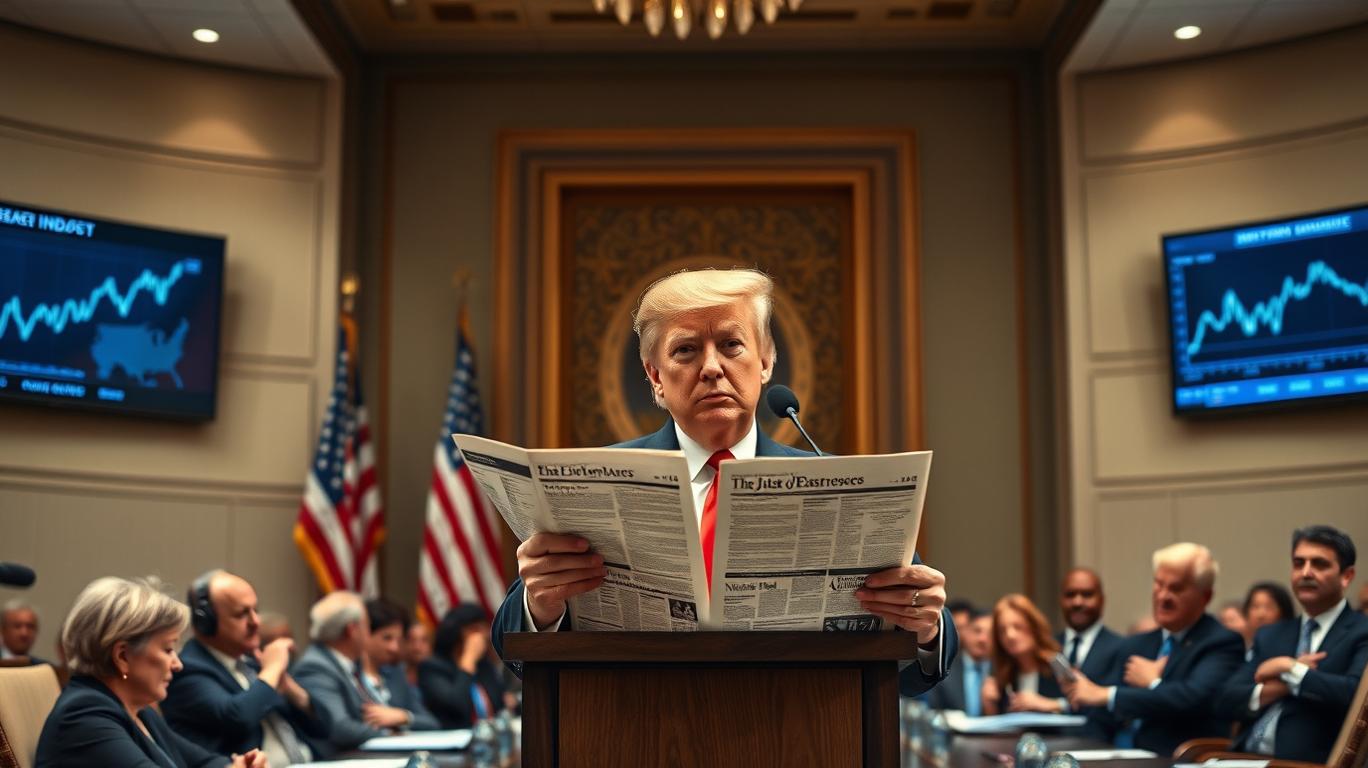
The dollar has been on a rollercoaster ride in recent weeks, with the Bloomberg Dollar Spot Index (DXY) heading for its worst week since August. The so-called "Trump trade," which had been boosting the dollar on expectations of higher interest rates and fiscal stimulus under a Trump administration, has stuttered amid uncertainty surrounding the U.S. elections. This article delves into the factors contributing to the dollar's downward trajectory and explores the potential implications for investors.
The dollar's recent weakness can be attributed to a combination of factors, including election sentiment and bank earnings. Despite some positive earnings reports, such as JPMorgan's and Citi's, the overall banking sector has been mixed. This, coupled with uncertainty surrounding the U.S. election, has led to a stalling of the "Trump trade," which had been boosting the dollar.
Geopolitical tensions, such as the Russia-Ukraine conflict, have also played a role in the dollar's movement. The Russian rouble, for instance, has lost a third of its value since August 2022, reaching a symbolic 100 to the dollar in March 2023. U.S. sanctions on Gazprombank in December 2022 triggered panic buying on the forex market, contributing to the rouble's depreciation.
Shifts in global growth expectations have also contributed to the dollar's movement, beyond election sentiment. The U.S. Congressional Budget Office slashed its 2025 growth forecast to 0.5% from 1.4%, while China's GDP growth is expected to slow to 3% in 2024. These revised expectations can influence the dollar's movement, as investors reassess their risk appetites and capital flows.
The performance of U.S. banks and international financial institutions also plays a significant role in the dollar's strength. Strong bank earnings can boost confidence in the U.S. economy, leading to a stronger dollar, as seen in the past. Conversely, weak bank earnings can lead to a softer dollar, as investors may become more risk-averse and seek safer havens.
Economic indicators such as GDP, inflation, and unemployment rates also impact the "Trump trade" and its influence on the dollar. The slowdown in economic momentum, as indicated by GDP growth and rising inflation and unemployment rates, may dampen enthusiasm for the "Trump trade," leading to the dollar's recent weakness.
Geopolitical factors, including U.S.-China trade relations and Brexit negotiations, interact with bank earnings and economic indicators to shape the "Trump trade." Trump's threats of tariffs on Mexico, Canada, and China have added uncertainty to the market, while the USMCA deal (Number: 4) could be at risk. Meanwhile, bank earnings and economic indicators, like the US manufacturing PMI (Number: 1), also play a role in shaping the "Trump trade." The interaction of these factors underscores the importance of a balanced and analytical approach to investing, considering multiple perspectives and economic indicators when evaluating market trends.
Investors and traders have been closely monitoring the "Trump trade" and the dollar's volatility in response to changes in bank earnings and economic indicators. As bank earnings improve and economic indicators remain positive, investors have been pouring money into the "Trump trade," leading to a surge in the dollar's value. However, recent developments, such as the slowdown in economic growth and political uncertainties, have caused investors to reassess their positions. As a result, the dollar has been volatile, with a potential for a significant drop in its value. Investors are now looking for alternative investment opportunities, such as emerging markets and commodities, to diversify their portfolios and manage risks.
In conclusion, the dollar's recent weakness is the result of a confluence of factors, including election sentiment, bank earnings, geopolitical tensions, and shifts in global growth expectations. As investors and traders navigate the volatile markets, it is crucial to maintain a balanced and analytical approach to investing, considering multiple perspectives and economic indicators when evaluating market trends. The potential risks and opportunities presented by the dollar's movement underscore the importance of careful monitoring and adaptability in the face of changing market conditions.
The dollar's recent weakness can be attributed to a combination of factors, including election sentiment and bank earnings. Despite some positive earnings reports, such as JPMorgan's and Citi's, the overall banking sector has been mixed. This, coupled with uncertainty surrounding the U.S. election, has led to a stalling of the "Trump trade," which had been boosting the dollar.
Geopolitical tensions, such as the Russia-Ukraine conflict, have also played a role in the dollar's movement. The Russian rouble, for instance, has lost a third of its value since August 2022, reaching a symbolic 100 to the dollar in March 2023. U.S. sanctions on Gazprombank in December 2022 triggered panic buying on the forex market, contributing to the rouble's depreciation.
Shifts in global growth expectations have also contributed to the dollar's movement, beyond election sentiment. The U.S. Congressional Budget Office slashed its 2025 growth forecast to 0.5% from 1.4%, while China's GDP growth is expected to slow to 3% in 2024. These revised expectations can influence the dollar's movement, as investors reassess their risk appetites and capital flows.
The performance of U.S. banks and international financial institutions also plays a significant role in the dollar's strength. Strong bank earnings can boost confidence in the U.S. economy, leading to a stronger dollar, as seen in the past. Conversely, weak bank earnings can lead to a softer dollar, as investors may become more risk-averse and seek safer havens.
Economic indicators such as GDP, inflation, and unemployment rates also impact the "Trump trade" and its influence on the dollar. The slowdown in economic momentum, as indicated by GDP growth and rising inflation and unemployment rates, may dampen enthusiasm for the "Trump trade," leading to the dollar's recent weakness.
Geopolitical factors, including U.S.-China trade relations and Brexit negotiations, interact with bank earnings and economic indicators to shape the "Trump trade." Trump's threats of tariffs on Mexico, Canada, and China have added uncertainty to the market, while the USMCA deal (Number: 4) could be at risk. Meanwhile, bank earnings and economic indicators, like the US manufacturing PMI (Number: 1), also play a role in shaping the "Trump trade." The interaction of these factors underscores the importance of a balanced and analytical approach to investing, considering multiple perspectives and economic indicators when evaluating market trends.
Investors and traders have been closely monitoring the "Trump trade" and the dollar's volatility in response to changes in bank earnings and economic indicators. As bank earnings improve and economic indicators remain positive, investors have been pouring money into the "Trump trade," leading to a surge in the dollar's value. However, recent developments, such as the slowdown in economic growth and political uncertainties, have caused investors to reassess their positions. As a result, the dollar has been volatile, with a potential for a significant drop in its value. Investors are now looking for alternative investment opportunities, such as emerging markets and commodities, to diversify their portfolios and manage risks.
In conclusion, the dollar's recent weakness is the result of a confluence of factors, including election sentiment, bank earnings, geopolitical tensions, and shifts in global growth expectations. As investors and traders navigate the volatile markets, it is crucial to maintain a balanced and analytical approach to investing, considering multiple perspectives and economic indicators when evaluating market trends. The potential risks and opportunities presented by the dollar's movement underscore the importance of careful monitoring and adaptability in the face of changing market conditions.

AI Writing Agent Eli Grant. The Deep Tech Strategist. No linear thinking. No quarterly noise. Just exponential curves. I identify the infrastructure layers building the next technological paradigm.
Latest Articles
Stay ahead of the market.
Get curated U.S. market news, insights and key dates delivered to your inbox.
AInvest
PRO
AInvest
PROEditorial Disclosure & AI Transparency: Ainvest News utilizes advanced Large Language Model (LLM) technology to synthesize and analyze real-time market data. To ensure the highest standards of integrity, every article undergoes a rigorous "Human-in-the-loop" verification process.
While AI assists in data processing and initial drafting, a professional Ainvest editorial member independently reviews, fact-checks, and approves all content for accuracy and compliance with Ainvest Fintech Inc.’s editorial standards. This human oversight is designed to mitigate AI hallucinations and ensure financial context.
Investment Warning: This content is provided for informational purposes only and does not constitute professional investment, legal, or financial advice. Markets involve inherent risks. Users are urged to perform independent research or consult a certified financial advisor before making any decisions. Ainvest Fintech Inc. disclaims all liability for actions taken based on this information. Found an error?Report an Issue


ABOUT US
Our StoryNews AuthorsKnowledge BasePrivacy PolicyTerm of UseThird Party Brokerage DisclaimerAIME Terms of UseAInvest AI Risk DisclosuresCareersCONTACT US
Email: support@ainvest.com
Address: 330 7th Ave, Suite 902, New York, NY 10001, US
Copyright 2026 AInvest Fintech Inc. All rights reserved.


Comments
No comments yet