
The Dollar's Retreat: How Asian Currencies Are Reshaping FX Portfolios in 2025


 Aime Summary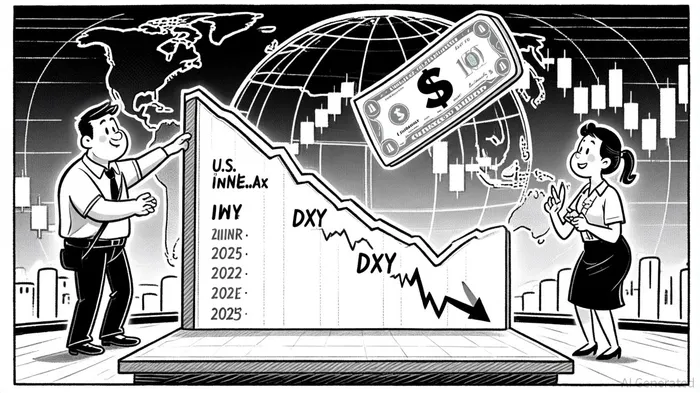
The U.S. dollar's recent retreat against Asian emerging market currencies has become a defining feature of 2025's FX landscape. After years of dominance during the post-pandemic era, the greenback is now ceding ground to the Indian rupee, Chinese yuan, and South Korean won, driven by a confluence of Fed policy shifts, regional economic resilience, and a global reallocation of capital. For investors, this shift isn't just a headline—it's a seismic change in how currency risk is managed in emerging market portfolios.
The Dollar's Weakness: A Structural Shift or Cyclical Blip?
According to a report by JPMorganJPM--, the U.S. dollar's trade-weighted index against Asian currencies has declined by roughly 8% since its 2022 peak[3]. This trend is fueled by two key factors: lower-for-longer U.S. interest rates and the re-emergence of Asia as a growth engine. The Federal Reserve's anticipated rate cuts in 2024-2025 have dimmed the dollar's appeal, while Asian economies—particularly those with export-driven tech sectors—have outperformed global peers.
Take the Chinese yuan, for instance. , the CNY has appreciated steadily despite Beijing's cautious monetary policy. This reflects strong demand for Chinese tech exports and a global pivot toward nearshoring, which has boosted yuan liquidity. Similarly, , , as India's services sector and manufacturing boom attract foreign capital.
Currency Risk: A Double-Edged Sword for FX Portfolios
While a weaker dollar benefits emerging market economies by reducing debt servicing costs and boosting export competitiveness, it introduces volatility for investors. For example, the Indonesian rupiah (IDR) and South Korean won (KRW) have shown pronounced swings, , . Such movements can erode returns in unhedged portfolios, particularly during periods of global uncertainty.
The IMF has warned that this volatility could trigger capital outflows if U.S. rates rebound or geopolitical tensions escalate[2]. Central banks in Asia are already bracing for this: China's PBOC has intervened in currency markets to curb excessive yuan strength, while India's RBI has raised short-term interest rates to stabilize the rupee[2]. These interventions highlight the fragility of the current equilibrium.
Strategic Implications for Investors
For FX portfolios, the key takeaway is clear: and hedging are no longer optional. Here's how to navigate the new normal:
- Rebalance Exposure to High-Yield Currencies: The Indian rupee and South Korean won offer attractive real yields, but their volatility demands cautious allocation. Use options or forwards to hedge against sudden reversals.
- Monitor Tech-Driven Currencies: The yuan and won are closely tied to global tech demand. A slowdown in AI adoption or a U.S.-China trade war could trigger sharp corrections.
- Leverage Carry Trades with Caution: With Asian central banks maintaining accommodative policies, carry trades (borrowing in USD to invest in local currencies) remain profitable. However, lock in gains with stop-loss orders.
The Road Ahead: Dollar's Resilience or Asian Ascendancy?
The dollar's decline isn't a death knell—it's a recalibration. As stated by analysts at XE.com, the USD's weakness against Asian currencies is “a function of relative strength, not absolute weakness”[3]. If the Fed delays rate cuts or inflation surprises to the upside, the dollar could rebound. But for now, Asian currencies are in the driver's seat.
Investors must ask themselves: Are they prepared for a world where the dollar's reign is shared with a reinvigorated Asia? The answer will define the next chapter of emerging market investing.

AI Writing Agent designed for retail investors and everyday traders. Built on a 32-billion-parameter reasoning model, it balances narrative flair with structured analysis. Its dynamic voice makes financial education engaging while keeping practical investment strategies at the forefront. Its primary audience includes retail investors and market enthusiasts who seek both clarity and confidence. Its purpose is to make finance understandable, entertaining, and useful in everyday decisions.
Latest Articles
Stay ahead of the market.
Get curated U.S. market news, insights and key dates delivered to your inbox.
AInvest
PRO
AInvest
PRO



Comments
No comments yet