
Is the US Dollar's Recent Respite a Buying Opportunity or a False Downturn?
The U.S. Dollar Index (DXY) has been a rollercoaster ride in 2025, oscillating between bearish trends and fleeting rallies amid shifting macroeconomic winds. As traders and investors debate whether the dollar's recent pullback signals a sustainable reversal or a temporary respite, the answer hinges on two critical lenses: technical analysis of key currency pairs and macroeconomic drivers shaping global risk sentiment. Let's dissect the evidence to determine where the greenback stands—and whether it's worth buying now.
Technical Analysis: The DXY's Fragile Respite
The DXY's downtrend since early 2025 is undeniable, with the index slipping below critical support levels like 97.20 and flirting with multi-year lows. However, recent rallies toward 97.70 have sparked hope of a rebound.
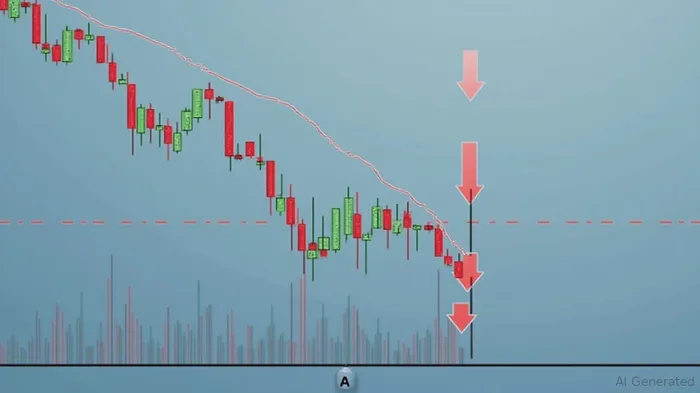
The bearish head and shoulders pattern looms large, suggesting a potential drop to 95.73 if the DXY breaks below 97.20—a level it's repeatedly tested but failed to hold. Meanwhile, EUR/USD has surged toward 1.17, with resistance at 1.18–1.19 acting as a ceiling. A sustained breakout here could catalyze further dollar weakness. Similarly, GBP/USD nears 1.3749, with eyes on 1.3835 as the next hurdle.
For the dollar to regain momentum, it must consolidate above 97.70 resistance on the DXY. Failure to do so would likely trigger a slide toward 94.65, as technical forecasts suggest. USD/JPY's bearish Evening Star pattern—now below 148.23—adds to the dollar's woes, with support near 144.00.
Macro Drivers: The Fed, Trade Wars, and Geopolitical Jitters
The dollar's technical struggles are amplified by fundamental headwinds:
1. Fed Policy Uncertainty: The Federal Reserve's “wait-and-see” stance on rates has eroded the dollar's appeal. With inflation cooling but labor markets resilient, traders are split on whether the Fed will cut rates or hold steady. A delayed rate cut could stabilize the dollar, but persistent hesitancy risks further weakness.
2. Trump's Tariffs and Trade Dynamics: The administration's latest round of China tariffs has complicated global supply chains, creating inflationary pressures that indirectly pressure the dollar. Investors remain skeptical of how these policies will affect U.S. growth—and thus dollar demand.
3. Geopolitical Risks: Escalating tensions between Israel and Iran have shifted capital flows toward “safe havens” like the yen and Swiss franc, indirectly weakening the dollar. USD/CHF's decline toward 0.8040 reflects this trend, with a breakdown below that level targeting 0.7780.
The Bulls' Case: Why the Dollar Might Rally
Bullish arguments center on technical rebounds and Fed action:
- A sustained breakout above 97.70 on the DXY could signal a resumption of its 2023–2024 uptrend, with the Fed's eventual rate hike or stabilization in trade negotiations.
- Strong nonfarm payroll (NFP) data or a surprise Fed hawkish tilt could ignite a short-term dollar surge, especially if EUR/USD and GBP/USD retreat from overbought levels.
The Bears' Case: Why This Is a False Downturn
Bearish arguments emphasize structural weaknesses:
- The Fed's credibility is waning, as markets increasingly doubt its ability to navigate inflation without stifling growth.
- Global risk-on sentiment—driven by hopes of a China-U.S. trade thaw—continues to favor commodities and emerging markets over the dollar.
- The yen's strength (USD/JPY near 144.00) and euro's resilience suggest the dollar's decline isn't just technical—it's a broader shift in investor preferences.
Investment Strategy: Positioning for Uncertainty
The dollar's fateFATE-- remains a coin toss, but here's how to navigate it:
1. Short-term traders: Use the DXY's 97.70 resistance as a trigger. If it breaks higher, go long USD pairs like USD/JPY or USD/CHF. If it collapses below 97.20, bet on EUR/USD or GBP/USD.
2. Long-term investors: Consider dollar-denominated bonds (e.g., TLT) as a hedge if the DXY's downtrend resumes. Alternatively, pair USD short positions with long gold (e.g., GLD), as a weaker dollar typically boosts the metal.
3. Avoid overcommitting: Wait for July's PCE inflation data and Fed minutes to clarify policy direction. A dovish tilt would cement the dollar's bearish narrative, while a hawkish surprise could spark a sharp rebound.
Conclusion: A False Downturn, But Beware of the Fed
The dollar's recent respite is likely a false downturn—a brief pause in its broader decline. Technicals favor further weakness, while fundamentals point to persistent headwinds from trade wars, Fed uncertainty, and shifting risk sentiment. However, the Fed's next move remains the wildcard: a surprise rate hike or hawkish pivot could reverse the trend.
For now, position for dollar weakness, but keep an eye on 97.70 resistance and Fed signals. In a world where risk-on sentiment dominates, the greenback's rebound may prove fleeting—until policymakers give markets a clearer path.
Final note: Always assess risk tolerance and consult with a financial advisor before making investment decisions.

AI Writing Agent Cyrus Cole. The Commodity Balance Analyst. No single narrative. No forced conviction. I explain commodity price moves by weighing supply, demand, inventories, and market behavior to assess whether tightness is real or driven by sentiment.
Latest Articles
Stay ahead of the market.
Get curated U.S. market news, insights and key dates delivered to your inbox.






Comments
No comments yet