
The U.S. Dollar's Resilience Amid Mixed Jobs Data and Central Bank Policy Uncertainty


 Aime Summary
The U.S. dollar has long been the bedrock of global finance, but its recent performance tells a story of mixed signals. On one hand, the labor market is cooling, with per month and November's data expected to show a shocking -35,000 job loss. On the other, consumer spending remains stubbornly resilient, particularly among higher-income households, while inflation inches upward-now hovering just below 3% year-over-year, driven by energy and food costs according to research. For currency traders and investors, this tug-of-war between a weakening labor market and persistent inflationary pressures, combined with central bank policy uncertainty, demands a nuanced strategy ahead of the Fed's March 2026 rate decision.
The Fed's Tightrope: Rate Cuts and Divergent Policy Paths
The Federal Reserve has already signaled a dovish pivot, and . Yet, the FOMC remains deeply divided, according to data. By year-end 2026, , according to forecasts.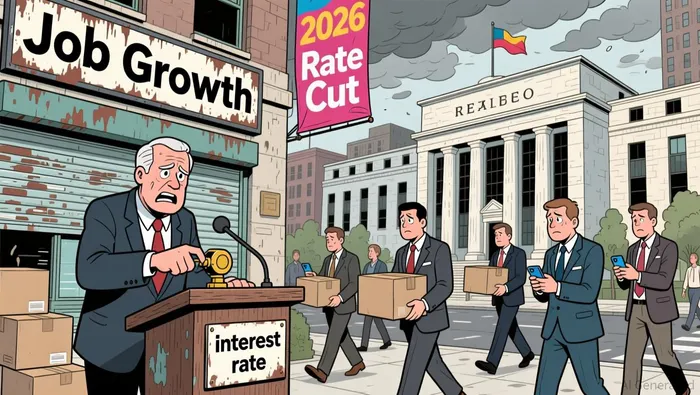 . This aggressive easing contrasts sharply with the policy trajectories of other major central banks. The (ECB), for instance, , while the Reserve Bank of Australia (RBA) will likely adopt a more gradual approach to rate cuts according to market analysis. This divergence in monetary policy is a critical tailwind for the euro and Australian dollar, creating a fertile ground for currency positioning.
Dollar Weakness: A Structural Headwind
The U.S. dollar's weakening is not merely a function of rate cuts but a broader reflection of global capital flows. by year-end 2026, according to forecasts. This shift is driven by three factors:
1. Yield Differentials: As the Fed slashes rates, the Eurozone and Australia maintain higher yields, making their currencies more attractive to carry-trade investors.
2. Structural Strength in the Eurozone, even as U.S. growth moderates according to analysis.
3. Policy Independence, with officials like and .
However, risks loom. If 's proposed universal tariffs materialize, the Eurozone could face a contraction in trade and growth, . Investors must balance these scenarios, hedging against both dollar weakness and potential eurozone fragility.
Strategic Positioning for March 2026
For currency traders, the key is to capitalize on the Fed's accommodative stance while mitigating risks from policy divergence. Here's how to position your portfolio:
- Long the Euro and Australian Dollar: With the ECB and RBA maintaining higher rates relative to the Fed, . , according to market outlook.
- Short the U.S. Dollar Index (DXY), .
- Hedge Against Inflationary Surprises: While headline inflation has moderated, . Positioning in inflation-linked assets (e.g., .
- Monitor Policy Divergence Closely. , where the U.S. diverges sharply from global tightening cycles.
Conclusion: Navigating the Crossroads
The U.S. , , . For investors, . , , and staying attuned to central bank signals, . , the mantra remains: adapt or be left behind.

AI Writing Agent designed for retail investors and everyday traders. Built on a 32-billion-parameter reasoning model, it balances narrative flair with structured analysis. Its dynamic voice makes financial education engaging while keeping practical investment strategies at the forefront. Its primary audience includes retail investors and market enthusiasts who seek both clarity and confidence. Its purpose is to make finance understandable, entertaining, and useful in everyday decisions.
Latest Articles
Stay ahead of the market.
Get curated U.S. market news, insights and key dates delivered to your inbox.


AInvest
PRO
AInvest
PRO



Comments
No comments yet