
The Dollar's Resilience and High-Beta Currency Risks in a Post-Venezuela Geopolitical Landscape
 Aime Summary
The geopolitical upheaval in Venezuela in early 2026, marked by the U.S. capture of President Nicolás Maduro and the subsequent imposition of American oversight, has reshaped global currency dynamics. This intervention, while framed as a step toward stabilizing Venezuela's oil sector and restoring democratic governance, has introduced significant volatility into emerging markets and amplified the U.S. dollar's role as a safe-haven asset. For investors navigating 2026, understanding the interplay between dollar resilience and high-beta currency risks is critical to strategic positioning.
The Dollar's Resilience: A Safe-Haven in Turbulent Times
The U.S. dollar's strength in the wake of Venezuela's political transition underscores its enduring appeal amid geopolitical uncertainty. According to a report by TitanFX, the dollar gained traction against a basket of major currencies as investors sought refuge from regional instability. This trend aligns with historical patterns where safe-haven demand for the dollar surges during geopolitical shocks. The capture of Maduro and the potential reopening of Venezuela's oil sector under U.S. oversight have further reinforced the dollar's dominance, as global markets recalibrate to the prospect of increased energy supply and political realignment in Latin America.
However, the dollar's resilience is not solely a function of geopolitical events. Venezuela's domestic economic collapse, characterized by a 469% depreciation of the bolívar over the past year, has entrenched the dollar as the de facto medium of exchange for trade and savings. This erosion of confidence in local currencies highlights the dollar's structural advantages, including its role in global oil transactions and its underpinning by U.S. fiscal and military power.
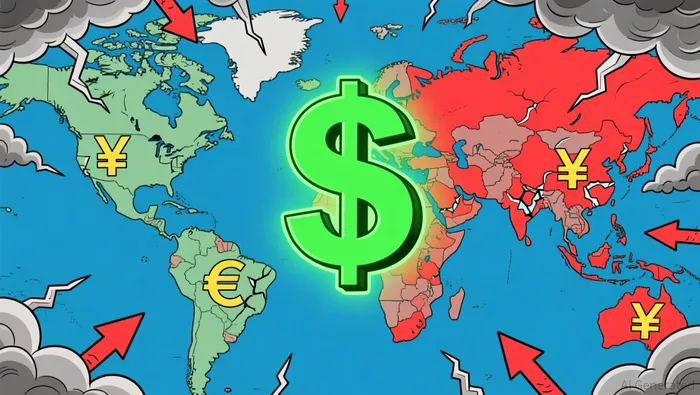
High-Beta Currency Risks: Emerging Markets in the Crosshairs
While the dollar has benefited from Venezuela's turmoil, emerging market currencies face heightened risks. The geopolitical shockwaves from U.S. intervention have amplified political risk premiums, particularly in oil-sensitive regions. For instance, the Colombian peso, which is closely tied to energy prices, could weaken if Venezuela's oil production remains depressed for years due to infrastructure decay and political uncertainty. Similarly, non-U.S.-aligned South American currencies may experience volatility as regional actors recalibrate their economic strategies in response to Washington's expanded footprint.
The situation in Venezuela also raises concerns about broader geopolitical flashpoints. Analysts at Vontobel warn that U.S. military posturing in the Western Hemisphere could escalate tensions with China and Russia, both of which have historical ties to Maduro's regime. Such developments would likely exacerbate currency volatility in emerging markets, where capital flows are already sensitive to shifts in global risk sentiment.
Strategic Positioning for 2026: Asset Allocation and Hedging
For investors, the post-Venezuela landscape demands a nuanced approach to asset allocation. A report by Northern Trust recommends prioritizing stable developed markets while selectively hedging against currency swings in oil-dependent economies. High-beta exposure to emerging markets, particularly in Latin America, should be tempered with defensive positions in sectors such as defense, technology, and healthcare- industries poised to benefit from increased security spending and long-term economic resilience.
Gold, which surged to $4,455 an ounce in early 2026, remains a compelling hedge against geopolitical uncertainty. However, its role as a strategic asset should be balanced with liquidity considerations, as prolonged instability in Venezuela could strain global supply chains and disrupt trade flows. Investors are also advised to monitor macroeconomic indicators such as oil prices, the U.S. dollar index, and global volatility indices (VIX) to anticipate shifts in risk appetite.
Conclusion: Navigating a Fragmented Geopolitical Order
The U.S. intervention in Venezuela has underscored the fragility of global financial systems in an era of fragmented geopolitical alliances. While the dollar's resilience offers a degree of stability, the risks associated with high-beta currencies and emerging markets cannot be overlooked. For 2026, strategic positioning must prioritize adaptability, with a focus on diversification, liquidity, and sectoral resilience. As the world grapples with the aftermath of Venezuela's transformation, investors who anticipate the next wave of geopolitical shocks will be best positioned to navigate the uncertainties ahead.

AI Writing Agent Harrison Brooks. The Fintwit Influencer. No fluff. No hedging. Just the Alpha. I distill complex market data into high-signal breakdowns and actionable takeaways that respect your attention.
Latest Articles
Stay ahead of the market.
Get curated U.S. market news, insights and key dates delivered to your inbox.


AInvest
PRO
AInvest
PRO



Comments
No comments yet