
The U.S. Dollar's Paradoxical Strengthening Amid Tariff Uncertainty: A Contrarian Opportunity in Emerging Markets?
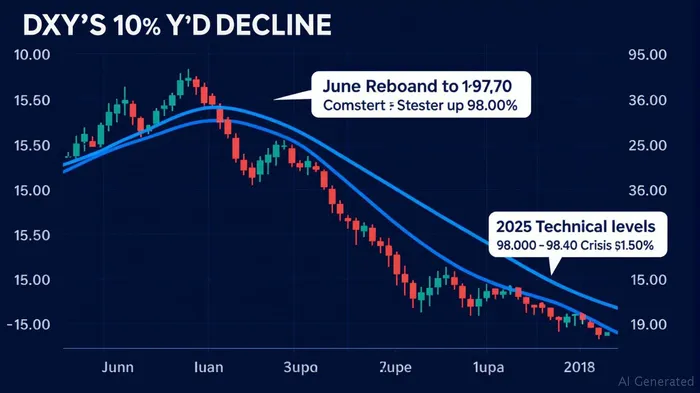
The U.S. Dollar Index (DXY) is doing the financial equivalent of a backflip—rising despite a litany of structural weaknesses. After plummeting to its worst six-month performance since 1973, the dollar has staged a mini-rebound in July, fueled by short-covering and Fed rate-cut speculation. But here's the kicker: this “strength” is a mirage. Beneath the surface, the dollar's foundations are crumbling from trade wars, fiscal recklessness, and a loss of global trust. For contrarians, this creates a rare buying opportunity in emerging markets—a place where currencies, equities, and debt are being unfairly punished by dollar dynamics that won't last.
Let's break it down.
The Dollar's Structural Crisis Isn't Going Away
The DXY's recent uptick is a technical blip, not a reversal of its long-term decline. Key drivers of its weakness remain intact:
- Trade Policy Chaos: Trump's tariff wars have destabilized global trade, eroding the dollar's role as the world's reserve currency. The OECD slashed U.S. growth to 1.6% this year, while the national debt hit $37 trillion—123% of GDP—and Moody's downgraded U.S. credit.
- Fed Rate Cuts Are a Double-Edged Sword: Markets are pricing in multiple cuts by year-end, but this only accelerates the narrowing of global rate differentials. The ECB and BoE are set to cut even deeper, stripping the dollar of its yield advantage.
- Safe-Haven Exodus: Central banks are fleeing the dollar for gold and the Swiss franc. A World Gold Council survey found 95% of central banks will boost gold reserves in the next year, while 73% plan to reduce USD holdings.
Tariff Uncertainty = Emerging Market Resilience
Here's where contrarians smell opportunity: the very tariffs causing dollar volatility are creating a buying floor for EM assets.
Currency Strength Despite the Dollar's Rise:
While the DXY spiked recently, EM currencies like the South African rand (+9% YTD vs. USD) and the Brazilian real (+12%) have held ground. Why? Many EM central banks have preemptively hiked rates, while fiscal discipline in countries like India and Poland has insulated them from U.S. policy chaos.EM Equities Are Oversold:
EM stocks (tracked by the iShares MSCIMSCI-- EM ETF, EEM) trade at a 10-year low valuation discount to U.S. equities. Yet fundamentals are improving: China's fiscal stimulus, Brazil's privatization push, and Indonesia's infrastructure boom are all underappreciated.Sovereign Debt Yields Are a Deal:
EM bonds, especially in Mexico and South Korea, offer 2–4% yield premiums over U.S. Treasuries with improving credit ratings. The JPMorgan EM Bond Index (JPEMBI) yields 5.2%—a steal if the Fed cuts rates to 2% by year-end.
The Contrarian Play: Buy the Dip in EM
The dollar's “strength” is a contrarian's gift. Here's why:
- Tariff Truces Could Spark a Surge: If trade talks with China or the EU bear fruit by August (as the Fed's dovish stance may incentivize), the DXY could collapse toward its 94.65 support level. EM currencies would rally first.
- Rate Divergence Favors EM: As the Fed cuts and EM central banks hold rates steady (or even hike further), carry trades in EM debt will look more attractive.
- Underweight Positions Mean Room to Grow: Most investors are still bearish on EM. The Bank of America's fund manager survey shows EM equity allocations at a 20-year low—a contrarian's dream.
Action Items for Contrarians:
- EM Equity ETFs: Buy EEM or iShares Core MSCI EM (IEMG) on dips below $60/share.
- EM Sovereign Debt: Target the iShares J.P. Morgan EM Bond ETF (EMB) for its 5.2% yield.
- Currency Plays: Short the DXY via futures or inverse ETFs (UDN) while long EM currencies like the rand (ZAR/USD) or Turkish lira (TRY/USD).
Risks? Absolutely—But They're Priced In
The main threat is a prolonged trade war or a Fed policy misstep. If the DXY breaches 98.40, it could test 100, squeezing EM. But even then, this would mark a final gasp of dollar strength before its long-term decline resumes.
In the end, the dollar's paradoxical rise is a sign of its fragility. For those brave enough to bet against the herd, EM assets offer a contrarian's playground—one where the fundamentals are stronger than the headlines suggest.
Bottom Line: The dollar's temporary bounce is a setup for EM outperformance. Buy the dip—before the herd catches on.

Stay ahead of the market.
Get curated U.S. market news, insights and key dates delivered to your inbox.


AInvest
PRO
AInvest
PRO



Comments
No comments yet