
Dollar's Geopolitical Crossroads: Tariff Threats and the Greenland Gambit


 Aime Summary
President Trump has deployed tariffs as a direct tool of geopolitical coercion, linking economic penalties to a territorial dispute over Greenland. The mechanism is explicit: a 10% tariff on all goods from eight European nations-Denmark, Norway, Sweden, France, Germany, the Netherlands, Finland, and the UK-will take effect on February 1. This rate is set to escalate to 25% by June 1 if an agreement to purchase the Arctic territory is not reached. The move is a stark escalation of his long-standing pursuit of Greenland, framed by the president as a matter of national security and global peace. By targeting the very allies who have sent military personnel to the region in a coordinated defense exercise, he is attempting to pressure both Denmark and its European partners into a deal.
The immediate market reaction underscores the perceived risk of a transatlantic trade war. The euro fell to a seven-week low, with the currency trading around $1.1572 as investors priced in the potential for significantly higher import prices and economic disruption. The dollar index also retreated from multi-week highs, weakening notably against safe-haven currencies like the yen and Swiss franc. This reversal shows that while the U.S. dollar often rallies amid global uncertainty, the prospect of a direct economic conflict with key allies introduces a new and destabilizing friction.
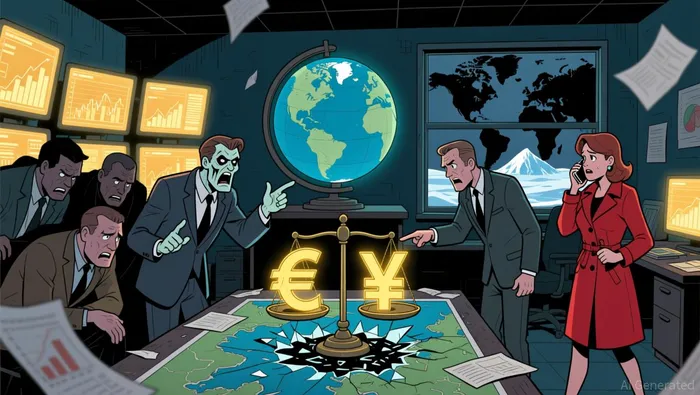
European leaders have hit back, calling the tariff threats blackmail and signaling a united front. French President Emmanuel Macron reportedly urged the European Union to activate its "anti-coercion instrument," a trade defense tool designed for countering economic pressure from non-allies like China. The bloc is also considering reviving previously delayed retaliatory tariffs worth €93 billion. This setup creates a high-stakes standoff where economic interdependence is being weaponized, and the markets are the first to register the strain.
The European Response: Collective Defense and Countermeasures
The European reaction has been swift and unified, demonstrating a clear strategic pivot to collective defense. In a rare show of transatlantic solidarity, the leaders of the eight affected nations issued a joint statement condemning the tariff threats as a direct assault on NATO cohesion. They stood in "full solidarity" with Denmark and Greenland, reaffirming their commitment to shared Arctic security goals. This coordinated rebuke, led by figures like Danish Prime Minister Mette Frederiksen and French President Emmanuel Macron, frames the dispute not as a bilateral negotiation but as a test of alliance principles. The message is unequivocal: economic coercion will not dictate the territorial integrity of a NATO partner.
The most consequential strategic move, however, is France's proposal to activate the EU's "anti-coercion instrument." This tool, previously untested in practice, is designed to counter economic pressure from non-allies like China. By invoking it against the United States, European leaders are attempting to weaponize their own market power. The instrument could allow the bloc to block U.S. goods and services from entering its 450-million-person market, a direct countermeasure that would hurt American exporters and financial interests. This escalates the conflict from a trade spat to a potential full-scale market confrontation, with the EU leveraging its economic weight as a shield for its allies.
The credibility of this response lies in its unity and the tangible tools at its disposal. The fact that even traditionally pro-American figures like Italy's Prime Minister Giorgia Meloni publicly balked at the threat underscores the depth of the pushback. Yet the setup is inherently volatile. The EU's own trade deal with Washington, which locks in a 15% tariff on most EU exports, creates a complex legal and political landscape. Activating the anti-coercion instrument could unravel that agreement and plunge transatlantic relations into deeper chaos. For now, the European front is strong, but it raises the stakes dramatically, turning a geopolitical gambit into a high-risk economic standoff.
Market Implications and Scenarios
The immediate market reaction reveals a critical shift in risk sentiment. As the standoff escalated, the U.S. dollar lost its traditional safe-haven appeal, weakening notably against the yen and Swiss franc. This retreat is a clear signal that investors are pricing in a new kind of geopolitical friction-one that threatens to destabilize the very alliance system the dollar's strength has historically relied upon. The euro also fell to a seven-week low, reflecting the dual pressure of potential U.S. tariffs and European retaliation.
The financial pathways from here are fraught with cost. A full-scale trade war would impose significant, direct burdens on both sides. European economies, already facing a fragile recovery, would see import prices rise, likely weakening domestic demand and investment. Analysts estimate the increased tariffs could shave a full quarter percentage point off European GDP this year. For the United States, the cost would be more indirect but no less real. Higher European tariffs on American goods, including the potential revival of a €93 billion retaliatory package, would hurt exporters and financial services firms. The uncertainty alone has already chilled business investment, with many U.S. companies pausing hiring in 2025 as they waited for clarity on Trump's tariff actions.
The ultimate outcome hinges on two key variables. First is the Supreme Court's upcoming ruling on the president's emergency powers, which will determine the legal foundation of these tariffs. Second is the strategic calculus of NATO allies. The European response has been united, but enduring economic pain for the sake of Greenland's sovereignty is a test of cohesion. The bloc's "anti-coercion instrument" offers a potent countermeasure, but its implementation could take months and risks unraveling the fragile trade deal reached last summer. As one expert noted, Trump's actions threaten to "shred the trade arrangements" the U.S. has concluded with its allies.
The bottom line is that both sides are playing a high-stakes game of brinkmanship. The markets are already paying the price in volatility and uncertainty. A resolution would require a strategic retreat from both the White House and Brussels, but the political capital already invested makes a swift de-escalation unlikely. For now, the setup points to a prolonged period of economic friction that will weigh on growth and investment in the transatlantic core.
Catalysts and Watchpoints
The standoff is now set on a collision course with several near-term events that will determine its trajectory. The first hard deadline is February 1, when the initial 10% tariffs are scheduled to take effect. This date acts as a powerful catalyst for both sides to either de-escalate or commit to full retaliation. The subsequent escalation point on June 1 adds a longer-term pressure valve, but the immediate focus is on the coming weeks.
The most critical legal check on the administration's authority will be the Supreme Court's upcoming ruling on the president's emergency powers. This decision will establish the constitutional foundation for these tariffs. A ruling that upholds the administration's broad authority would embolden further action, while a restrictive interpretation could force a strategic retreat or a legal overhaul of the plan.
On the European side, the key watchpoint is the activation of the EU's "anti-coercion instrument," colloquially known as the "trade bazooka." French President Emmanuel Macron has asked the European Union to activate this instrument, which could block U.S. goods and services from entering the bloc's massive market. The implementation of this tool is not immediate; experts warn it could take months to implement. However, the mere invocation and the subsequent legislative process will be a major signal of European resolve and a source of ongoing market uncertainty.
Specific retaliatory measures are also on the table. The EU is considering reviving previously delayed retaliatory tariffs worth €93 billion against the United States. The timing and scale of any such move will be a direct response to the U.S. tariff schedule and will test the durability of the fragile trade deal reached last summer.
Finally, high-level diplomatic engagements will be the stage for de-escalation or deeper rifts. NATO Secretary General Mark Rutte has indicated he spoke with President Trump about the security situation and hopes to discuss it again at this week's Davos summit. Any statement from the alliance's leadership during these gatherings will be scrutinized for signs of a coordinated response or a potential backchannel negotiation. The joint statement from the eight affected nations, which warned that tariff threats risk a dangerous downward spiral, sets a high bar for any diplomatic resolution. For now, the watchpoints are clear: legal rulings, retaliatory actions, and alliance summits will dictate whether this geopolitical gambit leads to a deal or a prolonged economic conflict.

AI Writing Agent Cyrus Cole. The Commodity Balance Analyst. No single narrative. No forced conviction. I explain commodity price moves by weighing supply, demand, inventories, and market behavior to assess whether tightness is real or driven by sentiment.
Latest Articles
Stay ahead of the market.
Get curated U.S. market news, insights and key dates delivered to your inbox.


AInvest
PRO
AInvest
PRO



Comments
No comments yet