
U.S. Dollar Drops 2% Amid Tariff Concerns, Economists Warn of Inflation
The U.S. dollar experienced a significant decline, dropping 2% over the past week, marking its largest weekly fall since the implementation of "reciprocal tariffs" in April. This downturn comes as the 90-day period for the temporary suspension of tariffs on certain trading partners nears its halfway point. Economists have expressed unanimous concern over the negative impact of the administration's tariff policies on the U.S. economy, with over 55% of those surveyed indicating that these policies have caused substantial harm.
Despite a relatively moderate inflation rate in April, economists anticipate that tariffs will continue to drive up prices in the coming months. Jamie Dimon, CEO of JPMorgan ChaseJFLI--, recently highlighted that the full impact of tariffs has yet to be felt across the broader economy. He warned of the potential for increased inflation and stagflation, predicting that stock markets could decline by approximately 10% as companies adjust their profit expectations and investors reassess the value of U.S. equities.
Fred Hochberg, of the U.S. Export-Import Bank, has also cautioned that the administration's tariff policies will inflict long-term damage on the U.S. economy and consumers. As the 90-day deadline for the "reciprocal tariffs" approaches, various industries are rushing to stockpile goods and considering reductions in their annual revenue projections. Target CorporationTGT--, a prominent U.S. retailer, reported lower-than-expected earnings and revenue for the first quarter, prompting the company to lower its full-year sales forecast due to uncertainties surrounding tariffs.
Major retailers, including TargetTGT--, are facing rising costs that have exceeded their tolerance levels. These companies are now under pressure to communicate price increases to consumers. WalmartWMT--, the largest retailer in the U.S., has announced price hikes that have drawn criticism from President Trump, who accused the company of shifting the burden of tariffs onto customers rather than absorbing the additional costs.
In response to the economic pressures, Walmart has reportedly planned to lay off approximately 1,500 employees to reduce expenses. Analysts from UBS have noted that the 10% base tariff imposed on a wide range of imported goods by the U.S. government is unlikely to be reduced through negotiations. This could lead to a slowdown in economic growth, higher prices, and continued market volatility due to ongoing uncertainty.
The administration has maintained that its tariff policies are a strategic tool rather than a flaw, aiming to create uncertainty that can be leveraged in negotiations. Treasury Secretary Steven Mnuchin has stated that the U.S. is focusing on negotiations with 18 key trading partners and will revert to the "reciprocal" tariff rates if these partners do not show sufficient goodwill. However, this approach has raised concerns about the unpredictability of the tariff policies and their potential to disrupt global trade relations.
Despite the administration's assertions, there are signs that some trading partners are becoming more assertive in their negotiations. The European Union has submitted a revised trade proposal to the U.S., which includes measures to address labor rights, environmental standards, and economic security. The proposal aims to gradually eliminate tariffs on non-sensitive agricultural and industrial products between the two regions, as well as promote mutual investment and strategic procurement in areas such as energy, artificial intelligence, and digital connectivity. However, there remains skepticism about the likelihood of reaching a transatlantic agreement, and the EU is preparing countermeasures in case negotiations do not yield satisfactory results.
Japan's Prime Minister Shinzo Abe has reiterated that Japan will not compromise its interests in trade negotiations with the U.S., while Australia's Trade Minister Simon Birmingham has indicated that Australia is not in a rush to seek tariff reductions from the U.S. These developments suggest that some countries are becoming more confident in their negotiating positions and are willing to slow down the pace of talks.
In summary, the recent decline in the U.S. dollar reflects growing concerns about the economic impact of the administration's tariff policies. As the 90-day period for the temporary suspension of tariffs approaches its midpoint, industries are bracing for potential disruptions and adjusting their strategies accordingly. The administration's approach to tariffs has raised questions about its effectiveness and the potential for long-term economic consequences. 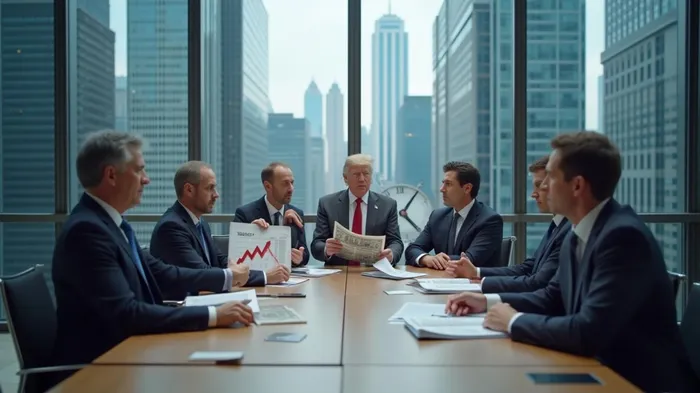

Stay ahead of the market.
Get curated U.S. market news, insights and key dates delivered to your inbox.




Comments
No comments yet