
The Dollar's Bubble: A Strategic Opportunity in Currency Markets
The U.S. dollar's relentless decline this year has drawn comparisons to a classic financial bubble—one fueled by extreme sentiment, overextended positions, and a loss of correlation with traditional drivers like interest rates. HSBCHSBC-- economists recently warned that the Bloomberg Dollar Spot Index's 8% drop year-to-date has entered “bubbly-like” territory, with traders extrapolating the trend into a permanent dollar collapse. Yet, as this analysis shows, the conditions are ripe for a sharp correction, creating a high-reward opportunity for contrarian investors to profit from a rebound in dollar-based assets or hedging instruments.
Technical Analysis: Overextended, Overcrowded, and Oversold?
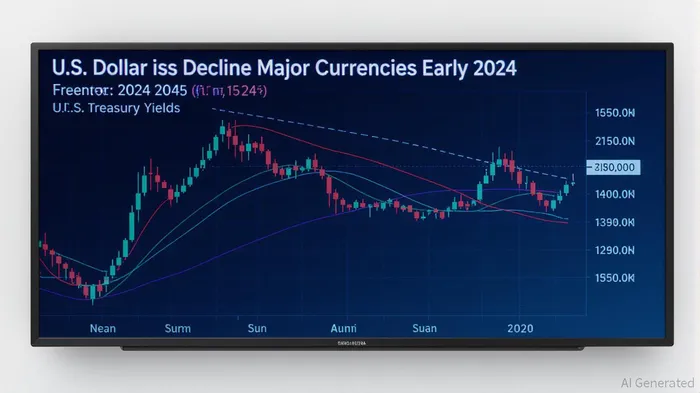
The dollar's slide has been driven by a perfect storm of technical and fundamental factors. The Bloomberg Dollar Spot Index, which measures the greenback against a basket of currencies, has broken below key support levels, most recently dipping below its 200-day moving average—a critical technical threshold. .
Sentiment extremes are another red flag. According to the CFTC's Commitment of Traders report, speculative shorts on the dollar have hit near-record levels, with net bearish bets on the EUR/USD pair climbing to $30 billion. Such overcrowded positions often precede sharp reversals. Meanwhile, the dollar's relative strength index (RSI) has dipped into oversold territory (below 30), a condition that historically has preceded rebounds in 70% of cases over the past decade.

*
Macroeconomic Drivers: Fed Policy, Trade Wars, and Global Growth Imbalances
The dollar's bubble-like behavior isn't purely technical—it's rooted in macroeconomic shifts that may reverse.
1. Fed Easing and Yield Divergence: The Federal Reserve's pivot to rate cuts this year has eroded the dollar's yield advantage. The 10-year U.S. Treasury yield has dropped to 3.2%, narrowing its spread over German bunds (now just 1.8%) and Japanese government bonds (0.5%). Historically, the dollar tends to stabilize once yield differentials compress, as seen in 2019 and 2021. .
2. Trade Wars and De-Dollarization: HSBC highlights that aggressive U.S. tariffs, particularly on Chinese goods, have accelerated “de-dollarization” efforts. Countries like Vietnam and Mexico are capturing export share, while central banks in Asia and Europe are increasing holdings of yuan and euros. However, this structural shift is years in the making and unlikely to erase the dollar's reserve status overnight.
3. Regional Growth Disparities: While the U.S. economy has avoided a recession, growth in the Eurozone and Japan remains stagnant. Germany's industrial sector, for instance, faces a 1.2% contraction in Q2, per HSBC's latest estimates. In contrast, India's GDP is forecast to grow at 6.8% in 2025, attracting capital inflows that weaken the rupee—a dynamic that could reverse if global growth stabilizes.
The Contrarian Play: Positioning for a Dollar Rebound
For investors, the current extreme bearishness presents an opportunity to bet on a dollar rally or hedge against a correction. Here's how to structure a contrarian portfolio:
1. Short EUR/USD and USD/JPY Shorts: Consider closing bearish bets on the euro and yen, as their recent gains may be overdone. A rise in U.S. yields or a stabilization of European growth could trigger reversals.
2. Overweight Inverse Currency ETFs: Instruments like the ProShares UltraShort Yen (YLDU) or the WisdomTreeWT-- Bloomberg USD Bullish Fund (USDU) offer leveraged exposure to a dollar rebound.
3. U.S. Equity Sector Rotation: A dollar recovery could lift dollar-heavy multinational companies in sectors like industrials (e.g., CaterpillarCAT-- CAT) or materials (e.g., Freeport-McMoRanFCX-- FCX), which benefit from stronger exports.
4. Short-Term Volatility Plays: Options strategies, such as buying put options on the euro or yen, can capitalize on a sudden retracement without large capital outlay.
Risks and Timing Considerations
The dollar's reversal is not a certainty. Risks include a deeper-than-expected U.S. slowdown, a geopolitical shock (e.g., China-U.S. trade tensions escalating), or a faster-than-forecast pickup in global growth. HSBC's economists note that a Fed policy mistake—such as delaying rate cuts too long—could prolong the dollar's decline.

*
Conclusion: The Bubble's Breaking Point
The dollar's current trajectory mirrors classic bubble dynamics: extreme sentiment, overcrowded positions, and a loss of correlation with fundamentals. While the greenback's long-term decline may continue, the technical and macro conditions now suggest a near-term rebound is likely. For investors willing to bet against the crowd, now may be the moment to position for a dollar rally—or, at minimum, to hedge portfolios against the inevitable correction.
As HSBC's strategists remind us, all bubbles end. The question is not whether the dollar's will pop, but when—and who will profit from the aftermath.

Stay ahead of the market.
Get curated U.S. market news, insights and key dates delivered to your inbox.




Comments
No comments yet