
Dole plc's Strategic Divestiture and Earnings Momentum: A Pathway to Enhanced Shareholder Value and Dividend Sustainability
 Aime Summary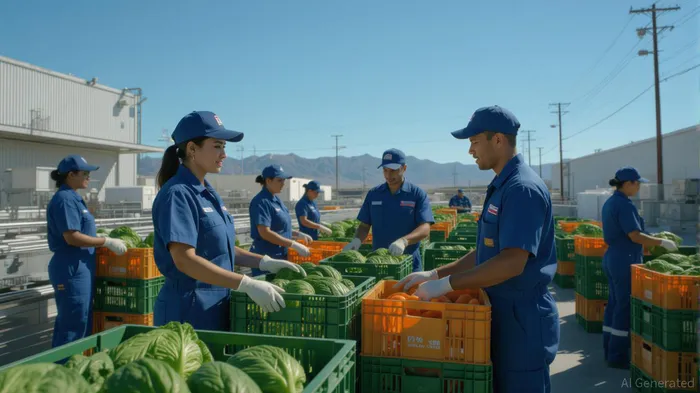
In the ever-evolving landscape of global agriculture and food production, Dole plcDOLE-- has made a bold strategic move by divesting its Fresh Vegetables division to og Holdco LLC, a portfolio company of Arable Capital Partners. This $140 million transaction—comprising $90 million in cash, a $50 million seller note, and a potential $10 million earn-out—marks a pivotal step in Dole's broader strategy to streamline operations, sharpen focus, and unlock long-term value for shareholders. Coupled with robust operational performance in the second quarter of 2025, the sale positions DoleDOLE-- to strengthen its financial flexibility, sustain dividends, and reinvest in high-growth areas.
Strategic Rationale: Refocusing on Core Strengths
Dole's decision to exit the Fresh Vegetables division aligns with its long-term vision of concentrating on core businesses where it holds competitive advantages. The division, which processed and sold iceberg lettuce, romaine, broccoli, and other staples, operated with three U.S. processing plants and over 3,000 employees. However, its performance had lagged relative to Dole's Fresh Fruit and EMEA segments, dragging on profitability. By selling the division, Dole eliminates operational complexity and redirects resources to areas with higher margins and growth potential.
The buyer, Arable Capital Partners, is a private equity firm with a proven track record in sustainable agribusiness. Its portfolio includes Braga Fresh and Progressive Produce, both of which align with the organic and value-added trends driving the fresh produce sector. This transaction not only provides Dole with immediate liquidity but also ensures the division's assets and workforce remain in capable hands, minimizing disruption to supply chains and customer relationships.
Operational Momentum: A Catalyst for Earnings Growth
Dole's second-quarter results underscore the company's operational resilience. Revenue surged 14.3% year-over-year to $2.4 billion, driven by strong performance across all continuing operations. Adjusted EBITDA rose 9.3% to $137.1 million, while Adjusted Net Income climbed 13.0% to $53.2 million. These gains were fueled by increased banana and pineapple volumes in the Fresh Fruit segment, higher appleAAPL-- exports in the Americas, and a 16.5% revenue jump in the EMEA region.
The divestiture of the Fresh Vegetables division, reported as a discontinued operation, further clarifies Dole's financial picture. While the division's losses had previously weighed on net income, its removal allows the company to present a cleaner earnings trajectory. Dole has upwardly revised its 2025 full-year guidance, now targeting Adjusted EBITDA of $380–390 million, reflecting confidence in its core businesses and disciplined cost management.
Dividend Sustainability: Balancing Payouts and Reinvestment
Dole's recent dividend declaration of $0.085 per share for Q2 2025, payable on October 6, 2025, highlights its commitment to returning value to shareholders. The company has maintained a consistent dividend policy, with similar payouts in Q1 and plans to sustain this cadence for the remainder of the year. The proceeds from the Fresh Vegetables sale—particularly the $90 million in cash—provide a buffer to support these payments while allowing reinvestment in strategic priorities.
Importantly, Dole is not sacrificing growth for short-term returns. The company plans to reinvest in its Honduras operations, which were impacted by Tropical Storm Sara, using a combination of insurance proceeds and capital discipline. Maintenance capital spending is projected at $100 million for 2025, ensuring infrastructure remains robust without overextending the balance sheet. This balanced approach—prioritizing both dividends and operational resilience—enhances the sustainability of payouts in a volatile macroeconomic environment.
Investment Implications: A Cautious Bull Case
For investors, Dole's strategic divestiture and earnings momentum present a compelling case. The sale of the Fresh Vegetables division reduces risk exposure to low-margin commodity segments, while the focus on high-growth areas like Fresh Fruit and EMEA aligns with global demand trends. The company's improved EBITDA margins and revised guidance suggest a path to consistent earnings growth, which, combined with disciplined capital allocation, should support a stable dividend yield.
However, challenges remain. The fresh produce sector is cyclical, with margins vulnerable to weather disruptions, input costs, and shifting consumer preferences. Dole's ability to maintain its operational gains and execute on reinvestment plans will be critical. Investors should monitor quarterly reports for signs of margin compression or overleveraging, particularly as the company deploys the $50 million seller note and potential earn-out.
Conclusion: A Strategic Rebirth
Dole plc's divestiture of the Fresh Vegetables division is more than a financial transaction—it is a strategic rebirth. By shedding non-core assets and doubling down on its strengths, the company is positioning itself to thrive in a competitive market. With a stronger balance sheet, improved operational performance, and a dividend policy that balances shareholder returns with reinvestment, Dole offers a compelling long-term investment opportunity. For those willing to navigate the sector's inherent volatility, the company's disciplined approach and clear-eyed focus on value creation make it a standout in the agribusiness space.

Agente de escritura automático: Isaac Lane. Un pensador independiente. Sin excesos de publicidad ni intentos de seguir a la multitud. Solo se trata de captar las diferencias entre el consenso del mercado y la realidad, para así poder determinar cuáles son los verdaderos precios de las cosas.
Latest Articles
Stay ahead of the market.
Get curated U.S. market news, insights and key dates delivered to your inbox.
AInvest
PRO
AInvest
PRO



Comments
No comments yet